The ENERGY STAR rating is an EPA-backed mark that identifies products, homes, and buildings that perform better on energy efficiency than typical comparable options. That’s the whole idea in one sentence, but the label works differently depending on what it’s stamped on.
A product label (on your dishwasher, your windows, your furnace) means that specific model passed EPA-recognized testing against a category-wide specification. A commercial or multifamily building, on the other hand, gets a 1–100 score that ranks its energy performance against similar buildings nationwide. A score of 50 is the median. Hit 75 or higher, and the building qualifies to apply for full ENERGY STAR certification.
Here’s what to remember before you read further:
- Look for the blue ENERGY STAR label on appliances, windows, and other products.
- A building score of 75+ puts that property in the top 25% for energy performance.
- Products and buildings both go through independent verification, not self-reported claims.
Key Takeaways
The ENERGY STAR rating uses EPA-verified testing for products and a 1–100 percentile-based score for buildings, both backed by third-party accreditation rather than manufacturer claims.
| Point | Details |
|---|---|
| Two different scoring systems | Products get a pass/fail label; buildings get a 1–100 percentile score based on peer comparison. |
| 75+ means top quartile | A building score of 75 or higher qualifies for certification after professional verification. |
| Independent testing required | EPA-recognized labs and ISO-accredited certification bodies verify every claim before labeling. |
| Savings are measurable | Certified buildings use about 35% less energy than typical peers. |
| Upgrades support better scores | Jsignorexteriors installs ENERGY STAR-rated roofing, siding, and windows that help Connecticut properties perform better against their benchmark. |
Table of Contents
- How the Energy Star Program Works
- How Does a Product Earn the Energy Star Label?
- What Does a Building’s 1–100 Energy Star Score Mean?
- What Are the Real Benefits of Energy Star Certification?
- Where Can You Find Energy Star Certified Products and Buildings?
- Why Trust the Energy Star Label?
- Why This Matters When You’re Planning Home Upgrades
- Ready to Turn Ratings Into Real Savings on Your Home?
- Where to Learn More
- Sources
How the Energy Star Program Works
ENERGY STAR isn’t a marketing gimmick dreamed up by manufacturers. The U.S. Environmental Protection Agency runs the program, working alongside the Department of Energy on technical standards and outreach. Since 1992, it has grown from a handful of computer categories into a system covering more than 65 product categories, along with homes, 21 commercial building types, and industrial plants.
A lot of moving parts keep the program running: manufacturers who build to spec, EPA-recognized labs that test the products, certification bodies that sign off on results, home certifiers who verify new construction, and building owners who benchmark their properties. None of them operate in isolation. In practice, the program does three things:
- Sets performance specifications for each product or building category.
- Verifies that products and buildings actually meet those specifications.
- Publishes free tools (Product Finder, Portfolio Manager) so the public can check results.
How Does a Product Earn the Energy Star Label?
A product doesn’t earn ENERGY STAR by having a good engineering team say so. It goes through a defined chain of custody:
- EPA (with industry input) sets a technical specification for the category.
- A manufacturer submits the product for testing at an EPA-recognized laboratory.
- A third-party certification body reviews the test results and certifies the product.
- The manufacturer signs a partnership agreement with EPA to use the label.
The labs need ISO/IEC 17025 accreditation, and the certification bodies need ISO/IEC 17065 accreditation. Those two standards are the backbone of the whole system: they govern how independent labs and certifiers operate everywhere, not just for appliances. Manufacturers can’t just claim compliance and slap the logo on the box.
When you’re shopping, run through this quick checklist:
- Confirm the blue ENERGY STAR label is actually printed on the unit or its spec sheet.
- Cross-check the model number against the ENERGY STAR Product Finder.
- Note the specification version year, since efficiency thresholds get updated periodically.
What Does a Building’s 1–100 Energy Star Score Mean?
This is where most people get confused, because the building score works nothing like the product label. There’s no pass/fail spec for a warehouse or an office tower the way there is for a refrigerator. Instead, EPA built a statistical model.
Here’s the mechanism in plain terms. EPA takes your building’s actual source energy use intensity (source EUI, meaning total energy consumed per square foot, accounting for losses at the power plant) and compares it to a predicted source EUI. That prediction comes from a regression model built on national survey data for buildings with similar characteristics: size, hours of operation, climate, number of occupants, and so on. Divide actual EUI by predicted EUI, and you get a ratio. EPA then looks up that ratio in a percentile table to produce the final 1–100 score.
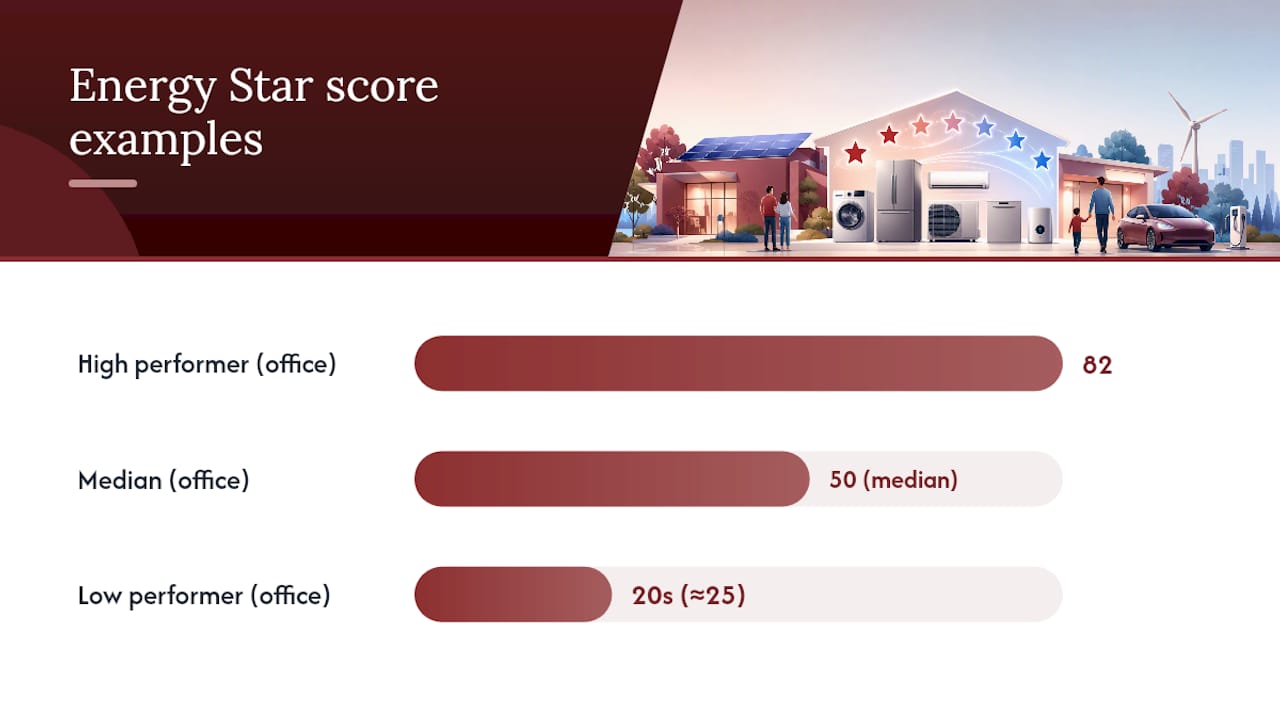
Picture two office buildings of similar size in similar climates. One uses less energy than its statistical peer group would predict; the model rewards it with a high score, maybe 82. Another uses roughly what’s predicted for its type and lands around 50, dead median. A third uses noticeably more than predicted and might score in the 20s. The score isn’t about raw energy use. It’s about performance relative to expected use for that specific type of building.
Building owners use the score for more than bragging rights:
- Benchmarking performance year over year to catch equipment problems early.
- Prioritizing which upgrades (roof, envelope, HVAC) will move the needle most.
- Meeting local energy disclosure or benchmarking ordinances.
- Applying for certification once the score clears 75, which requires sign-off from a licensed Professional Engineer or Registered Architect.
What Are the Real Benefits of Energy Star Certification?
The savings case is not hypothetical. ENERGY STAR certified buildings use about 35% less energy than similar buildings nationwide, which typically shows up directly in lower utility bills and a smaller carbon footprint.
Beyond the utility bill, certification and certified products open up a few other doors worth checking:
- Federal, state, and utility rebates for ENERGY STAR-rated windows, roofing, and HVAC equipment (offers change often, so verify current programs before budgeting).
- Stronger positioning with tenants and buyers who screen for efficiency, sometimes translating into rental premiums or better loan terms.
- Lower per-square-foot operating costs, which matters directly to net operating income and property valuation.
Where Can You Find Energy Star Certified Products and Buildings?
You don’t have to take a manufacturer’s word for anything. EPA publishes searchable, free tools for exactly this purpose.
- Search the ENERGY STAR Product Finder by category to confirm a specific model is currently certified.
- Look up ENERGY STAR certified homes listings if you’re buying new construction and want efficiency documentation.
- Use Portfolio Manager, EPA’s free benchmarking tool, to calculate or verify a commercial building’s 1–100 score.
- If a label looks outdated or a listing is missing, check the specification version and contact the manufacturer or EPA directly rather than assuming the product no longer qualifies.
Why Trust the Energy Star Label?
The label carries weight because it isn’t self-reported. Every certified product or building passes through third-party testing at EPA-recognized labs, review by accredited certification bodies, and ongoing post-market checks that catch mislabeled products before they cause lasting damage to the program’s credibility.
- Testing happens at independent, EPA-recognized laboratories, not manufacturer facilities.
- Certification bodies hold ISO/IEC 17065 accreditation, and labs hold ISO/IEC 17025 accreditation.
- EPA performs post-market verification to catch noncompliant products after they reach shelves.
- Commercial building certification isn’t a one-time badge. Owners have to reapply annually with fresh verification to keep it.
Pro Tip: If you want to dig into the accreditation requirements yourself, the EPA’s page on ENERGY STAR verification standards lays out exactly which ISO frameworks apply to labs versus certification bodies.
Why This Matters When You’re Planning Home Upgrades
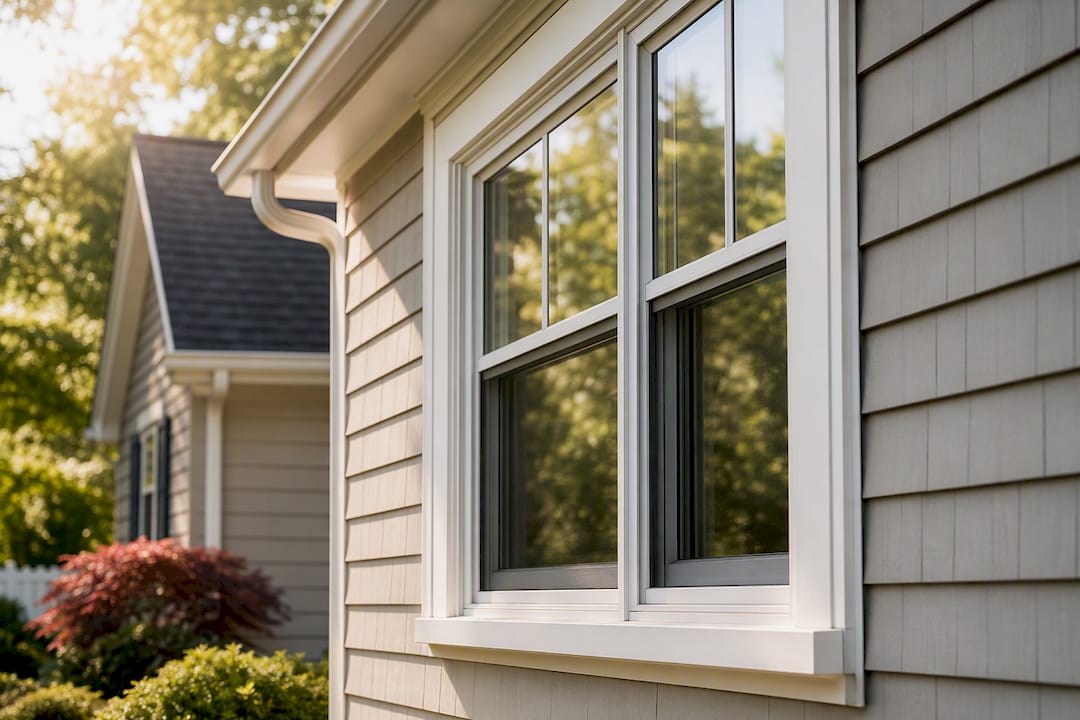
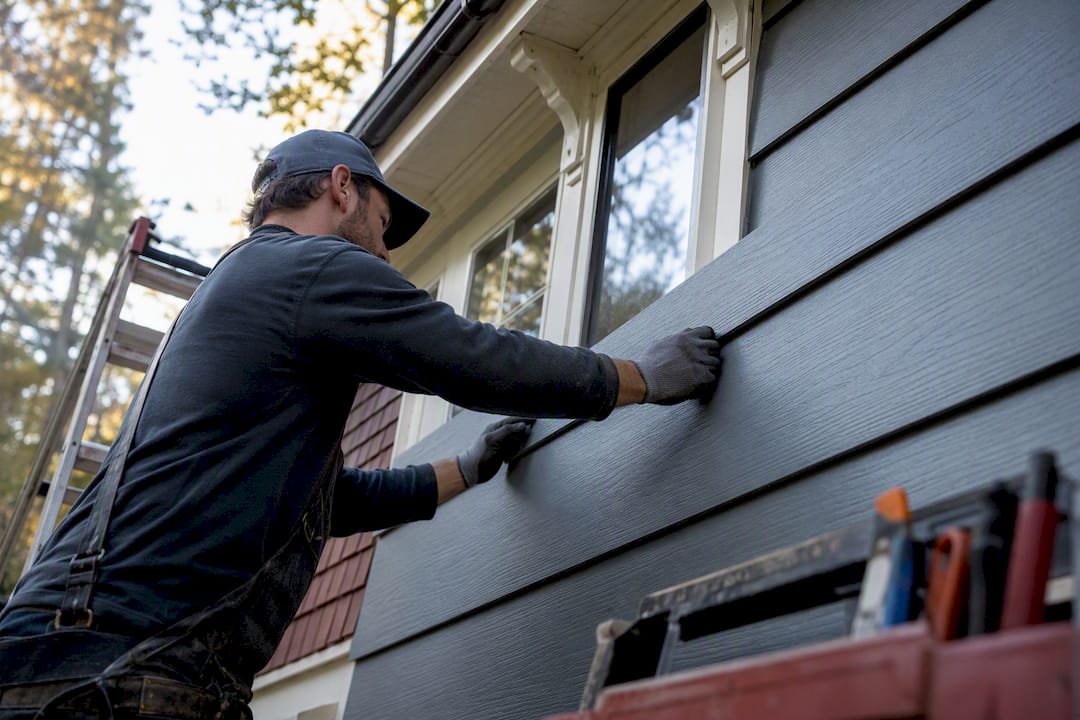
An ENERGY STAR score or label is a useful diagnostic, not just a badge. If your home feels drafty or your bills keep climbing, that’s usually a sign your building envelope, not just your appliances, needs attention. Before committing to a major certification push or a big-ticket appliance swap, it’s worth consulting a licensed builder, architect, or energy rater who can tell you where the real losses are happening. A qualified local contractor can also help you pick ENERGY STAR-rated windows, roofing, and siding suited to your specific house.
Ready to Turn Ratings Into Real Savings on Your Home?
Understanding the ENERGY STAR score is one thing. Actually lowering your energy bills requires the right materials installed correctly, and that’s where Jsignorexteriors comes in. As a Connecticut exterior contractor with more than 30 years in roofing, siding, and window replacement, Jsignorexteriors helps homeowners choose and install ENERGY STAR-rated products that improve real-world performance, not just paper specifications.
To be clear: Jsignorexteriors doesn’t issue ENERGY STAR certification. That’s the EPA’s job, along with the accredited labs and licensed professionals mentioned above. What Jsignorexteriors does is handle the physical work that makes a higher score achievable: a well-sealed roof, energy-conscious windows, and siding that closes the gaps where conditioned air escapes. If your roof or windows are due for replacement, get a quote from a Connecticut roofing contractor and find out what an upgrade could mean for your energy bills this year.
Where to Learn More
For deeper technical detail straight from the source, these EPA pages cover the tools mentioned above:
- ENERGY STAR Product Finder for verifying certified appliances and materials.
- Portfolio Manager for calculating a building’s score.
- Building certification requirements for the professional verification process.
Sources
- How the 1–100 ENERGY STAR Score is Calculated | ENERGY STAR Portfolio Manager reference
- ENERGY STAR Certification for Buildings | ENERGY STAR
- ENERGY STAR | US EPA