Low-e window coatings are ultra-thin metallic layers that reflect infrared heat while letting visible light through. Use them when you want measurable energy savings or less solar heat gain without darkening your rooms. For single-pane windows, a retrofit film or low-e storm window often delivers the fastest payback. For failing seals or drafty frames, a full replacement with a sealed low-e insulated glass unit is the better long-term investment. Either way, check the NFRC label before you buy.
TL;DR:
- Low-e window coatings can reduce energy loss by up to 40 percent and cut UV fading by 75 percent, as shown in research from Lawrence Berkeley National Laboratory.
- Soft-coat low-e coatings must stay sealed inside insulated glass units to avoid degradation, while hard-coat coatings are more durable but offer less thermal performance.
- Retrofit options like low-e films or storm windows provide cost-effective savings, with payback periods often between three and seven years, especially in severe climates.
- The performance of low-e windows heavily depends on correct specification, gas fills, spacer type, and proper installation to maximize insulation and solar control.
- Proper maintenance, including careful cleaning and moisture control, is essential to preserve the window’s performance and prevent seal failure or condensation issues.
Table of Contents
- How Do Low-E Window Coatings Work?
- Hard Coat vs. Soft Coat: Which Low-E Type Fits Your Windows?
- What Numbers Actually Tell You About Window Performance?
- Film, Storm Windows, or Replacement: Which Retrofit Wins?
- Installation Risks: Condensation, Seals, and What to Ask Your Contractor
- What Jsignorexteriors Sees on Real Window Projects
- Is Low-E Glass Environmentally Sustainable?
- Does Low-E Coating Work With My Window Frame Material?
- How Should You Clean Low-E Coated Windows?
- How to Prioritize Window Work on a Budget
- Ready for Windows That Actually Perform for Your Climate?
- Where to Verify Low-E Specs and Ratings
- Sources
- FAQ
How Do Low-E Window Coatings Work?
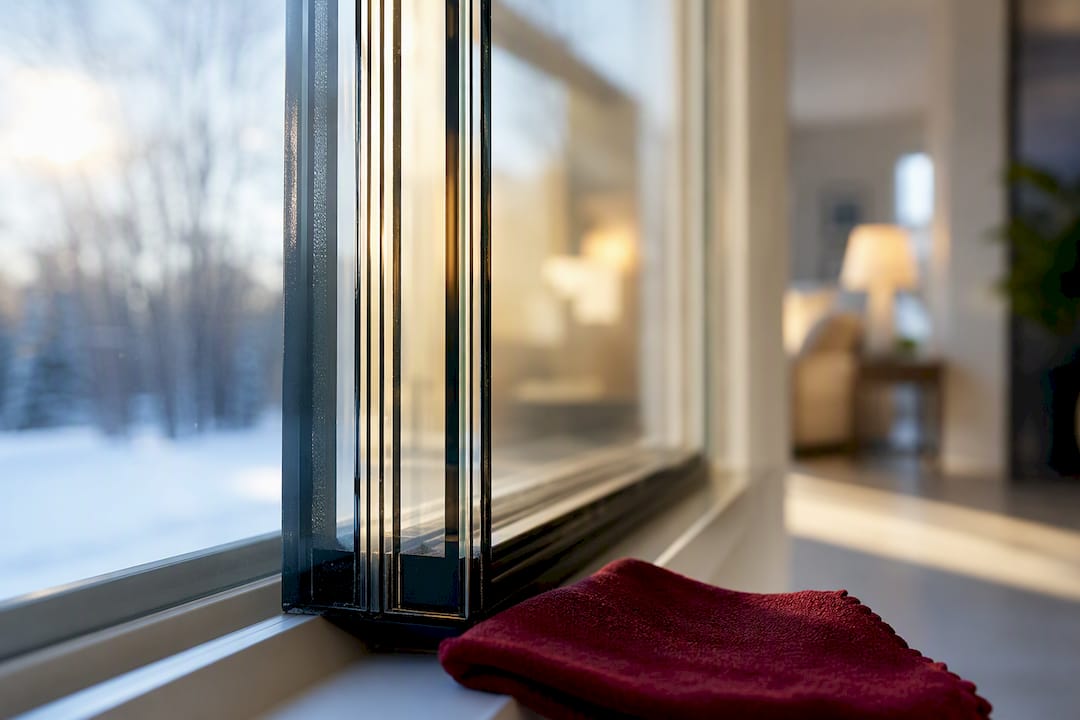
A low-e coating is a metallic or metal-oxide layer just a few molecules thick, applied to glass to control how much radiant heat passes through. It does not block visible light the way a tinted film does. Instead, it reflects infrared wavelengths back toward their source, whether that source is your furnace in winter or the sun in summer.
Emissivity measures how much radiant heat a surface releases. Standard clear glass has an emissivity around 0.84, meaning it radiates most of the heat that hits it. A low-e coated surface can drop that number close to 0.04, sharply cutting how much heat radiates through the glass. That difference is why two windows that look identical can perform very differently in a heating bill.
Low-e coatings handle radiant heat transfer. They do not do much about conduction or convection, which is why manufacturers pair them with other upgrades:
- Argon or krypton gas fills between panes, which slow conductive heat loss more than plain air.
- Warm-edge spacers, which reduce heat transfer at the perimeter of the glass unit.
- Multiple panes, which add insulating dead air space on top of the coating’s radiant control.
A low-e coating alone helps. Low-e paired with argon and warm-edge spacers produces a bigger jump in whole-window performance than any single change.
Hard Coat vs. Soft Coat: Which Low-E Type Fits Your Windows?
Not all low-e coatings are built the same way, and the manufacturing process determines where a coating can go.
Pyrolytic (hard-coat) low-e gets fused onto the glass while it is still hot during manufacturing. The result is a durable, scratch-resistant surface tough enough to sit exposed to weather or cleaning tools. That durability comes with a tradeoff: hard-coat products generally offer less dramatic emissivity reduction than their sputtered counterparts.
Sputtered (soft-coat) low-e applies multiple ultra-thin metallic layers in a vacuum chamber at room temperature. Soft coats deliver noticeably better thermal performance and can be tuned more precisely for a given climate. The tradeoff: the layers are delicate and oxidize quickly if exposed to air or moisture, so soft-coat glass must be sealed inside an insulated glass unit, never left exposed on a single pane or storm window.
Beyond hard and soft, coatings also differ by what they let through:
- High solar-gain (or “high-gain”) coatings let more of the sun’s heat into the home, useful in heating-dominated climates where you want that free warmth in winter.
- Low solar-gain (spectrally selective) coatings block a larger share of solar heat while still passing visible light, the better fit for hot, cooling-dominated regions.
- Balanced coatings split the difference for mixed climates with real heating and cooling seasons.
What Numbers Actually Tell You About Window Performance?
Three figures matter more than any brand name or marketing claim: U-factor, solar heat gain coefficient (SHGC), and visible transmittance (VT).
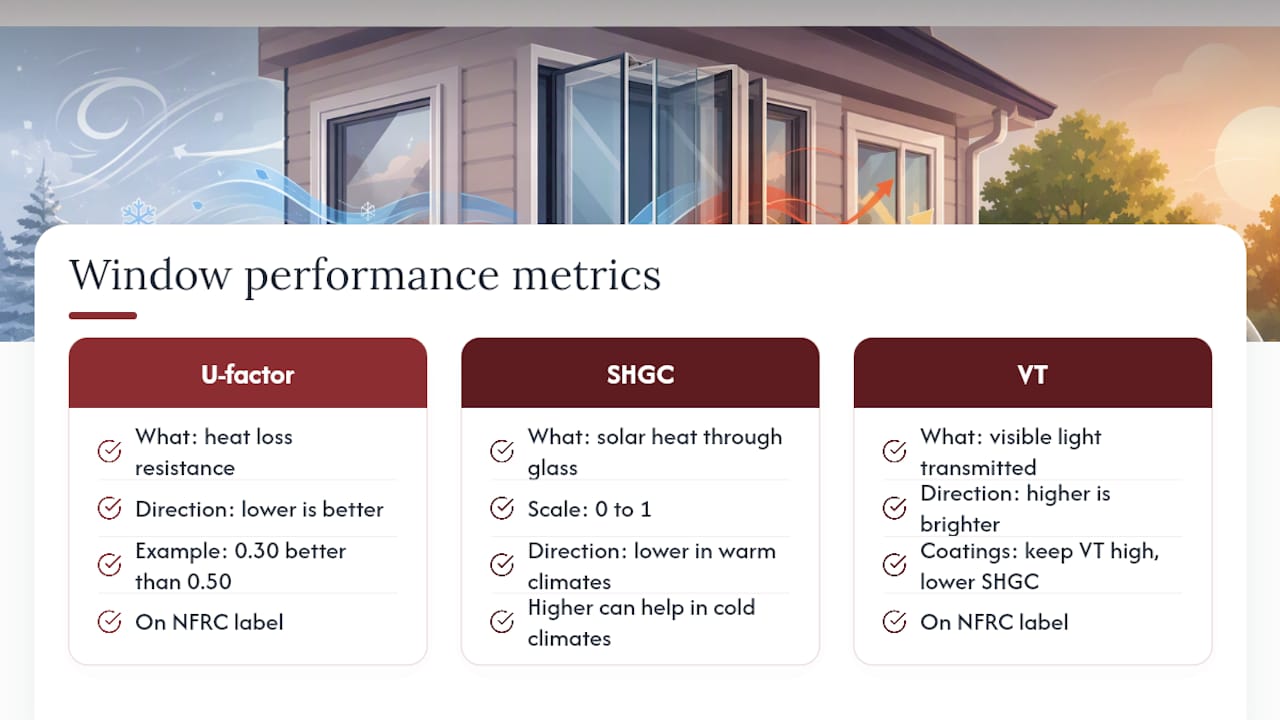
U-factor measures how well a window resists heat flow. Lower is better, full stop. A U-factor of 0.30 insulates better than one of 0.50.
SHGC measures how much solar heat passes through, on a scale from 0 to 1. Lower SHGC means less solar heat gain, which matters most for south and west-facing glass in warm climates. Higher SHGC can be a benefit in cold climates where passive solar warmth offsets heating costs.
Visible transmittance (VT) measures how much visible light gets through. This is where spectrally selective coatings earn their reputation: they can hold VT high while pushing SHGC low, so a room stays bright without turning into a greenhouse.
ENERGY STAR sets different U-factor and SHGC thresholds by climate zone rather than one national standard, so a window that qualifies in the Southern zone may fail to qualify in the Northern zone. Check your zone’s exact thresholds before assuming any “ENERGY STAR certified” label applies to your house.
Statistic to remember: Low-e coatings can cut window-related energy loss by up to 40 percent and reduce UV-driven fading by up to 75 percent compared with clear glass, according to Lawrence Berkeley National Laboratory research.
Every one of these figures should appear on the NFRC label attached to the window, not just in a sales brochure.
Film, Storm Windows, or Replacement: Which Retrofit Wins?
The right retrofit path depends on your budget, the condition of your existing frames, and how long you plan to stay in the house.
- Low-e window film. This is the lowest upfront cost option, and it can be applied to glass you already own. Basic films mostly control glare and modest solar heat. Advanced applied films with a room-facing low-e surface perform much better: LBNL/DOE testing measured a single-pane glass area improving from a U-factor of about 1.025 to roughly 0.58 after film application, which approaches double-pane performance. Professional installation matters here more than almost any other retrofit; a poorly applied film bubbles, peels, and fails early.
- Low-e storm windows. Installed over existing single-pane glass, these are a durable middle option. Field studies documented in ENERGY STAR’s storm window research show heating energy reductions of roughly 18 to 22 percent and cooling reductions near 9 percent, with payback often landing in the three to seven year range.
- Full replacement with low-e insulated glass units. This delivers the best long-term performance and is the right call when frames are rotted, seals have failed, or you are already renovating. Upfront cost is highest, but you also gain new hardware, better air sealing, and a fresh warranty.
Pro Tip: If you own a historic home where swapping out original frames isn’t an option, a low-e storm window combined with careful air sealing around the existing sash can rival replacement-level savings without touching the original glass, as explained in how new interior doors improve energy efficiency in older Portland homes.
Installation Risks: Condensation, Seals, and What to Ask Your Contractor
Soft-coat low-e glass has to live inside a sealed insulated unit. Expose it to air and humidity and the coating degrades within months, not years. That is the single biggest reason a homeowner should never accept a “soft-coat” retrofit film applied to an exposed single pane; only hard-coat films are rated for that kind of exposure.
Condensation is the other common failure point, especially with room-side low-e coatings in cold climates. Because the coating keeps radiant heat from escaping, the interior glass surface can run cooler than a standard window under certain humidity conditions, and moisture in the air condenses on it faster. If you notice fogging on the room side of a new window, check your indoor humidity level first. Anything above 40 to 50 percent relative humidity in winter is asking for trouble regardless of what coating you have.
Before signing a contract, ask your installer for:
- The NFRC label showing certified U-factor, SHGC, and air leakage for the exact model you are buying.
- Confirmation of the gas fill, typically argon, and how it is verified after installation.
- The spacer type used at the glass edge (warm-edge spacers outperform older aluminum spacers).
- Written warranty terms covering seal failure and coating degradation.
- Ventilation guidance for high-humidity rooms like bathrooms and kitchens.
Pro Tip: Keep a small hygrometer near your windows for the first winter after installation. If humidity creeps above 50 percent, run a bathroom fan longer or crack a window briefly. It is a five-dollar fix for what would otherwise look like a window defect.
A homeowner’s checklist for diagnosing interior window condensation walks through the difference between normal seasonal fogging and a genuine seal failure.
What Jsignorexteriors Sees on Real Window Projects
Most low-e upgrade calls Jsignorexteriors fields fall into three buckets: homes with original single-pane sash that never got insulated glass, units with cloudy or fogged glass from a failed seal, and older historic properties where the frame itself has to stay intact. A typical project runs through measuring, ordering the insulated glass units to spec, installation, and a final inspection of seals and operation. If your glass looks foggy between the panes, that is almost always a seal failure, not a coating problem, and it usually means replacement rather than retrofit.
Is Low-E Glass Environmentally Sustainable?
Manufacturing low-e glass does carry a real footprint. Sputtering soft-coat layers requires vacuum deposition equipment that runs on electricity, and pyrolytic hard coats get applied during the high-temperature float glass process, which already consumes significant energy. Neither process is free, and glass itself is energy-intensive to produce from raw silica.
The offset comes over the life of the window. A low-e coated unit that cuts a home’s heating and cooling energy use pays back its own manufacturing footprint many times over across a typical 20 to 30 year service life, since HVAC energy use, not manufacturing, dominates a window’s lifetime environmental impact in almost every climate.
Recyclability is where low-e glass gets more complicated than plain glass. The metallic layers in a coating mean insulated glass units cannot simply go into standard glass recycling streams the way a soda bottle can. Most glass recyclers require the coating and any laminate or spacer material to be separated first, which limits how much low-e glass actually gets recycled at end of life versus landfilled. Some manufacturers now offer take-back programs for old sash and frames, though availability varies widely by region and brand.
The practical takeaway for homeowners: a coating that lowers your energy bill for two or three decades is doing real environmental work regardless of what happens to the glass afterward. If sustainability is a priority beyond energy savings, ask your installer whether the manufacturer offers any glass reclamation option, and favor products with recycled content in the frame material itself, since aluminum and vinyl frames often carry post-consumer recycled content that glass coatings cannot.
Does Low-E Coating Work With My Window Frame Material?
Low-e coatings themselves are applied to the glass, not the frame, so the coating technology works the same regardless of whether your frames are vinyl, wood, fiberglass, or aluminum. What changes is how well the whole window performs once you account for the frame’s own conductivity.
Aluminum frames conduct heat readily, which can undercut the benefit of an excellent low-e coating if the frame lacks a thermal break, a strip of non-conductive material separating the interior and exterior metal. Vinyl and fiberglass frames insulate better on their own, so a low-e coated pane in a vinyl frame typically shows a lower whole-window U-factor than the same glass in an untreated aluminum frame. Wood frames sit in between, offering decent natural insulation but requiring more maintenance over time.
Glazing type matters just as much as frame material. Hard-coat low-e can go into single-pane storm windows or double-pane units. Soft-coat low-e needs a sealed insulated glass unit, whether that is a standard double-pane or a triple-pane configuration. Triple-pane windows with two low-e coated surfaces are increasingly common in the coldest climate zones, since the extra pane and coating combination pushes U-factor lower than double-pane options can achieve alone.
If you are specifying glazing for a storefront, mixed-use building, or commercial retrofit, the frame and glazing decisions get more involved, particularly around structural glazing and larger unit sizes. A detailed breakdown of storefront window glazing covers how spacers, seals, and frame systems interact on those larger installations. Whatever the frame material, ask for the NFRC rating on the assembled window, not just the glass, since the number that matters is how frame and glazing perform together.
How Should You Clean Low-E Coated Windows?
Low-e coatings on the exterior or air-space side of a sealed unit need no special cleaning routine; ordinary glass cleaner and a soft cloth handle them fine, since the coating sits protected between panes or on a durable hard-coat surface.
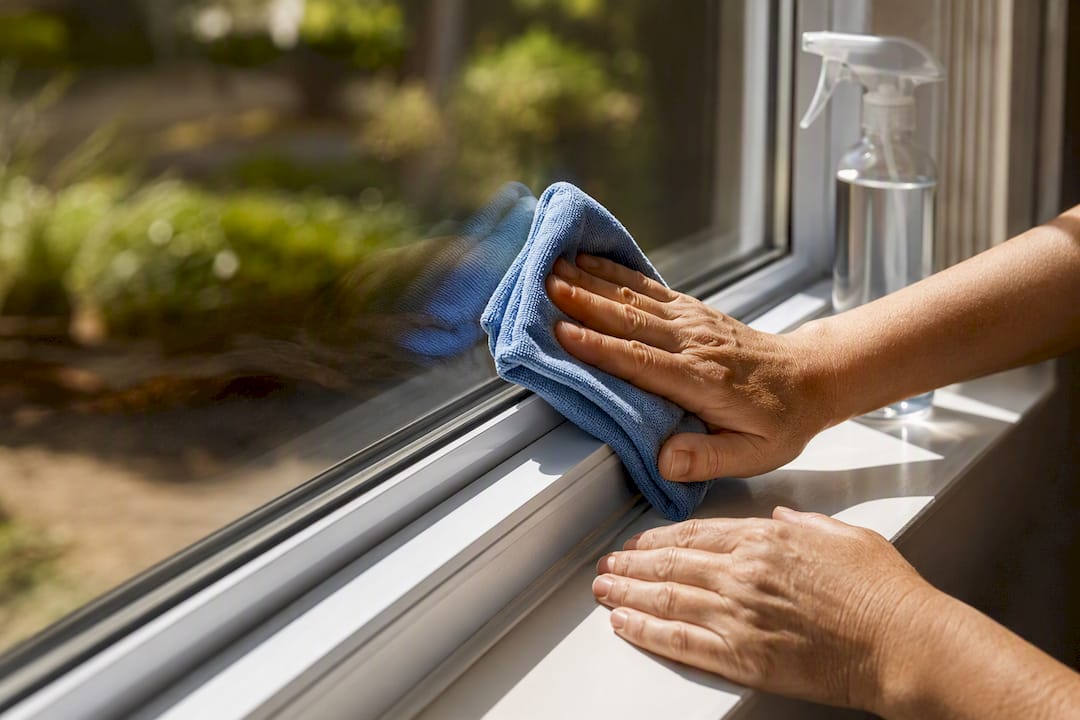
The one place to be careful is any exposed low-e surface, such as a room-facing coating on a storm window or applied film. Avoid abrasive pads, razor blades, or ammonia-based cleaners on these surfaces, since they can scratch or chemically degrade a coating that is not protected by a second pane. A microfiber cloth with a mild, ammonia-free glass cleaner is the safer standard choice.
Never use metal scrapers on low-e film retrofits, even to remove stubborn debris. If a film has bubbled, peeled at the edges, or developed a haze, that is a sign of installation failure or age, not something a different cleaning product will fix. Replacement of the film, not more aggressive cleaning, is the right response.
For sealed insulated glass units, keep an eye on the weep holes and drainage tracks in the frame rather than the glass itself. Debris buildup there causes water pooling that eventually stresses the seal, which is a more common cause of coating failure than anything related to cleaning technique. A quick seasonal check, brushing out tracks and confirming drainage, does more for coating longevity than any glass cleaner on the market.
Avoid pressure washers directed at window seals, since the force can drive water past the seal and accelerate the same condensation and fogging problems discussed earlier.
How to Prioritize Window Work on a Budget
Fix failing seals and air leaks first. A fogged insulated glass unit or a drafty frame wastes more energy than any coating choice can offset, so that repair or replacement comes before anything else. Second, if full replacement is not in the budget yet, retrofit remaining single-pane windows with low-e storm windows or professionally applied films; the energy savings are well documented and the cost is a fraction of new windows. When budget allows, replace with NFRC and ENERGY STAR rated low-e insulated units matched to your climate zone.
— Adam
Ready for Windows That Actually Perform for Your Climate?
Choosing between a film, a storm window, and full replacement is only half the job. Getting the U-factor, SHGC, and gas fill specification right for a Connecticut winter and summer is the other half, and it is where a lot of retrofit projects go wrong. Specialized contractors handle specification work directly, checking existing frames, seals, and humidity conditions on-site before recommending whether a retrofit or a full swap makes sense for a given budget.

A consultation can include an on-site review of current glazing, an NFRC spec comparison for climate-matched U-factor and SHGC targets, and installation by licensed crews who handle the gas fill and spacer details that make or break performance. If your windows are drafty, fogged, or original to a house built decades ago, schedule a window replacement estimate and get a straight answer on whether retrofit or replacement fits your situation before you spend a dollar.
Where to Verify Low-E Specs and Ratings
For the technical detail behind any recommendation in this guide, go straight to the source. The ENERGY STAR product list for storm windows shows certified models by climate performance. NFRC explains how to read the U-factor, SHGC, and air leakage label on any window you are considering. DOE’s guide to energy efficient windows covers climate-based coating selection in more depth than any single article can.
Sources
- Materials, processes, and issues in low emissivity and solar control coatings (LBNL)
- ENERGY STAR Residential Windows, Doors, and Skylights specification (v7)
FAQ
Can You Get a Low-E Coating Added to Existing Windows?
Yes. Low-e retrofit films can be applied directly to existing glass, and low-e storm windows can be installed over single-pane units without replacing the original sash. Full replacement with a factory-sealed low-e insulated glass unit is the only option that requires swapping out the existing window entirely.
What Are the Downsides of Low-E Glass?
Low-e coated glass costs more upfront than clear glass, and soft-coat versions must stay sealed inside an insulated unit or the coating degrades quickly. Some homeowners also notice a slight color shift or reflectivity change compared with untreated glass, though spectrally selective coatings minimize this while keeping visible light transmission high.
Is Low-E Glass Really Worth the Cost?
For most climates, yes. Berkeley Lab research links low-e coatings to energy loss reductions of up to 40 percent compared with clear glass, and storm window retrofits alone have shown heating savings of 18 to 22 percent in field studies. The payback period depends on your current windows, climate zone, and whether you choose film, storm windows, or full replacement.
How Can You Tell If a Window Already Has Low-E Coating?
Check the NFRC label on the window itself; it lists U-factor, SHGC, and whether a low-e coating is present. Without a label, a simple trick is holding a flame near the glass at night. A low-e coated pane shows a slightly different flame color on one or more of its reflections compared with the others, since the coated surface reflects differently than uncoated glass.