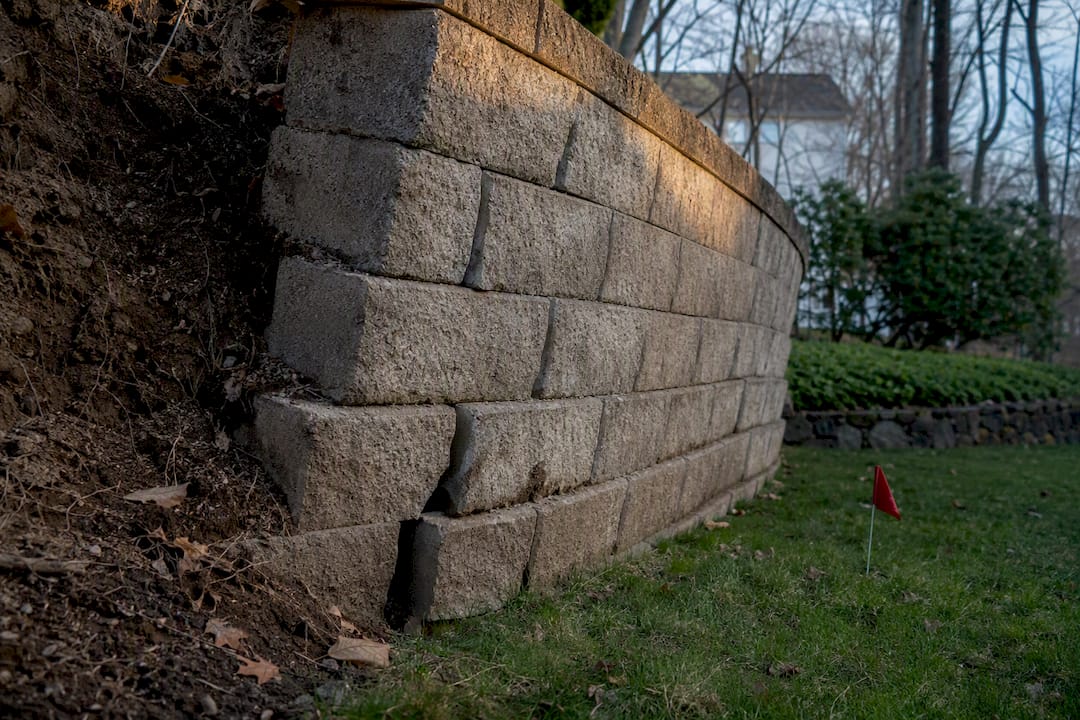
A significant forward lean, horizontal cracking, large bulges, soil washing out at the base, or exposed and loose blocks all mean a retaining wall may be failing right now. If you see any of these, keep people and vehicles away from the area, photograph and measure what you see, remove any added weight near the top of the wall, and call a professional for an assessment before doing anything else.
TL;DR:
- Most failures originate from poor drainage, undersized footings, or freeze-thaw damage, which accelerate material deterioration and structural instability.
- Visible signs like forward lean, bulging, or wide horizontal cracks require immediate professional evaluation, especially if cracks are wider than 3 millimeters or the wall shifts noticeably.
- Drainage issues, such as clogged weep holes or standing water at the base, are the most common culprits and should be addressed with inspections and potential retrofit before structural failure.
- Cracks caused by freeze-thaw cycles or exposed rebar indicate structural weakness, requiring prompt repair to prevent collapse, especially in climates with cold winters.
- Regular inspections twice a year, along with after storms, and recording measurements from fixed points help catch slow movements before they escalate into urgent repairs.
Table of Contents
- What Are the Warning Signs of Retaining Wall Failure?
- Why Do Leaning, Bulging, and Cracked Walls Mean Trouble?
- How Do Drainage Problems Cause Retaining Wall Failure?
- What Do Spalling and Exposed Rebar Mean for Wall Strength?
- What Ground Changes Signal a Failing Retaining Wall?
- What Should You Do Right Now if Your Wall Is Failing?
- Can a Broken Drainage Pipe Cause Retaining Wall Failure?
- Does Foundation or Footing Damage Show Up in the Wall Above?
- How Often Should You Inspect a Retaining Wall for Failure Signs?
- What Actually Causes Retaining Walls to Fail?
- When Should You Call a Structural Engineer vs. a Contractor?
- A Contractor’s Take on Reading Retaining Wall Distress
- Get a Professional Assessment Before a Small Sign Becomes a Big Repair
- Sources
- FAQ
What Are the Warning Signs of Retaining Wall Failure?
Not every crack means collapse is coming, but some signs demand action within hours, not weeks. Here’s a working checklist you can run through in ten minutes, organized by how urgently each one needs a response.
- Visible forward lean (Immediate) — Stay back and call a structural engineer today; leaning walls can fail without further warning.
- Bulging or bowing face (Immediate) — Keep people and cars away from the base and top of the wall.
- Horizontal cracks (Urgent) — Schedule a professional assessment within the week; these often signal bending failure.
- Wide or rapidly growing cracks (Urgent) — Measure and re-check weekly; call sooner if width increases.
- Blocked or dry weep holes after rain (Urgent) — Clear visible debris and monitor for continued dryness.
- Soil washout or erosion at the toe (Urgent) — Avoid digging near the base yourself and report it to a contractor.
- Separation between the wall and a patio, driveway, or foundation (Urgent) — Note the gap width and watch for growth.
- Displaced blocks, loose stones, or missing mortar (Urgent) — Avoid climbing on or near the wall until inspected.
- Efflorescence or persistent damp patches (Monitor) — Track whether staining spreads after storms.
- Trees or shrubs rooted near the wall (Monitor) — Watch for new cracks near root zones and consider removal.
Take photos from a fixed spot and jot down measurements of any lean or crack width. That record is exactly what an inspector needs to judge how fast a retaining wall failure is progressing.
Why Do Leaning, Bulging, and Cracked Walls Mean Trouble?
A wall that leans or bulges outward is being pushed by soil behind it faster than it can resist. That lateral earth pressure is the same force the wall was built to hold back, and once it wins, the wall rotates forward or bows at its weakest point, often near mid-height where bending stress peaks.
Horizontal cracks are the ones to worry about most. They usually mean the wall is bending under load and, in reinforced concrete or block walls, can point to corroding rebar losing its grip. Vertical or hairline cracks are far more common and often cosmetic, tied to normal curing or minor settling rather than active failure, according to engineering guides on retaining wall warning signs.
Measurement gives you an objective read instead of a guess:
- A crack you can slide a credit card into (roughly 3 millimeters) or wider deserves professional attention.
- Any lean visible to the naked eye, without a level or string line, is already significant, since engineering deflection guidance allows for only tiny amounts of movement relative to wall height.
- A change you can measure week to week, rather than year to year, is an urgent signal.
Pro Tip: Drive a small stake into the ground a fixed distance from the wall, then measure from the stake to the wall face at the same height every two weeks. Contractors use this exact low-cost method to track rate of change between visits, and it turns “it looks worse” into a number you can act on.
How Do Drainage Problems Cause Retaining Wall Failure?
Water is the quiet cause behind most collapses. When weep holes clog or backfill soil turns to mud after rain, water has nowhere to go and builds up hydrostatic pressure against the back of the wall, adding a load the structure was never designed to carry. Drainage failure is the single most common root cause of premature wall failure, according to inspection guidance on retaining wall damage.
Watch for these signals after the next rainstorm:
- Weep holes that used to trickle water but now stay dry, suggesting a blocked drain line behind the wall.
- Damp patches or dark streaks that appear and don’t dry out for days.
- White, chalky mineral deposits called efflorescence, which mean water has been passing through the wall and evaporating on the surface.
- Moss or plant growth inside mortar joints, a sign of chronic dampness.
- Standing water pooling at the base, or “toe,” of the wall instead of draining away.
Clear leaves and dirt from any visible drain outlets, check that the ground behind the wall still slopes away from it, and note whether these signs worsen after storms. A retaining wall drainage retrofit can relieve that pressure before it does more damage.
What Do Spalling and Exposed Rebar Mean for Wall Strength?
Spalling is when the surface of concrete or brick flakes and pops off, usually because water trapped inside the material freezes, expands, and pushes the surface apart. Each freeze and thaw cycle enlarges the internal voids a little more, and over a winter or two that slow damage becomes visible, according to a technical bulletin on freeze-thaw damage.
- Flaking or crumbling concrete surfaces, especially near the top of the wall where water sits longest.
- Rust stains bleeding through the face, meaning the rebar underneath is corroding.
- Exposed reinforcement bars visible through cracked or missing concrete.
- Loose blocks, missing mortar, or gaps you can wiggle by hand.
- In timber walls, soft or spongy wood, fungal growth, or rot at the ground line.
Peer-reviewed modeling of masonry under repeated freeze-thaw exposure shows measurable loss of compressive strength and ductility over many cycles, which is why surface flaking that keeps spreading is a structural concern, not just a cosmetic one. A patch job that ignores exposed rebar or ongoing water intrusion tends to fail again within a season or two.
What Ground Changes Signal a Failing Retaining Wall?
Sometimes the wall face still looks fine, but the ground around it tells a different story. A dip or depression forming behind the wall, soil visibly washing away at the toe, an exposed footing you didn’t used to see, or new cracks in a nearby driveway or patio all point to movement happening below the surface.
- Sunken or soft spots in the lawn behind the wall.
- Soil or gravel washing out from underneath the base after rain.
- Cracks appearing in adjacent concrete slabs, walkways, or driveways.
- A footing that’s become visible where it used to be buried.
One mechanism worth knowing about is “piping,” a form of internal soil erosion where water carves hidden channels through the backfill. Piping can hollow out the ground behind a wall for months with almost no visible warning, then produce a sudden collapse once the tunnel finally caves in. If you notice ground-level changes, treat the situation as urgent even if the wall face itself looks stable.
What Should You Do Right Now if Your Wall Is Failing?
- Cordon off the area and keep people, pets, and vehicles away from both the top and base of the wall.
- Remove anything heavy near the top edge, such as parked cars, stacked materials, or planters.
- Do not dig, dig out, or add fill at the toe of the wall; disturbing the base can trigger sudden movement.
- Photograph the wall from several angles and record date-stamped measurements of any lean or crack width.
- Note recent weather, nearby excavation, or construction that might have changed drainage or loading.
- Call a licensed structural engineer or a qualified masonry contractor, especially if the wall supports a driveway, patio, or the foundation of a building.
Pro Tip: Before you call, write down the wall’s approximate age, material, and height. That single detail helps a contractor gauge urgency over the phone and arrive prepared instead of guessing.
Can a Broken Drainage Pipe Cause Retaining Wall Failure?
Standing water and dry weep holes aren’t the only drainage red flags. A cracked or disconnected drain pipe behind the wall, sometimes part of a perforated subdrain system installed during original construction, can dump water directly into the backfill instead of carrying it away safely. That failure mode is harder to spot than a clogged weep hole because the surface may look dry even while water pools deep in the soil.
Look for these secondary indicators of a drainage system breakdown:
- A sudden increase in nearby soil settling or soft ground, even without heavy rain in recent days.
- Sinkholes or sudden depressions forming near where a drain line runs, which can mean a pipe has collapsed or separated underground.
- Water surfacing at an unexpected spot lower down the slope, suggesting the original outlet is blocked and water has found a new path.
- A musty smell or unusually lush, fast-growing grass in one section of the yard, both signs of chronic underground moisture.
Older Connecticut properties, especially those with clay or corrugated drain pipe installed decades ago, are more prone to this kind of hidden failure simply because the materials degrade with age. If a drainage retrofit was never done during the wall’s life, a broken pipe can go unnoticed for years while it quietly saturates the backfill. Catching it early, before it shows up as a bulge or crack, is one of the best returns on a single inspection visit.
Does Foundation or Footing Damage Show Up in the Wall Above?
A retaining wall is only as stable as what it sits on. If the footing beneath it settles unevenly, erodes, or was undersized to begin with, the wall above will show the strain even though the actual problem is invisible underground.
Watch for a wall that leans or tilts along only part of its length rather than uniformly, since uneven movement usually points to a footing issue rather than simple soil pressure. Stair-step cracking, where a crack zigzags along mortar joints instead of running straight, often means one section of the footing has settled more than its neighbor. A visible gap opening up between the base of the wall and the ground it sits on is another footing red flag, as is a wall that seems to be rotating around one end rather than bowing evenly.
Footing problems tend to get worse gradually and then jump, since soil under a footing rarely erodes evenly. That’s part of why documenting movement over time matters more for footing-related failure than for simpler drainage issues. If you notice asymmetric leaning or stair-step cracking, mention it specifically when you call a contractor, since it usually changes the type of repair needed from surface patching to underpinning or partial rebuild.
How Often Should You Inspect a Retaining Wall for Failure Signs?
Twice-a-year inspections, once in spring after frost has left the ground and once in fall before winter freeze cycles begin, catch most developing problems before they become emergencies. Add a check after any major storm, since heavy rain is when hydrostatic pressure spikes and when new cracks or washout are most likely to appear.
A useful inspection routine takes fifteen minutes and covers the same ground every time:
- Walk the full length of the wall from both the top and bottom side.
- Check weep holes for flow within a day or two after rain.
- Run your eye along the top of the wall for any new lean compared to your last check.
- Look at the base for fresh soil washout, gaps, or standing water.
- Photograph from the same fixed spots each visit so changes are easy to compare side by side.
Walls older than 20 years, or any wall taller than about four feet holding back a driveway or structure, warrant closer attention and a professional look every few years even without visible symptoms. Consistency matters more than frequency here. The same phone photo taken from the same spot every six months will reveal slow lean or crack growth far better than an occasional worried glance.
What Actually Causes Retaining Walls to Fail?
Most of the symptoms covered so far trace back to a short list of underlying causes, and knowing which one applies to your wall changes the fix. Poor original drainage design tops the list. Walls built without adequate weep holes, gravel backfill, or a subdrain system are set up to accumulate water pressure from day one, regardless of how well they were built otherwise.
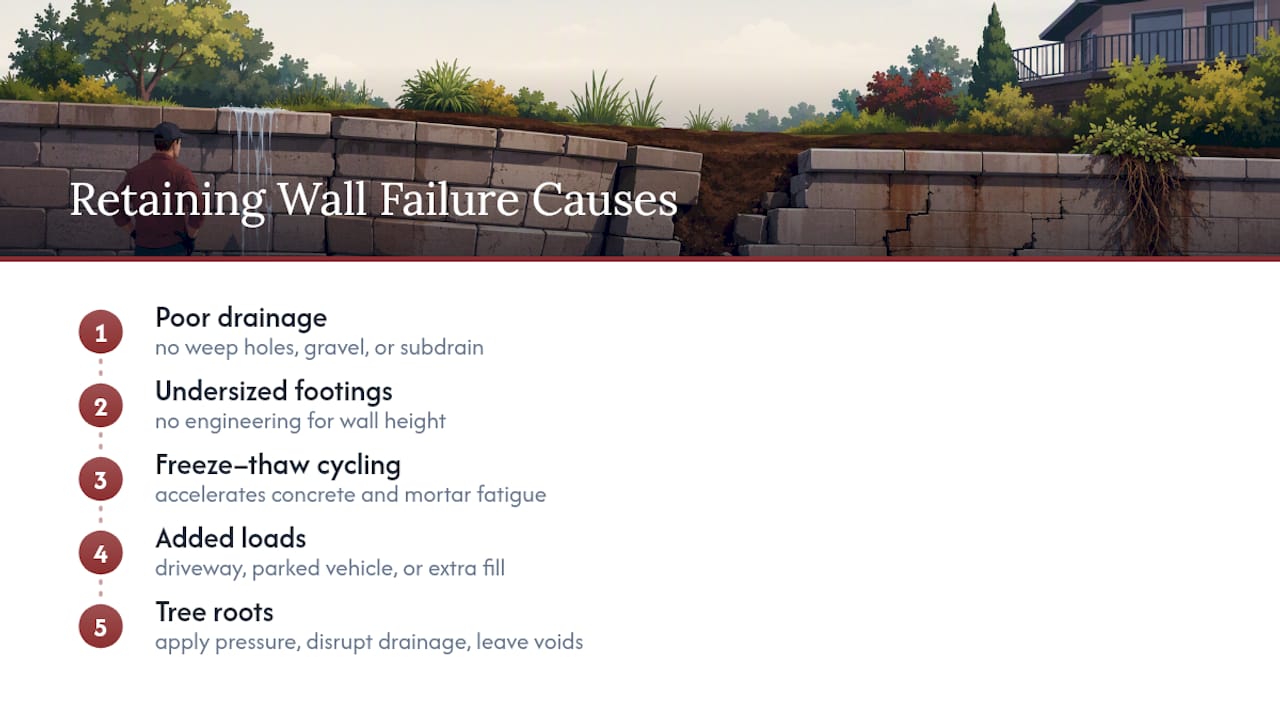
Undersized footings or walls built without engineering input for their height are another common root cause, particularly on older properties or additions where a homeowner or previous contractor built a wall taller than local code anticipated. Freeze-thaw cycling, especially in a Connecticut winter, accelerates material fatigue in concrete and mortar that would otherwise last decades longer in a milder climate.
Overloading is often overlooked. A wall designed to hold back plain soil can be pushed past its limit by a new driveway, a parked vehicle, or added fill placed above it years after construction. Tree roots near the top of a wall add both physical pressure and drainage disruption as they grow and eventually decay, leaving voids behind. Recognizing which of these causes fits your situation helps a contractor recommend a rebuild, a drainage retrofit, or targeted masonry repair instead of a one-size-fits-all fix.
When Should You Call a Structural Engineer vs. a Contractor?
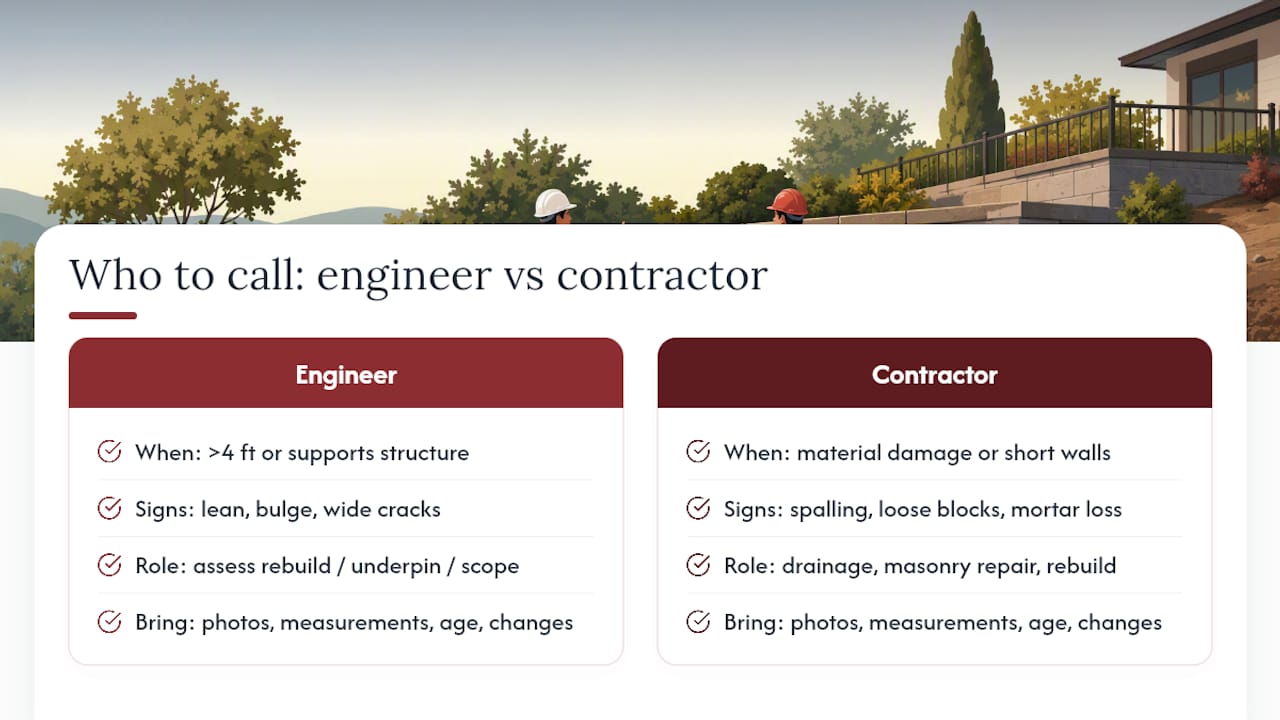
Call a structural engineer first when the wall is taller than four feet, supports a driveway, patio, deck, or the foundation of a building, or shows any of the immediate-level signs from the checklist above, including visible lean, bulging, or wide horizontal cracks. An engineer’s assessment establishes whether the wall needs a full rebuild, underpinning, or a more limited repair, and that assessment should come before anyone commits to a repair scope or price.
A qualified masonry contractor is the right first call for material-level damage, spalling, loose blocks, mortar loss, or drainage retrofits, on shorter walls or when the movement signs fall into the monitor category rather than urgent or immediate. Many situations benefit from both: an engineer to confirm the structural cause and scope, and a contractor to carry out the drainage work, rebuild, or masonry repair once that scope is defined.
Bring the same documentation to either professional. Photos from fixed reference points, measured crack widths and lean, the wall’s approximate age and material, and any recent changes nearby, like new construction, a new driveway, or an unusually wet season, all help them triage the situation accurately on the first visit instead of needing a second trip just to gather information.
A Contractor’s Take on Reading Retaining Wall Distress
Three checks catch most problems before they become emergencies: a fixed photo reference point checked monthly, a crack measured with something as simple as a coin or credit card, and a quick test of whether weep holes still drain after rain. In three decades of exterior and masonry work, the most common mistake is patching the visible crack while ignoring the drainage problem behind it, which almost always reopens the same crack within a year. Planting a tree at the top of a wall and dismissing a small crack because “it’s not getting bigger fast” are the other two habits worth breaking. A professional assessment costs far less than an emergency rebuild.
— Adam
Get a Professional Assessment Before a Small Sign Becomes a Big Repair
The company has spent many years handling exterior and masonry work, and retaining wall trouble is one of the most common calls that starts small and gets expensive fast if it waits. Our masonry team assesses the wall itself along with the drainage behind it, since the two are almost always connected, and that assessment comes before any firm repair scope or quote so you know exactly what you’re paying for and why.

Whether the fix turns out to be a drainage retrofit, repointing and block replacement, or a full rebuild, we walk you through the reasoning behind the recommendation in plain language. If you’ve spotted any of the signs covered here, leaning, cracking, bulging, or water where it shouldn’t be, visit our masonry services page to schedule an inspection and get a clear read on what your wall actually needs.
Sources
- The Freeze-Thaw Cycle in Concrete and Brick Assemblies (Technical bulletin)
- 7 Warning Signs of Retaining Wall Failure – ISTA Engineers
- Retaining Wall Damage — InspectApedia
- Modeling freeze–thaw damage on masonry (MDPI, 2021)
FAQ
Who Is Responsible for a Failing Retaining Wall?
Responsibility generally falls to the property owner where the wall sits, though shared or boundary walls can involve neighboring owners depending on local property lines and any agreements on record; a survey or title review can clarify disputed cases.
Will All Retaining Walls Eventually Fail?
Every retaining wall degrades over time from soil pressure, water, and weather, but proper drainage, periodic inspection, and prompt repair of early signs can keep a well-built wall functional for many decades rather than failing on a fixed timeline.
What Is the Typical Lifespan of a Retaining Wall?
Lifespan depends heavily on material and drainage design, with well-drained concrete or block walls often lasting several decades, while walls with poor original drainage or freeze-thaw exposure can show serious deterioration in a fraction of that time.
What Is the 1/3 Rule for Retaining Walls?
The 1/3 rule is a rough construction guideline suggesting that roughly one-third of a wall’s total height should be buried or embedded below grade for stability, though the exact ratio a project needs depends on soil type, wall height, and load, which is why an engineer’s calculation matters more than the rule of thumb on taller or load-bearing walls.