The safest way to handle roof moss removal is a soft-wash chemical treatment, not a pressure washer. Apply an approved product, let it dwell so the moss dies and loosens, then rinse gently or brush it away by hand. Pressure washing strips protective granules and can void your shingle warranty outright. Skip prevention afterward, and you’ll be back on the ladder in a few years.
TL;DR:
- Using a chemical soft wash is the safest method, and pressure washing can strip protective granules and void warranties.
- Moss holds moisture that can lead to leaks and roof damage, but high-pressure cleaning accelerates granule loss and shingle deterioration.
- Proper moss removal involves careful application, patience for it to die, and gentle removal with brushes or blowers, avoiding pressure washers entirely.
- Preventive measures like zinc or copper ridge strips and trimming overhanging branches can reduce moss recurrence, which typically costs less than repeated treatments.
- Call a professional if your roof has a steep pitch, widespread moss, exposed shingles, or if safety concerns arise, with costs generally ranging from $400 to $800.
Table of Contents
- Why Roof Moss Damage Is Worse Than It Looks
- How to Remove Moss from Shingles Safely
- Which Moss Removal Products Actually Work?
- What Actually Prevents Moss on Roofs?
- When Should You Call a Roofing Professional?
- What 30 Years on Connecticut Roofs Has Taught Us
- Sources
Why Roof Moss Damage Is Worse Than It Looks
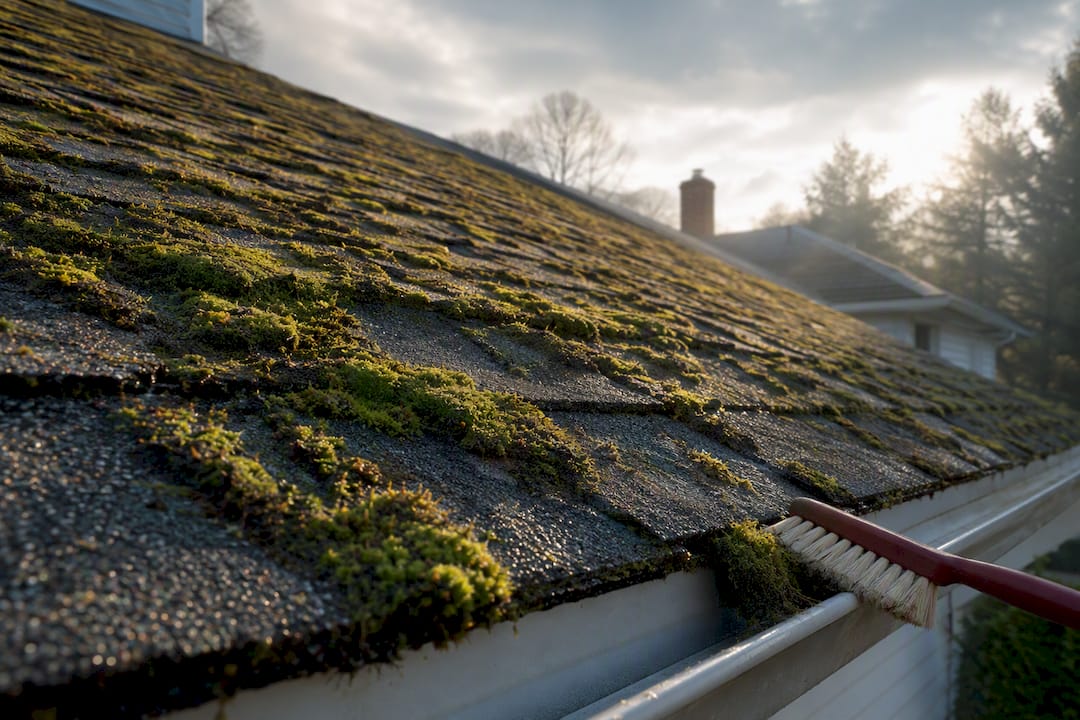
Moss does more than make your roof look neglected. It acts like a sponge, holding moisture against the shingle surface long after the rest of the roof has dried out. That trapped water works its way under shingle tabs, lifting edges and creating entry points for leaks, especially during wind events when a loosened tab has nothing left to grip.
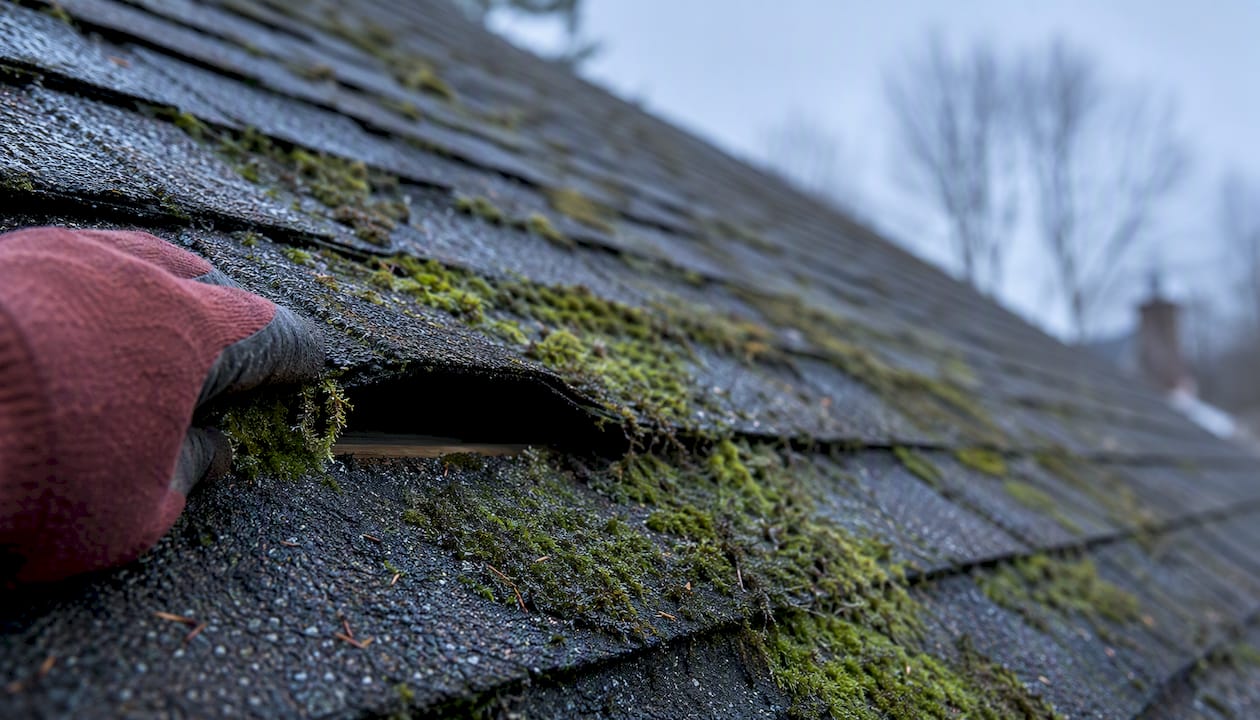
The bigger mistake homeowners make isn’t ignoring the moss. It’s reaching for a pressure washer to fix it fast. High-pressure spray strips the mineral granules that protect shingles from UV damage, and once those granules are gone, they don’t come back. The Asphalt Roofing Manufacturers Association specifically warns against pressure washing asphalt shingles for this reason, and manufacturers like GAF, Owens Corning, and CertainTeed can deny warranty claims if granule loss traces back to aggressive cleaning.
A little judgment goes a long way here:
- Thin, scattered moss patches on a shade side are worth monitoring, not panicking over.
- Thick mats that raise shingle edges or trap standing debris need treatment soon, before the next heavy rain or freeze cycle.
- Any spot where you can see daylight-colored granule loss around moss growth means the damage has already started.
How to Remove Moss from Shingles Safely
Getting this right comes down to sequence: protect the property, apply treatment, wait, then remove gently. Rushing the dwell time or skipping straight to scrubbing is how homeowners end up doing more harm than the moss ever would.
1. Pick the right day. An overcast, mild day with no rain in the forecast for 24 to 48 hours works best. Wind kicks spray where you don’t want it, and direct sun can cause some chemical treatments to evaporate before they’ve had time to work.
2. Protect what’s below. Cover shrubs, flower beds, and any plants near the drip line with plastic sheeting, and pre-wet grass and landscaping close to the house. Chemical runoff from bleach or quaternary ammonium products can scorch foliage fast, and the Clean Water Services fact sheet treats plant protection as a non-negotiable step, not an afterthought.
3. Set up for safety, not speed. Use a stabilized extension ladder, have a spotter on the ground, and wear non-slip shoes and safety glasses. If your roof pitch feels steep or the moss coverage is heavy, that’s your cue to stop and call a professional instead of improvising.
4. Apply the treatment. A pump sprayer or hose-end applicator works for most homeowner-grade products. Dwell times vary by product, but many treatments need 24 to 48 hours to fully kill the moss down to the root structure.
5. Let it die before you touch it. Moss will brown and shrink as it dies. This is the point where it loosens its grip on the shingle surface, which is exactly why patience here saves your roof.
6. Remove gently. A soft-bristle brush or a leaf blower on a low setting clears dead moss without gouging granules loose. Never scrape with a metal tool, and never bring out the pressure washer, even on the “low” setting.
7. Rinse downhill. A garden hose with a fan-spray nozzle, working from the ridge down, clears residue without forcing water under the shingles.
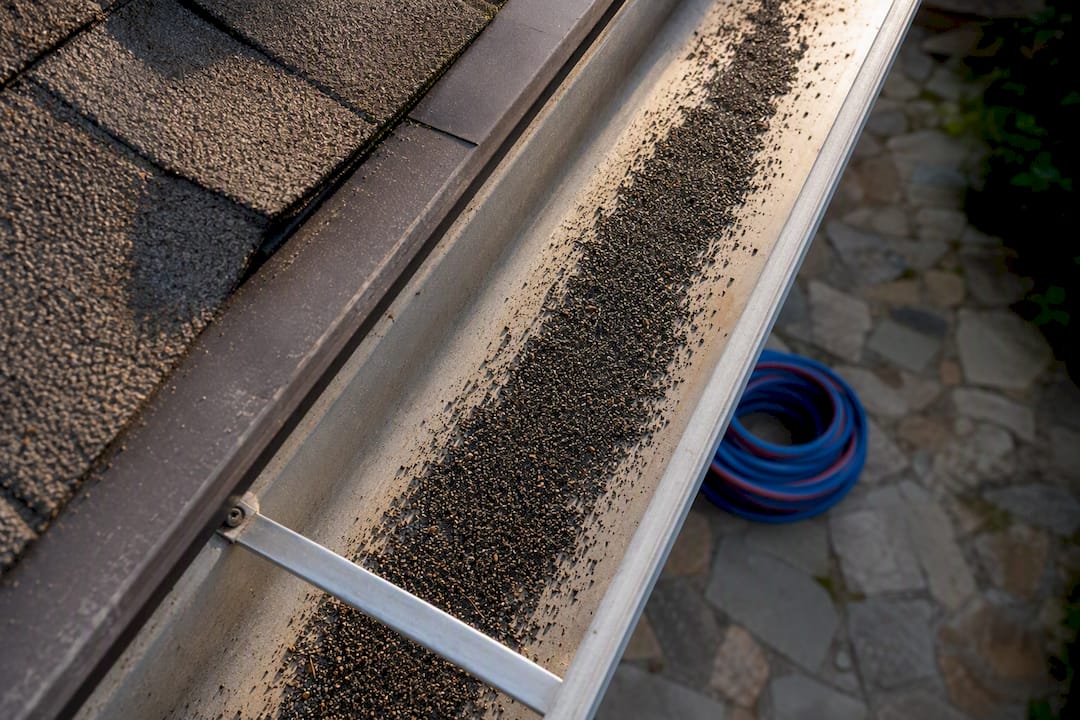
8. Check your work. Look in the gutters for excess granule buildup, a sign the roof surface took more abuse than it should have. Inspect for any shingle tabs that stayed lifted after the moss cleared, since those spots may need a repair before they turn into a leak. If flashing around a chimney or vent looks compromised, it’s worth understanding what flashing does and why it’s often the first thing to fail after years of moss damage.
Pro Tip: Mark stubborn patches with painter’s tape before you start rinsing. It’s easy to forget which spots needed a second treatment once the roof is wet and everything looks the same color.
Which Moss Removal Products Actually Work?
Homeowners have a handful of realistic options, and each one trades off speed against how long it keeps moss from coming back.
- Sodium hypochlorite (diluted bleach): Fast-acting, inexpensive, and the method most extension guidance references, but its residual protection fades within a season or two.
- Zinc sulfate: Slower to work but leaves behind a longer-lasting inhospitable surface for new spores.
- Quaternary ammonium compounds (quats): Commercial products in this category, often marketed as no-rinse mossicides, tend to offer better residual control than bleach with less risk to nearby plants.
- Potassium salts: A gentler option often marketed as a plant-safer alternative, though it may need more frequent reapplication.
Bleach dilution ratios matter more than people assume. Going stronger than the label recommends doesn’t kill moss any faster, it just increases the chance of scorching your lawn or bleaching nearby siding. Whatever product you choose, read the label for pre-wetting instructions, required PPE, and runoff precautions before you mix anything.
DIY treatment materials for an average residential roof typically run $30 to $150, a small price compared to what professional cleaning or shingle replacement costs.
What Actually Prevents Moss on Roofs?
Cleaning moss without addressing why it grew back is a cycle homeowners repeat every two to four years. The fix that breaks that cycle is usually cheaper than another round of treatment.
Zinc and copper strips installed along the ridge release trace metal ions with every rain, creating conditions moss and algae can’t tolerate. Zinc strips cost less upfront and remain one of the more underused, high-return prevention steps available, while copper strips cost more but tend to outlast them.
- Trim overhanging branches to cut down shade and let the roof dry faster after rain.
- Clear gutters and valleys regularly so debris doesn’t hold moisture against the shingle line.
- Consider algae-resistant shingles at your next re-roof if your property sits under heavy tree cover.
Shade and moisture are the two conditions moss needs most, and Oregon State University’s research points to canopy trimming and better drainage as the most cost-effective fixes available to homeowners.
| Prevention Method | Typical Cost Range | Expected Service Life |
|---|---|---|
| Zinc ridge strips | Low upfront cost | Several years before replacement needed |
| Copper ridge strips | Higher upfront cost | Longer than zinc, often a decade or more |
| Tree trimming / canopy management | Varies by scope | Ongoing, needs periodic upkeep |
Routine roof checks catch moss regrowth and other wear early, which is the whole idea behind preventive roof maintenance rather than reactive fixes.
When Should You Call a Roofing Professional?
Some jobs are worth handling yourself. Others aren’t, and knowing the difference protects both your safety and your shingles.
- Steep roof pitch. If you wouldn’t feel steady standing on it dry, don’t attempt it wet with cleaning solution involved.
- Widespread moss mats covering large sections rather than isolated patches usually mean the underlying deck has been damp for a while.
- Visible shingle lifting or granule loss signals damage already in progress, not just a cosmetic issue.
- Hard-to-reach areas, like a roof with limited ladder access or multiple stories.
- General discomfort with heights or ladder work. There’s no shame in this one. Oregon State Extension specifically recommends professional help when roof access poses a hazard.
Professional cleaning for an average 2,000 square foot roof typically runs $400 to $800, with ridge-strip installation as an add-on. Steeper pitches, harder access, and heavier moss coverage push costs toward the higher end. A warranty-safe roof cleaning service typically runs in a similar range and should always use soft-wash methods, protect landscaping, and carry proof of insurance before anyone climbs a ladder. Ask any contractor whether they pressure wash, how they protect plants, and whether they offer ridge-strip installation as part of the service.
What 30 Years on Connecticut Roofs Has Taught Us
The single most common mistake we see isn’t moss itself, it’s homeowners reaching for the wrong tool to remove it. A pressure washer looks like the fast solution, and it is, right up until it strips granules that took years to wear down naturally and shortens the roof’s remaining life by doing so.
The other mistake is treating moss removal as a one-time job. Skip prevention, and you’re scheduling the same cleaning again in a few years. A proper procedure for moss removal typically includes securing the ladder and safety anchors first, protecting the landscaping, applying a soft-wash treatment, and adding ridge strips when needed.
If moss has already lifted shingles or exposed flashing, that’s no longer a cleaning question. It’s a repair question, and it’s worth getting it evaluated by a roofing contractor in Connecticut before a small problem becomes a bigger one.
— Adam
Sources
- Algae & Moss Prevention and Cleaning for Asphalt Roofing Systems – Asphalt Roofing Manufacturers Association (ARMA)
- How to remove moss from my roof? – Oregon State University Extension
- ROOF MOSS CONTROL | Clean Water Services (PDF)
- How to remove moss from roof safely (The Roofing Brief)