Preventive roof maintenance is the scheduled program of inspections and small corrective repairs that keeps a roof watertight and extends its service life. Done consistently, it reduces total lifecycle cost and prevents the kind of major leaks that turn a $400 flashing repair into a $12,000 deck replacement. The single most important step you can take right now: schedule a biannual inspection for spring and fall, and clear any visible debris from your roof surface and gutters today.
Pro Tip: At your next inspection, photograph each of the four roof quadrants from ground level and add a timestamped note. That 10-minute habit creates the documentation trail that insurers and buyers will ask for later.
Table of Contents
- What does preventive roof maintenance actually include?
- Your printable preventive maintenance checklist
- How to inspect your roof exterior and document what you find
- Common roof problems and what to do about them
- Safety rules and when you must hire a licensed roofer
- How to document inspections and build a maintenance program
- What does preventive roof maintenance cost?
- What a professional inspection looks like
- Key Takeaways
- The mistake most property owners make with their roofs
- Jsignorexteriors serves Connecticut homeowners and businesses
- Authoritative resources for further reading
What does preventive roof maintenance actually include?
Preventive roof care covers three overlapping activities: regular visual inspections, routine housekeeping (debris and gutter clearing), and timely small repairs before minor defects become structural problems. The RCABC Roofing Practices Manual describes a complete preventive maintenance program as one that combines regular visual inspections with corrective action and, when hidden moisture is suspected, non-destructive moisture detection such as infrared thermography.
The industry term you’ll see in contractor proposals and trade standards is “preventive roof system maintenance.” That phrasing signals a program, not a one-time visit. A program has a schedule, a checklist, written records, and a repair priority system. A one-time visit is just an inspection. The difference matters because roofs deteriorate incrementally, and the value of preventive maintenance comes from catching small defects early, before water finds a path through the assembly.
Your printable preventive maintenance checklist
Use this list at every maintenance visit, whether you’re doing the walkthrough yourself or handing it to a contractor. Work in order: perimeter first, then drainage, then penetrations, then the field of the roof, then accessories.
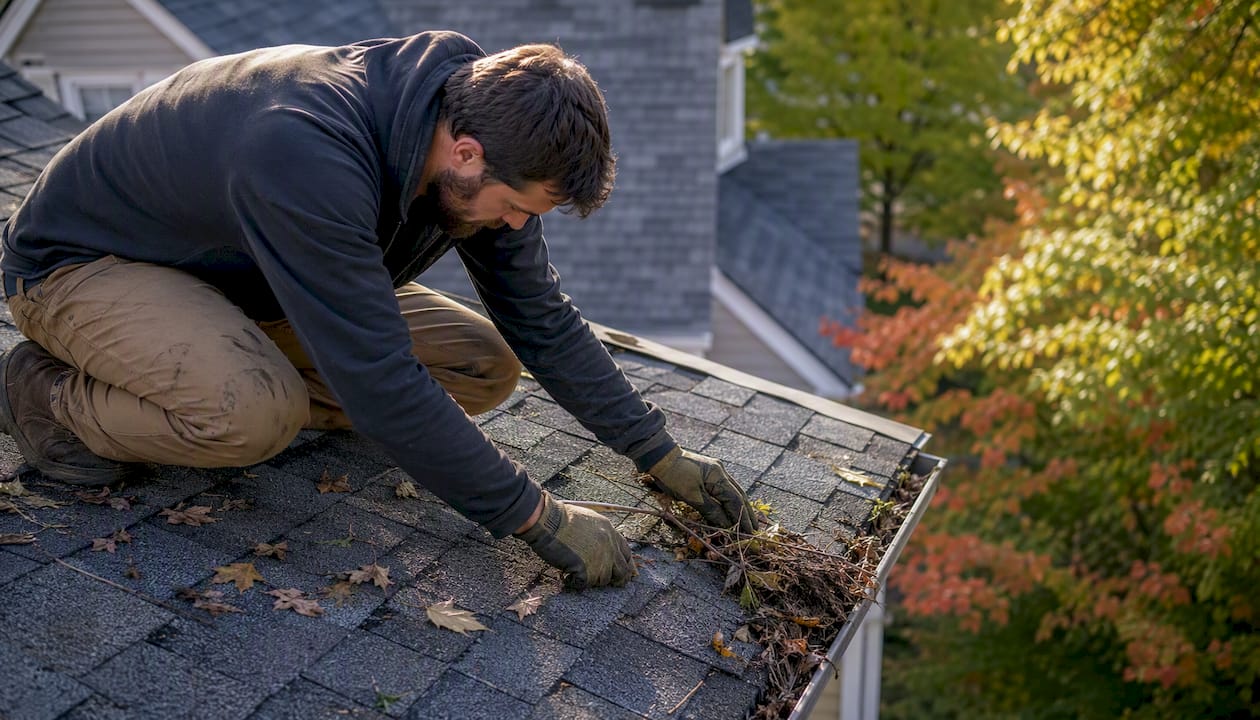
- [ ] Remove all debris from the roof surface (leaves, branches, dirt accumulation)
- [ ] Clear gutters, downspouts, and roof drains; flush with water to confirm flow
- [ ] Check shingles or roof covering for lifted, curled, cracked, or missing pieces
- [ ] Inspect all flashing at walls, valleys, and edges for gaps, rust, or separation
- [ ] Check sealant around every penetration: vents, chimneys, skylights, HVAC curbs
- [ ] Look for moss, algae, or any vegetation growth on the surface
- [ ] Inspect the attic for daylight, water stains, mold, or wet insulation
- [ ] Confirm gutters are firmly attached and pitched correctly toward downspouts
- [ ] Note any standing water or low spots that did not drain within 48 hours of rain
Owner-maintenance tasks consistently include these same categories across industry guides: debris removal, gutter cleaning, shingle and flashing inspection, and scheduling professional checks at least every six months.
Pro Tip: Add a one-line status note next to each item: “OK,” “Monitor,” or “Repair needed.” That single column turns a checklist into a prioritized work order.
How to inspect your roof exterior and document what you find
Start at the perimeter before you go up
Walk the full perimeter of the building at ground level first. Look for loose edge metal (drip edge or fascia), missing fasteners, and any shingles or tiles that have slid out of position. Binoculars help here. You can identify a surprising number of defects without setting foot on the roof.
If you do access the roof, begin at the lowest edge and work upward. Check that edge metal is tight and that no gaps have opened between the drip edge and the fascia board below.
Reading the roof surface
Lifted or curled shingles lose their seal and allow wind-driven rain underneath. Cracked or missing shingles are obvious entry points. Granule loss, visible as bare dark patches on asphalt shingles or as heavy granule deposits in gutters, signals accelerated aging. Blistering or bubbling on a low-slope membrane points to trapped moisture or adhesion failure. Soft spots underfoot on a flat roof often mean wet insulation below, which is a more serious problem than the surface alone suggests.
A roof that looks intact from the street can still be failing at its penetrations. Flashing and sealant joints around chimneys, skylights, and pipe vents account for a disproportionate share of active leaks — inspect every one of them, not just the field of the roof.
Inspect each penetration carefully. Look for rust on metal flashing, cracked or missing caulk, and any separation between the flashing collar and the roofing material. Flashing failures are among the most common and most preventable leak sources on both residential and commercial roofs.
Drainage and standing water
Check every drain, scupper, and gutter outlet. Blockages cause ponding, and ponding accelerates membrane deterioration on flat roofs. This Old House recommends cleaning debris and gutters at least twice annually, and every three months in areas with dense tree coverage.
Photographing defects
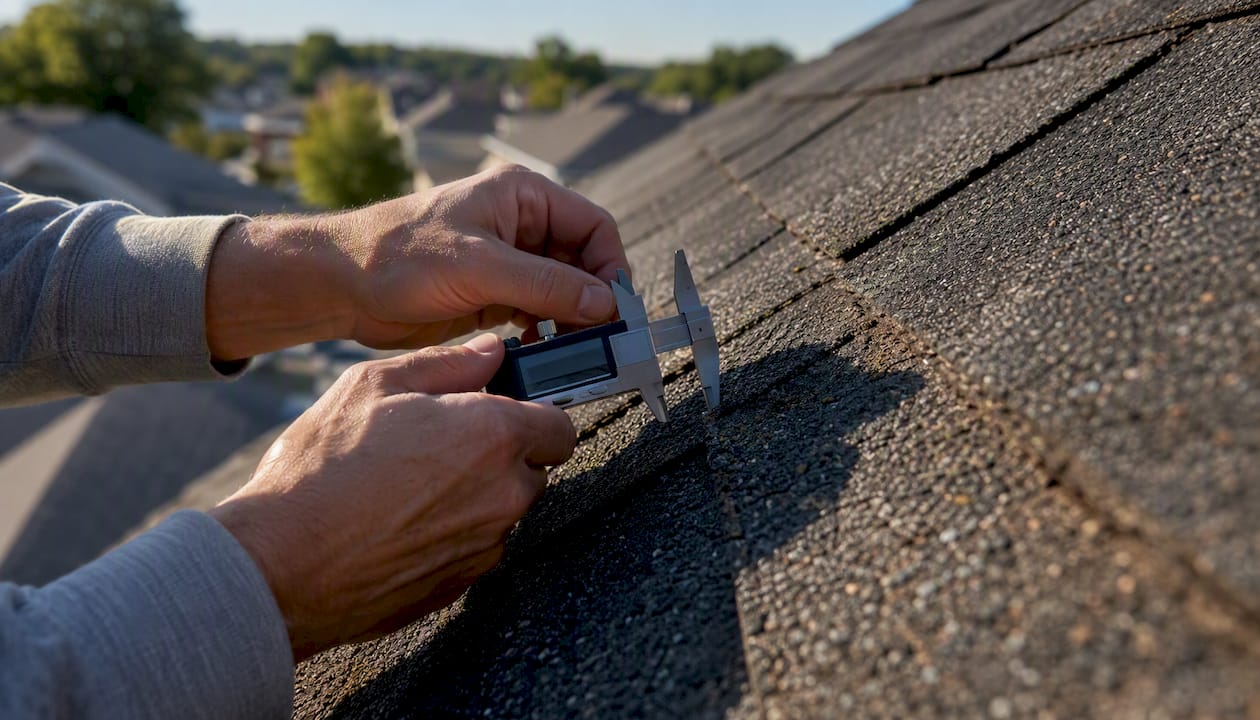
Take at least one wide-angle context shot showing the defect’s location on the roof, then a close-up. Place a coin or a ruler in the frame when photographing gap sizes or crack widths. Record the date, the roof quadrant (NE, NW, SE, SW), and a brief description in the file name or a companion note. This record is what separates a credible maintenance history from a vague claim that “we’ve been keeping up with it.”
Common roof problems and what to do about them
Ice dams
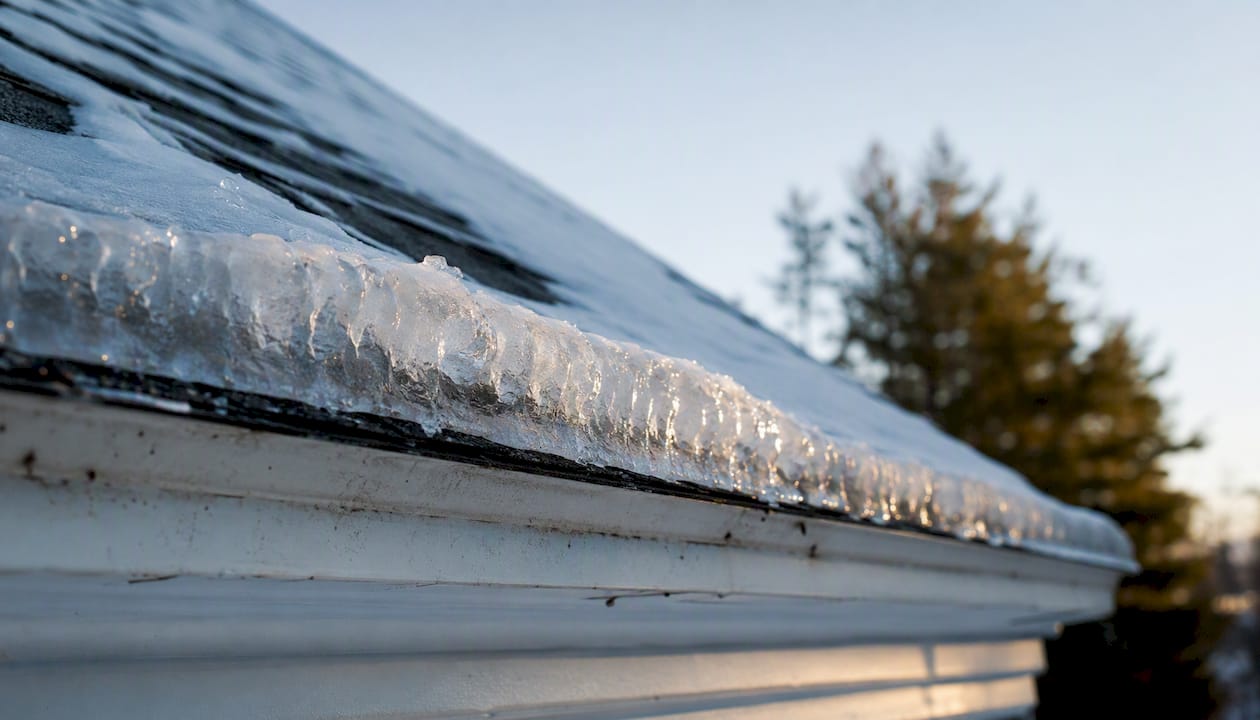
Ice dams form when heat escaping through a poorly insulated attic melts snow on the upper roof, which then refreezes at the cold eaves. The resulting ice backup forces water under shingles. The fix is insulation and ventilation, not just heat cables. Heat cables are a temporary measure; correcting attic insulation and ensuring adequate soffit-to-ridge airflow is the long-term solution.
Flashing and sealant failure
Corroded metal flashing and cracked caulk around penetrations are responsible for a large share of residential leaks. You can apply a compatible roof sealant to a small crack as a temporary measure, but corroded or separated flashing needs professional replacement. Sealant over rust buys time; it does not fix the underlying failure.
Standing water and clogged drains
- Clear drain screens and scuppers at every maintenance visit.
- Pour water into drains to confirm they flow freely.
- Ponding water that remains more than 48 hours after rain shortens membrane life on flat roofs and should be addressed by a contractor who can evaluate whether the deck slope or drain placement needs correction.
When to stop DIYing and call a professional
Widespread membrane damage, any suspected penetration leak, soft spots underfoot, structural movement, or anything involving work near roof edges all require a licensed roofing contractor. Attempting those repairs yourself risks personal injury and can void manufacturer warranties.
Safety rules and when you must hire a licensed roofer
Most property owners can safely perform ground-level visual checks, clear gutters from a ladder, and remove debris from accessible low-slope areas. The line between owner tasks and contractor tasks is clear once you know where to draw it.
Before any rooftop work, run this safety check
- Conditions are dry and wind is calm (avoid wet, icy, or windy days entirely)
- You have proper footwear with non-slip soles
- A partner is present and knows where you are
- Fall protection is in place for any roof with a pitch above 4:12
- You have identified fragile surfaces (skylights, translucent panels, damaged decking) and will not step on them
DIY vs. professional scope
Safe for owners: Clearing debris from the roof surface, cleaning gutters from a ladder, ground-level visual inspection, photographing defects, applying sealant to a small isolated crack as a temporary measure.
Requires a licensed contractor: Flashing replacement, membrane repairs, any work near roof edges on a pitched roof, re-roofing, structural repairs, and any repair needed to preserve a manufacturer warranty. Industry data sheets are explicit that owners should retain professionals for repairs beyond routine housekeeping to avoid warranty conflicts and safety risks.
Manufacturer warranties and many property insurance policies require that repairs be performed by a qualified contractor. A DIY patch on a warranted roof system can void coverage for the entire assembly, not just the repaired area.
How to document inspections and build a maintenance program
A maintenance program without records is just a series of forgotten visits. A simple log takes five minutes to complete and pays for itself the first time you file an insurance claim or sell the property.
- Store everything in one folder, backed up both locally and in the cloud. Maintaining written and photographic inspection records protects insurance claims and demonstrates proactive maintenance to buyers and insurers.
Pro Tip: Name photo files with the format YYYY-MM-DD_QuadrantNE_Defect so they sort chronologically and are searchable by location. A folder of 40 well-named photos is far more useful than 40 files called “IMG_4521.”
What does preventive roof maintenance cost?
Setting a realistic budget is easier when you separate inspection costs from repair costs.
| Task | Typical Cost Range | Notes |
|---|---|---|
| Professional inspection (residential) | $400 | Varies by roof size and complexity |
| Professional inspection (commercial) | — | Larger area; may include moisture scan |
| Gutter cleaning (professional) | — | Per visit; frequency depends on tree cover |
| Minor sealant/caulk repair | — | Small penetration touch-ups |
| Flashing repair (professional) | — | Depends on location and extent |
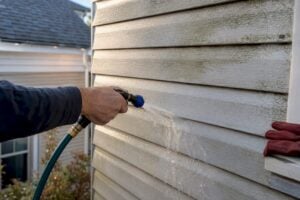
| Moss/algae treatment | $400 | Professional low-pressure cleaning |
| Annual preventive program (commercial) | Varies by sq. ft. | Often measured in cents per sq. ft. annually |
Preventive maintenance program costs are modest compared with reactive repair costs. A neglected flashing joint that costs a small amount to seal today can lead to deck rot that costs significantly more to remediate. For facility managers building a budget line, a reasonable starting point is to allocate a small annual amount per square foot for inspections and minor repairs, then adjust based on roof age and condition.
When presenting costs to decision makers, pair the inspection cost with a prioritized repair list and a rough estimate of what deferred repairs will cost if left another season. That framing converts a maintenance expense into a risk-management decision.
What a professional inspection looks like
A thorough contractor inspection follows a defined sequence and produces a written deliverable, not just a verbal summary.
Typical inspection sequence:
- Safety setup and roof access
- Full visual survey of the roof field, edges, and all penetrations
- Photo documentation of every defect
- Moisture scan (infrared or nuclear meter) if visual evidence suggests hidden wet insulation
- Written report with a defect inventory, urgency rating, estimated repair cost ranges, and recommended timing
A professional inspection report should give you enough information to make a repair decision without the contractor present. If a report contains only a list of recommendations with no photos, no urgency ratings, and no cost estimates, ask for a revised version before signing anything.
What to look for in a contractor:
- Licensed and insured in your state (Connecticut requires contractor licensing for roofing work)
- Manufacturer certifications for the roof system installed on your building
- Clear written scope of work and warranty terms for any repairs performed
Jsignorexteriors brings more than 30 years of experience to residential and commercial roof inspections throughout Connecticut. Every inspection includes a documented defect inventory, photographic evidence, and a prioritized repair recommendation so you know exactly what needs attention and in what order. Learn more about commercial roof failure patterns that a thorough inspection is designed to catch early.
Key Takeaways
Preventive roof maintenance reduces total lifecycle cost by catching small defects early, before water infiltration causes structural damage that costs far more to repair.
| Point | Details |
|---|---|
| Inspect twice a year | Schedule spring and fall inspections per NRCA guidance, plus a check after any severe weather event. |
| Document every visit | Photograph each roof quadrant and log defects with severity ratings to protect insurance claims and resale value. |
| Know the DIY boundary | Owners can clear debris and gutters; flashing replacement, membrane repairs, and edge work require a licensed contractor. |
| Budget for small repairs | Professional inspections typically run $400 for residential roofs; small preventive repairs cost far less than reactive ones. |
| Jsignorexteriors for Connecticut | Jsignorexteriors provides licensed, insured inspections with written reports and prioritized repair lists throughout Connecticut. |
The mistake most property owners make with their roofs
Most owners treat the roof the way they treat their car’s check-engine light: they wait for something obvious before acting. The problem is that a roof rarely announces a failure dramatically. It leaks quietly, usually at a flashing joint or a cracked sealant bead, and by the time a stain appears on the ceiling, the water has already been traveling through the assembly for weeks.
The documentation habit is the part most people skip, and it’s the part that matters most when something goes wrong. An insurer handling a storm damage claim will ask whether you’ve been maintaining the roof. A buyer’s inspector will ask the same question. A folder of dated photos and inspection logs answers both questions before they become problems.
The other underestimated issue is ventilation. Owners spend money on shingles and ignore the attic. Poor attic ventilation shortens shingle life, creates ice dams, and drives up energy costs, yet it’s one of the cheapest things to correct. If your last inspection didn’t include an attic check, it wasn’t a complete inspection.
One practical tip worth keeping: maintain a small supply of compatible roof sealant and a tube of flashing caulk on hand. A small gap that opens in October can be temporarily sealed in 20 minutes. Left until spring, that same gap lets in a winter’s worth of moisture.
Jsignorexteriors serves Connecticut homeowners and businesses
Jsignorexteriors has been inspecting and repairing roofs across Connecticut for more than 30 years, and the difference between a good inspection and a useful one comes down to the report you receive afterward. Every inspection Jsignorexteriors conducts includes a full written defect inventory, prioritized repair recommendations, and photographic documentation you can keep on file.

As a fully licensed and insured roofing contractor in Connecticut, Jsignorexteriors handles everything from routine preventive inspections to flashing repairs, gutter work, and full roof replacements for both residential and commercial properties. Whether you need a first-time inspection or want to put a formal maintenance program in place, the process starts with a single call. Contact Jsignorexteriors today to schedule your inspection and get a prioritized repair list you can act on.
Authoritative resources for further reading
These sources informed this guide and are worth bookmarking for ongoing reference:
- Roofing maintenance tips — This Old House
- Preventative roof system maintenance guidance — NRCA
- Roof maintenance manual — RCABC Roofing Practices Manual
- Roof maintenance tips — Angi
- DS 1-32 Inspection and Maintenance of Roof Assemblies (Data Sheet)
- Algae discoloration and organic growth — Asphalt Roofing Manufacturers Association
- Why roof maintenance is important — NRCIA