Siding color changes over time, and modern vinyl is no exception to that rule, even though it resists fading better than older generations of the product. Darker colors and south or west-facing walls will show it first. The right response depends on what you’re seeing: regular cleaning for dirt and light chalking, a careful repaint only within strict color rules for vinyl, or replacement when the damage goes beyond the surface.
TL;DR:
- Factory-colored vinyl siding typically maintains its appearance for decades, while field-painted siding usually needs attention within 5 to 15 years depending on quality and climate.
- Darker siding colors with low light reflectance absorb more heat, accelerating fading and potentially causing warping or buckling if not carefully managed.
- Regular cleaning with mild detergent and water every 6 to 12 months can prevent surface chalking and extend siding lifespan, especially in harsh environments.
- A wash test is a quick diagnostic that can distinguish surface dirt or chalk from genuine pigment fading, saving unnecessary repaint or replacement costs.
- Replacing siding is often more cost-effective long-term than repeated repainting, especially when panels show warping, water damage, or repeated adhesion failures.
Table of Contents
- The Science Behind Siding Fade
- How Long Before Siding Actually Starts To Fade
- Do Dark Colors Fade Faster? The LRV Rule Explained
- The Wash Test: How To Tell Fading From Dirt Or Chalking
- How To Prevent Siding Color Fade Before It Starts
- Restoring Faded Vinyl: Cleaning, Restorers, And Safe Painting Rules
- When Fading Means Replace, Not Repaint
- A Contractor’s Checklist Before You Hire Anyone
- Wood And Fiber Cement: How Other Siding Materials Age
- Pollution, Salt Air, And Other Environmental Stressors
- How Manufacturer Quality And Warranties Shape Fade Resistance
- What Fading Actually Costs You Over Time
- Measuring Fade Precisely: Beyond The Naked Eye
- What I’d Tell Homeowners To Actually Prioritize
- Get A Straight Answer On Your Siding
- Sources
The Science Behind Siding Fade
Fading isn’t really about pigment disappearing. It’s a chemical breakdown happening at the surface of the panel, and understanding it changes how you treat the problem.
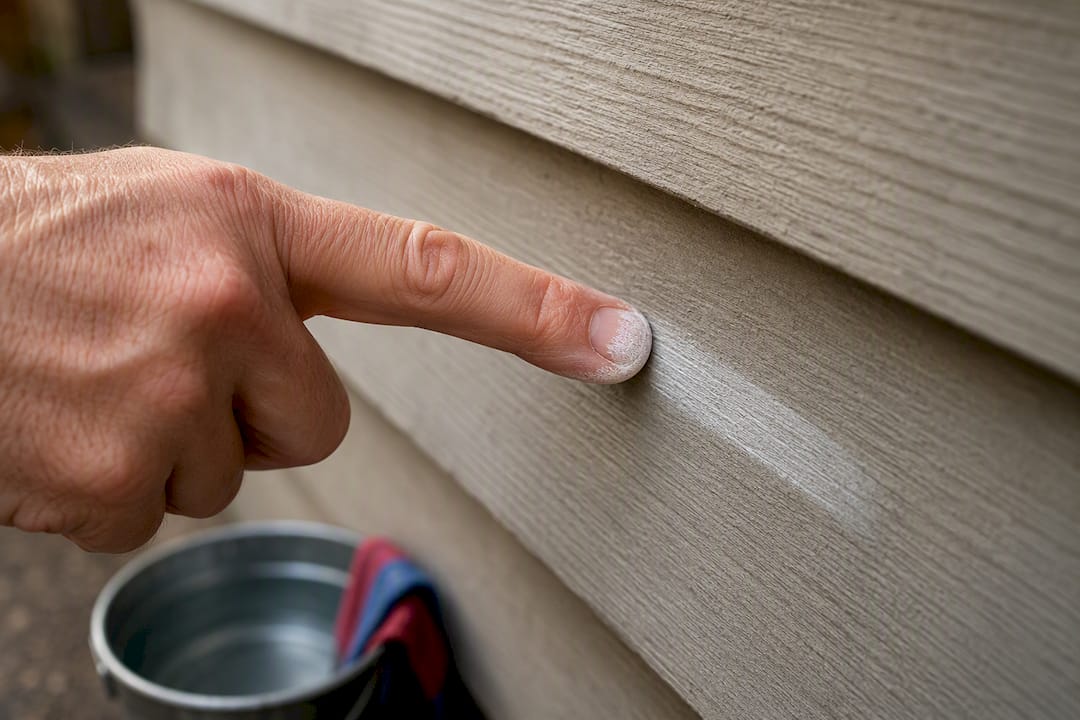
Ultraviolet radiation breaks apart the resin binder that holds pigment particles in place. As that binder degrades, pigment granules loosen and rise to the surface, creating the powdery residue known as chalking. That chalky film scatters light differently than a smooth painted surface, which is why a wall can look faded even when the actual pigment underneath hasn’t lost much color at all. Run a finger across it and the true story shows up on your skin, not just your eyes.
Heat compounds the problem. Dark surfaces absorb more infrared energy, and that added heat load accelerates the same photochemical reactions driving UV damage. Vinyl responds to heat physically, too. It expands when hot and contracts when it cools, and enough thermal stress from a mismatched dark paint job can cause visible waviness or buckling.
Material matters just as much as climate. A few contrasts worth knowing:
- Vinyl carries color all the way through the panel rather than as a surface coat, so it tends to chalk and dull gradually rather than peel.
- Fiber cement relies on a factory-applied coating, and how that coating was cured determines how well it holds up.
- Wood siding depends entirely on whatever paint or stain was applied, which means its color life is only as good as the last paint job.
Exposure amplifies all of it. South and west-facing walls take the harshest sun in the Northern Hemisphere, and homes near salt water or at higher altitude see faster breakdown from added environmental stress.
How Long Before Siding Actually Starts To Fade
Timelines vary wildly depending on whether you’re looking at factory-colored material or a painted surface, and that distinction matters more than most homeowners realize when they’re budgeting for upkeep.
Factory-colored vinyl siding is built to hold its appearance for decades under normal conditions, with gradual, even dulling rather than sudden blotches. Field-painted siding, whether it’s wood, older vinyl, or a repainted fiber cement panel, typically needs attention again somewhere between 5 and 15 years, depending on paint quality and climate exposure.
A few patterns to watch for:
- Early, uniform chalking within the first couple of years often points to a paint film problem rather than normal aging.
- Gradual color shift that develops evenly over many years is expected wear, not a defect.
- Factory-baked finishes with a strong pigment package (metal oxide pigments rather than cheaper organic dyes) consistently outlast field-applied paint, because the curing process bonds pigment to substrate far better than air-drying ever can.
That last point drives a lot of the material decisions in later sections. Curing conditions you can control in a factory simply don’t exist on a ladder in your backyard.
Do Dark Colors Fade Faster? The LRV Rule Explained
Light Reflectance Value, or LRV, measures how much visible light a color bounces back on a scale of 0 (absolute black) to 100 (pure white). Lower LRV means more absorbed sunlight, and more absorbed sunlight means more heat, which is the single biggest reason dark siding colors show wear faster than pale ones.
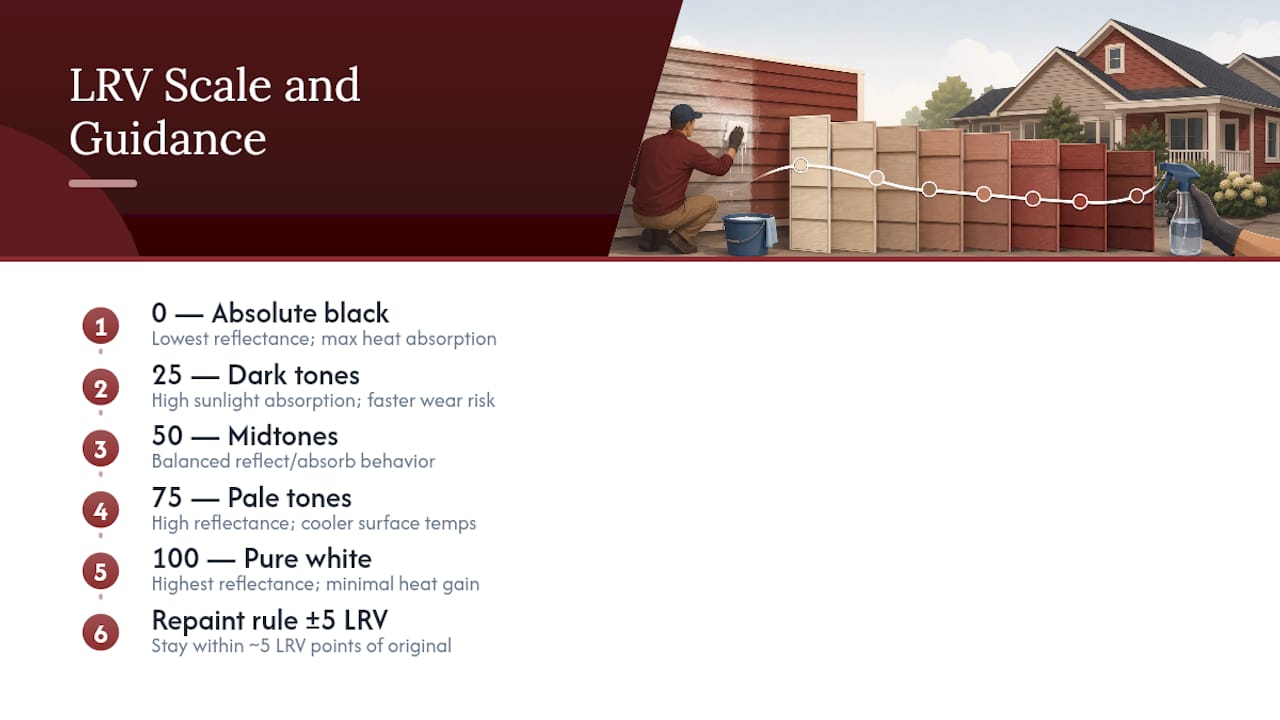
That’s not a reason to avoid dark siding. It’s a reason to be careful about how dark you go, particularly if you’re repainting existing vinyl rather than buying a factory-colored panel.
Field guides used by siding contractors generally recommend staying within about five LRV points of the original color when repainting vinyl, unless the paint is a heat-reflective formulation designed for the purpose. Sherwin-Williams’ VinylSafe line is the best-known example, using specialized pigments engineered to reflect more infrared energy than standard tints at the same visual darkness.
Pro Tip: Ask your paint retailer to measure the LRV of your current siding before you pick a new color. Most professional paint counters have the tool on hand, and it takes thirty seconds.
Deep organic pigments, the reds, blues, and near-blacks that give siding a rich look carry the highest risk. Those pigment chemistries were never designed to survive the heat loads a dark LRV creates on a plastic substrate. That’s exactly why manufacturers reserve their deepest colors for factory-applied finishes cured under controlled heat, rather than offering them as field-paint options at all.
The Wash Test: How To Tell Fading From Dirt Or Chalking
Before you assume your siding needs paint or replacement, run the diagnostic contractors use first. It takes fifteen minutes and it will save you from an unnecessary repaint or, worse, a premature tear off.
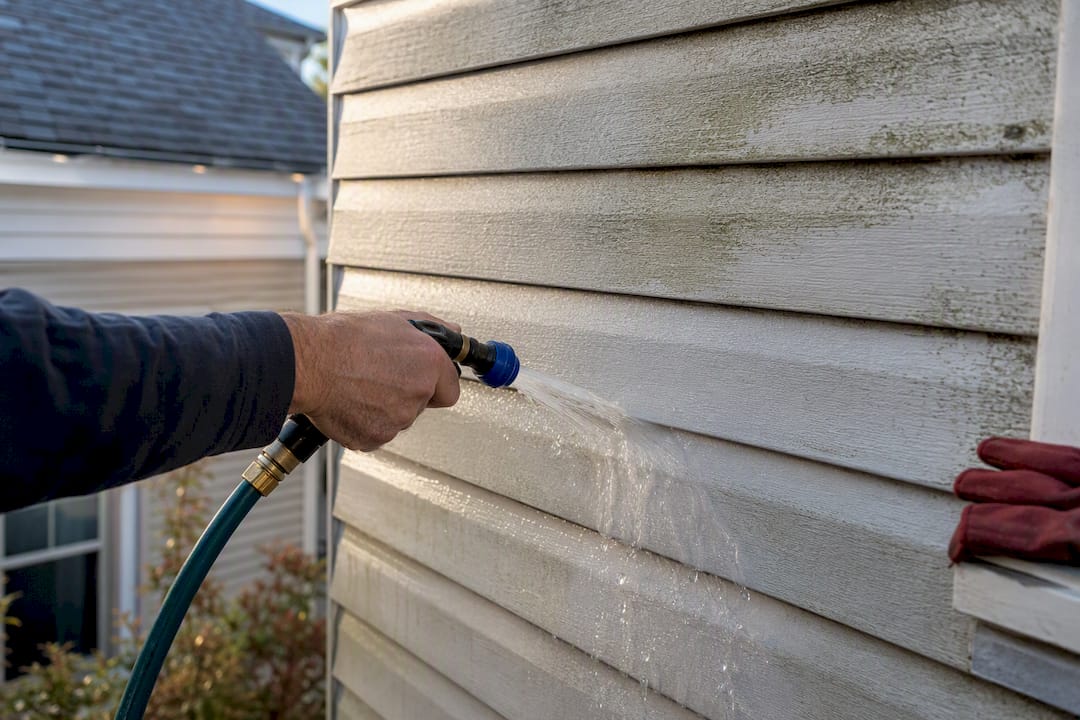
- Mix a mild detergent with water, never a harsh degreaser or bleach solution that can strip finish further.
- Scrub a test section with a soft brush, working in the direction of the panel seams.
- Rinse thoroughly with a garden hose, keeping water pressure low.
- Let the section dry completely before judging the result.
- Compare the washed spot to an unwashed area nearby.
If the washed section looks noticeably brighter, you were looking at dirt, mildew, or surface chalk, not true color loss, and routine cleaning will keep it that way going forward. Rub your palm flat against a dry section of siding first. Chalk transfers as a fine powder onto your skin; true pigment fade leaves your hand clean but the color visibly dulled underneath.
Watch for the warning signs that go beyond a cosmetic issue: soft or spongy panels, visible separation at the seams, or discoloration that follows a crack or gap rather than sun exposure. Those point to moisture intrusion or adhesion failure, and that’s a call for a professional, not a bucket of soap.
How To Prevent Siding Color Fade Before It Starts
Prevention beats restoration every time, and most of it comes down to habits rather than products.
Rinse siding every 6 to 12 months with a garden hose, and use a soft wash with mild detergent when you notice mildew, algae, or the first hint of chalking. Skip the pressure washer unless a professional is running it. Consumer-grade pressure washers push water behind seams and under J-channels, and that trapped moisture accelerates exactly the kind of finish deterioration you’re trying to prevent. Controlling moisture at the wall assembly matters just as much as cleaning the surface, which is why proper sealing and insulation around windows, doors, and penetrations belongs on the same maintenance list as washing.
Your landscaping affects fade timelines more than you’d expect. A few adjustments that genuinely help:
- Trim shrubs and trees back from siding so panels get airflow and dry out after rain.
- Redirect sprinkler heads away from walls. Constant dampness accelerates growth and finish breakdown.
- Keep gutters clear so overflow doesn’t streak and stain panels below the roofline.
Pro Tip: Walk your property once a season and note which walls stay damp longest after a storm. Those are the spots that need the most attention, and often the ones where mildew shows up first.
Design choices matter too, especially before you build or replace anything — understanding LP SmartSide, James Hardie & Vinyl siding in Wisconsin options can guide your material and finish selections. Factory-finished siding with a baked-on coating consistently resists fading better than anything you’ll apply with a brush or sprayer at home, because of the controlled curing process. If you’re set on a dark color for a south or west-facing wall, look specifically for reflective, heat-managed finishes rather than a standard dark tint, and understand that installation quality also affects how evenly a wall ages, since gaps and poor fastening create uneven stress points where fading and warping show up first.
Restoring Faded Vinyl: Cleaning, Restorers, And Safe Painting Rules
Cleaning solves most fading complaints. When a wash test shows the color underneath the grime is still solid, a chemical vinyl restorer, a product designed to penetrate oxidized surface pores and lift chalk without repainting, is often the better move than reaching for a paintbrush. These restorers preserve the panel’s original texture and skip the thermal risk that comes with darker paint altogether.
Painting is the right call when the color has genuinely faded through, not just chalked on the surface. If you go that route, the rules aren’t optional:
- Use a paint formulated specifically for vinyl, not standard exterior latex, since vinyl-safe paints are engineered to flex with the material’s expansion and contraction.
- Stay within roughly five LRV points of the original color unless the product is a certified heat-reflective line.
- Confirm surface prep and paint adhesion requirements before starting. Poor adhesion is the most common cause of early peeling on a repaint job.
- Check your siding’s warranty documentation before you pick up a brush. Most manufacturers void color and finish warranties the moment a homeowner repaints, regardless of what product was used.
That last point trips up more homeowners than any other step in this process. A repaint that looks great for two years but voids a 30-year manufacturer warranty is rarely the win it feels like at first.
When Fading Means Replace, Not Repaint
Some damage sits past the point where cleaning or painting makes sense. A few signals tell you it’s time to consider full replacement instead:
- Visible warping, buckling, or dimensional instability in the panels themselves, not just the color.
- A pattern of repeated repaint cycles every few years with no lasting improvement.
- Structural rot or water damage behind the siding, not just surface discoloration.
- Widespread adhesion failure across multiple elevations rather than one isolated wall.
Replacement gives you factory-cured color consistency across every wall at once, plus a fresh finish warranty you don’t have with a patched-together repaint. Weigh the cost of siding replacement against the cost of another round of restoration and cleaning first. If you’re already on your second or third repaint attempt, the math usually favors starting over.
A Contractor’s Checklist Before You Hire Anyone
A proper siding inspection covers more than a glance from the curb. Expect a professional to run the wash test, check LRV against your existing color if repainting is on the table, inspect fasteners for movement, and review any field-cut edges where color and adhesion typically fail first.
Before signing anything, ask directly whether repainting voids your color warranty, and whether factory-finished, higher-grade panels make sense for your sun-exposed walls.
Wood And Fiber Cement: How Other Siding Materials Age
Vinyl isn’t the only material homeowners deal with, and the fade story looks different depending on what’s on your wall.
Wood siding fades the fastest of the common options, because its color comes entirely from an applied paint or stain rather than material that’s colored all the way through. UV breaks down that surface coating in the same way it attacks any painted surface, and wood adds a second failure mode vinyl doesn’t have: moisture absorption. Wood expands and contracts with humidity, which stresses paint film and speeds up peeling and cracking on top of ordinary UV fade. Expect a quality exterior paint job on wood to need attention again in the 5 to 10 year range, sooner on south-facing walls.
Fiber cement sits in a different category, largely because of how it’s finished at the factory. Products with a baked-on, multi-coat finish hold color far longer than field-painted alternatives, since the curing process locks pigment to the substrate under controlled heat and humidity that a job site simply can’t replicate. Fiber cement that was painted after installation, rather than factory-finished, behaves much more like painted wood in terms of how quickly it needs recoating.
The takeaway if you’re comparing materials for a new project: factory curing beats field application almost every time, regardless of what the base material is.
Pollution, Salt Air, And Other Environmental Stressors
UV and heat get most of the attention, but they’re not the only forces working against your siding’s color.
Airborne pollution, particularly in industrial or high-traffic urban corridors, deposits fine particulates on siding surfaces that can chemically interact with certain finishes over time, accelerating the same oxidation process that UV starts. Homes near highways or manufacturing areas often see faster surface dulling than comparable homes in cleaner air, even with identical sun exposure.
Salt air is its own problem, and it’s not limited to oceanfront properties. Homes within several miles of coastline deal with airborne salt that settles on siding and can accelerate finish breakdown and metal fastener corrosion, particularly on the windward side of the house. Combine salt exposure with a south or west orientation and you’ve got the fastest fade timeline of any common residential scenario.
Altitude adds a subtler factor. UV intensity increases with elevation because there’s less atmosphere filtering it out, which means homes in mountain or high-plateau regions often see accelerated chalking compared to sea-level homes with the same color and material, even at similar latitudes.
None of these factors change your maintenance approach dramatically. They just mean homes in these conditions should shorten their cleaning intervals and pay closer attention to early warning signs rather than waiting for problems to become obvious.
How Manufacturer Quality And Warranties Shape Fade Resistance
Not all siding is built to the same standard, and the pigment package a manufacturer chooses has more impact on long-term color life than almost any other single factor.
Higher-grade products use metal oxide pigments and UV-stabilizing additives blended directly into the resin, while budget lines often rely on cheaper organic pigments that break down faster under sustained sun exposure. This is where the factory curing process again makes a real difference. Multiple coats applied and cured under controlled temperature and humidity produce a more durable bond between pigment and substrate than anything achievable outdoors.
Warranty language tells you a lot about how confident a manufacturer actually is in their product. Read the fine print closely: most warranties cover catastrophic fading, meaning color loss well beyond a defined threshold, but they typically exclude gradual chalking, normal weathering, and anything that happens after the siding has been repainted or altered from its original finish. A 30 or even 50-year warranty sounds impressive until you realize “fade” is often defined narrowly enough that ordinary aging doesn’t qualify for a claim at all.
That’s worth checking before you buy, not after you notice a problem. Ask specifically what fading threshold triggers warranty coverage, and get it in writing rather than relying on a sales conversation.
What Fading Actually Costs You Over Time
The real cost of siding fade isn’t the color change itself. It’s the decisions that change gets forced onto you, and how those decisions compound over a decade or two.
Routine cleaning costs almost nothing beyond your own time, a garden hose, and an occasional bottle of mild detergent. That’s the cheapest tier by a wide margin, and it’s the one most homeowners skip until the siding already looks tired. Chemical restoration for oxidized vinyl sits in the next tier up, more expensive than cleaning but far cheaper than a full repaint or replacement, provided the underlying panel is still structurally sound.
Repainting carries hidden costs beyond the labor and materials, since it often means voiding your remaining color warranty permanently. If that repaint job doesn’t hold up, you’re paying for a second repaint with no manufacturer backup at all, a cycle that gets expensive fast.
Replacement is the largest upfront cost, but it resets the clock completely with a fresh warranty and no patchwork history to manage. Homeowners who repaint every 5 to 7 years for two decades often spend more in total than they would have spent on one well-timed replacement with a durable, factory-finished product from the start. Running the math on your specific situation, comparing your last few years of maintenance spending against a one-time replacement quote, usually makes the right choice obvious.
Measuring Fade Precisely: Beyond The Naked Eye
Visual inspection catches obvious fading, but your eyes adjust to gradual change faster than you’d think, which is exactly why a wall can look “fine” to you and noticeably dull to a visiting neighbor.
A colorimeter solves that blind spot. It’s a handheld device that measures color numerically, typically using the CIELAB color space, which expresses any color as three coordinates: lightness, and position on red green and blue yellow scales. Take a baseline reading on a protected section of siding, like behind a shutter or under an eave, then compare it against an exposed wall. The numeric difference between those readings tells you objectively how much color has actually shifted, rather than relying on memory or a photo that may have been taken under different lighting.
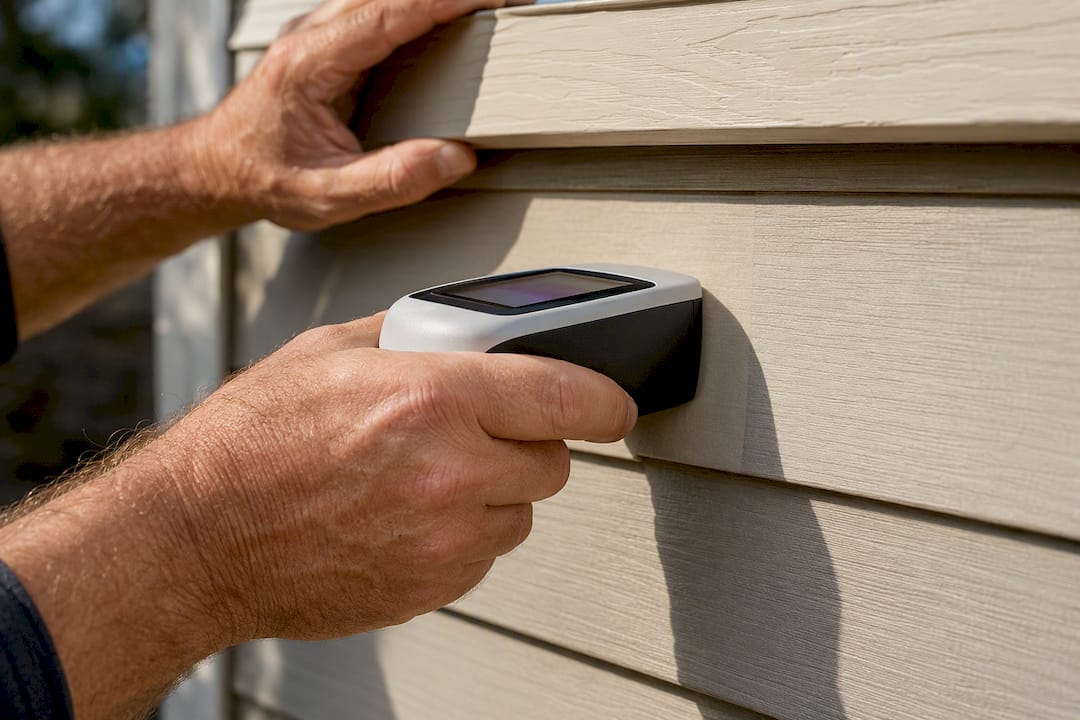
Contractors use this same logic when documenting a fade complaint for a warranty claim. A side-by-side reading between a shaded and sun-exposed section of the same siding run provides evidence that’s far harder to dispute than a verbal description of “it looks lighter than it used to.” If you’re pursuing a warranty claim over color loss, ask whether your contractor can take these readings before you file anything. Manufacturers respond far better to numbers than to opinions.
What I’d Tell Homeowners To Actually Prioritize
Most fading advice online treats every siding job like it’s headed for a repaint, and that’s backwards. The research keeps pointing to the same conclusion: cleaning solves the majority of complaints homeowners bring to a contractor, and repainting should be the last option considered, not the first.
The LRV rule gets buried in technical guides when it should be the first thing anyone hears before picking a darker color. It’s the single cheapest piece of information that prevents the most expensive mistake, a warped panel that has to be torn out and replaced entirely.
What conventional advice underplays is the warranty angle. Homeowners assume a fresh coat of paint is a safe, reversible fix. It’s often the opposite: an irreversible decision that trades a manufacturer’s decades-long promise for a paint job with no backing at all. Read your warranty before you touch a brush.
If you take one thing from this guide, make it the wash test. Fifteen minutes with a hose and mild detergent tells you more about your real situation than any amount of guessing from the sidewalk.
— Adam
Get A Straight Answer On Your Siding
You’ve read the diagnostics and the rules, and if your wash test came back inconclusive or you’re staring at a wall that’s warped instead of just dull, it’s time for a second set of eyes. A contractor with extensive experience can handle these calls for homeowners, from a quick LRV check before a repaint to a full replacement quote when a panel’s past saving.

What sets a contractor visit apart from another round of online guessing is a real inspection: fastener condition, field-cut seams, and an honest read on whether your siding needs cleaning, restoration, or a fresh install. That’s the kind of specific answer a wash test alone can’t give you. If your siding is showing more than surface chalk, request a siding evaluation and get a clear recommendation before you spend money on the wrong fix.
Sources
- Vinyl Siding Institute — Cleaning and maintenance
- The Spruce — How to paint vinyl siding
- ENERGY STAR — Why seal and insulate