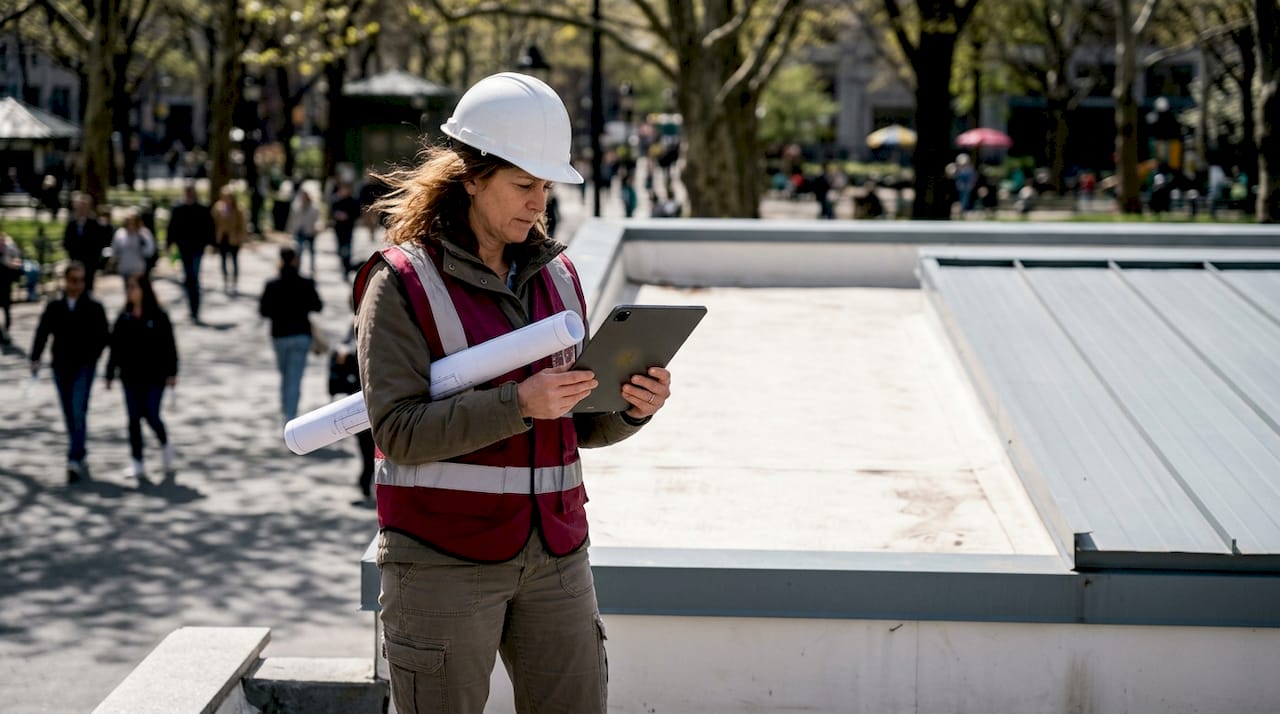
Commercial roofing systems are defined by the materials and methods used to protect low-slope and flat-roofed buildings from weather, moisture, and energy loss. The types of commercial roofing systems available today range from single-ply membranes like TPO, PVC, and EPDM to metal panels, built-up roofing (BUR), modified bitumen, spray polyurethane foam (SPF), and restoration coatings. Each system carries a distinct cost range, lifespan, and best-fit application. TPO alone accounts for over 50% of new low-slope commercial roofing installations in the U.S. That dominance reflects its balance of energy performance and affordability, but it does not mean TPO is the right choice for every building.
1. What are the main types of commercial roofing systems?
Commercial roofing falls into five broad categories: single-ply membranes, metal roofing, multi-ply systems (BUR and modified bitumen), spray polyurethane foam, and restoration coatings. Each category serves a different combination of building structure, budget, and ownership timeline. Understanding where each system excels prevents costly mismatches between the roof and the building it protects.
Single-ply membranes dominate new construction. Metal roofing leads in longevity. BUR and modified bitumen serve high-traffic and industrial settings. SPF works well as an overlay system. Coatings extend existing roofs without full replacement. Knowing which category fits your building is the first step in any roofing decision.
2. TPO roofing: the market leader for low-slope buildings
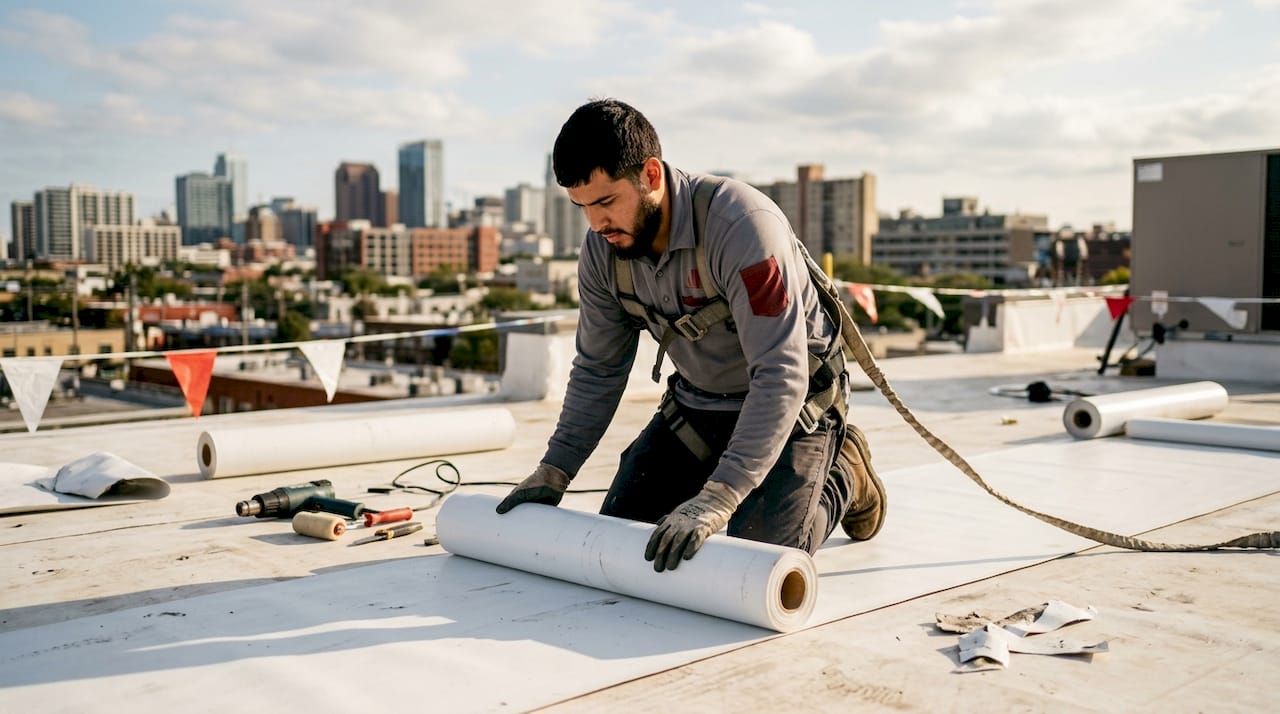
TPO (thermoplastic polyolefin) is the most widely installed single-ply membrane in the U.S. commercial market. Its white reflective surface reduces cooling loads, which makes it a strong fit for retail strips, warehouses, and office buildings in warm or mixed climates. Costs run between $5.50 and $9.00 per square foot with a typical service life of 20–30 years.
Pros:
- High solar reflectivity lowers energy bills
- Heat-welded seams create a strong, watertight bond
- Widely available and competitively priced
Cons:
- Formulations vary by manufacturer, affecting long-term durability
- Less chemical resistant than PVC
- Seam quality depends heavily on installer skill
Pro Tip: Match TPO to buildings you plan to hold for 10–20 years. For longer hold periods, EPDM or metal may deliver better lifecycle value.
Installation quality matters as much as the membrane itself. Poor installation on flashings and drains causes premature failure regardless of which membrane you choose. Always verify that your contractor welds seams to manufacturer specifications.
3. PVC roofing: the best choice for chemical exposure
PVC (polyvinyl chloride) roofing costs more than TPO, with installation running $7–$15 per square foot, but it earns that premium in specific environments. Restaurants, food processing plants, and industrial facilities benefit most from PVC’s superior resistance to grease, oils, and harsh chemicals. Its 25–30 year service life and strong fire resistance add further value in regulated industries.
Pros:
- Excellent chemical and grease resistance
- Strong fire ratings suitable for code-sensitive buildings
- Durable in environments where other membranes degrade
Cons:
- Higher upfront cost than TPO or EPDM
- Plasticizers can migrate over time, reducing flexibility in cold climates
- Fewer installers specialize in PVC compared to TPO
PVC is not the default choice for every flat roof. Reserve it for buildings where chemical exposure is a real and ongoing factor. Paying the PVC premium on a standard office building adds cost without adding benefit.
4. EPDM roofing: the long-hold asset standard
EPDM (ethylene propylene diene monomer) is a synthetic rubber membrane with a proven track record in public sector and institutional buildings. It suits long-hold assets like schools, government facilities, and healthcare buildings where ownership extends beyond 30 years. TPO fits short-hold retail assets, while EPDM suits long-hold public sector buildings because of its durability and lower lifecycle cost over time.
EPDM costs less upfront than PVC and performs well in cold climates, making it a practical option for Connecticut property owners managing buildings through harsh winters. Its black surface absorbs heat, which can increase cooling costs in summer. That trade-off is acceptable for buildings where heating costs outweigh cooling demands. Explore roofing material comparisons for Connecticut to see how EPDM stacks up against other options in the local climate.
5. Metal roofing systems: durability over decades
Metal roofing is the longest-lasting commercial option available. Standing seam metal roofs last 30–50+ years and command a higher upfront cost of $10–$18 per square foot. That cost is justified for institutional buildings, manufacturing facilities, and any property where the owner plans to hold the asset for decades.
| Metal system type | Lifespan | Cost per sq ft | Best application |
|---|---|---|---|
| Standing seam | 30–50+ years | $10–$18 | Industrial, institutional |
| Structural panels | 25–40 years | $8–$14 | Warehouses, agriculture |
| Architectural panels | 20–35 years | $7–$12 | Retail, mixed-use |
Metal roofs require minimal maintenance over their lifespan. Many standing seam systems are also solar-ready, accepting photovoltaic panel attachments without penetrating the roof surface. That feature adds long-term value for owners investing in energy efficiency.
Pro Tip: In coastal zones within 1,500 feet of saltwater, standard galvanized steel corrodes within 2–3 years. Specify aluminum or Galvalume-coated panels for any coastal Connecticut property.
6. Built-up roofing (BUR): the industrial workhorse
Built-up roofing is one of the oldest commercial roofing methods still in active use. A BUR system consists of multiple alternating layers of bitumen and reinforcing fabric, topped with a gravel or mineral surface. BUR systems typically last 20–30 years and cost $5–$10 per square foot, making them competitive with single-ply options on price while offering superior redundancy.
Pros:
- Multiple layers provide built-in redundancy against leaks
- Gravel surface resists foot traffic and UV degradation
- Long track record in industrial and government buildings
Cons:
- Heavy system requires a structurally sound roof deck
- Longer installation time compared to single-ply
- Harder to locate leaks when they do occur
BUR works best when you need a roof that can handle regular rooftop traffic, equipment loads, and decades of service. For a deeper look at how BUR compares to modern alternatives, the built-up roofing guide from Jsignorexteriors covers the key details.
7. Modified bitumen: the high-traffic flat roof solution
Modified bitumen roofing is a hybrid system that combines the redundancy of BUR with modern polymer technology. It installs in two or three layers and handles rooftop foot traffic better than most single-ply membranes. Modified bitumen costs $6–$11 per square foot with an 18–25 year service life, placing it in the mid-range for both cost and longevity.
The system suits retail buildings with rooftop HVAC units, apartment complexes, and any property where maintenance crews access the roof regularly. Its torch-applied or cold-adhesive installation methods give contractors flexibility in different weather conditions. Modified bitumen is a practical middle ground between the economy of single-ply and the redundancy of full BUR.
8. Spray polyurethane foam (SPF): the seamless overlay option
SPF roofing applies as a liquid that expands into a solid foam layer, creating a seamless surface with no joints or seams to fail. It delivers R-values of 6–7 per inch of thickness, making it one of the best-insulating roofing options available. Installation costs range from $4–$12 per square foot depending on thickness and the protective coating applied over the foam.
SPF works particularly well as an overlay on existing roofs that are structurally sound but showing age. Applying foam over an old membrane avoids tear-off costs and adds insulation value in a single step. The foam must be protected with a UV-resistant coating, typically silicone or acrylic, applied immediately after installation.
9. Roof restoration coatings: extend life without replacement
Roof restoration is not a roofing system in the traditional sense, but it is a legitimate strategy that delays full replacement by years. Silicone or SEBS coatings can extend roof life by 10–20 years at a fraction of replacement cost. Warehouses, retail chains, and industrial properties use this approach to manage large roofing portfolios without simultaneous capital expenditure.
Coatings work only on roofs that are structurally sound and free of wet insulation. A qualified contractor must perform a moisture survey before applying any coating system. For Connecticut property owners weighing this option, Jsignorexteriors provides detailed guidance on roof coating systems and when they make financial sense.
10. How to compare commercial roofing options for your building
Choosing the right system requires comparing lifecycle cost, not just the upfront price per square foot. Facility managers who focus only on low upfront cost often end up replacing roofs earlier than planned, erasing any initial savings. A lifecycle cost analysis accounts for energy savings, maintenance frequency, and expected replacement timing over 20+ years.
| Roofing system | Lifespan | Cost per sq ft | Maintenance level | Best fit |
|---|---|---|---|---|
| TPO | 20–30 years | $5.50–$9.00 | Low | Retail, warehouses |
| PVC | 25–30 years | $7.00–$15.00 | Low | Restaurants, industrial |
| EPDM | 25–35 years | $5.00–$8.00 | Low | Schools, government |
| Metal (standing seam) | 30–50+ years | $10.00–$18.00 | Very low | Industrial, institutional |
| BUR | 20–30 years | $5.00–$10.00 | Moderate | Industrial, high-traffic |
| Modified bitumen | 18–25 years | $6.00–$11.00 | Moderate | Retail, apartments |
| SPF | 15–25 years | $4.00–$12.00 | Low to moderate | Overlays, retrofits |
Key factors to evaluate before selecting a system:
- Building structure: Deck type and load capacity affect which systems are feasible
- Rooftop use: Frequent foot traffic favors BUR or modified bitumen over single-ply
- Climate: Cold climates favor EPDM; hot climates favor TPO or reflective coatings
- Chemical exposure: Grease or chemical venting requires PVC
- Ownership timeline: Short holds favor TPO; long holds favor EPDM or metal
Pro Tip: Ask your contractor for a lifecycle cost analysis before signing any contract. A roof that costs $2 more per square foot but lasts 15 years longer is almost always the better investment.
Key takeaways
The right commercial roofing system depends on building use, ownership timeline, and climate, not on which material is cheapest upfront.
| Point | Details |
|---|---|
| TPO leads the market | TPO covers over 50% of new low-slope installations due to its energy performance and competitive cost. |
| Lifecycle cost beats upfront price | A full cost analysis including maintenance and energy savings prevents premature roof failure and budget overruns. |
| Installation quality is decisive | Flashing and drain detailing often matter more than membrane choice for long-term roof performance. |
| Match system to building use | Chemical exposure, foot traffic, and ownership timeline each point to a different roofing system. |
| Coatings extend roof life | Silicone and SEBS coatings can add 10–20 years to a sound existing roof at a fraction of replacement cost. |
What 30 years of roofing decisions taught me about picking the right system
The most common mistake I see commercial property owners make is treating roofing as a commodity purchase. They get three bids, pick the lowest number, and assume the material spec sheet does the rest. It does not.
The membrane is only part of the equation. I have seen TPO roofs fail in under 10 years because the flashings were poorly detailed, and I have seen 30-year-old BUR systems still performing because they were installed with care and inspected regularly. The contractor’s workmanship and attention to detail at the perimeter, drains, and penetrations determines whether a roof reaches its rated lifespan.
My other strong opinion: do not overlook restoration coatings if your existing roof is structurally sound. Property owners with large portfolios almost always save money by coating and extending rather than tearing off and replacing. The math is straightforward, but it requires a contractor willing to be honest about whether your roof qualifies rather than one who defaults to full replacement.
Finally, Connecticut’s climate adds a real variable. Freeze-thaw cycles stress seams and flashings every winter. A system that performs well in Atlanta may underperform here without proper detailing for thermal movement. Work with a contractor who knows local conditions, not just the manufacturer’s spec sheet.
— Adam
Jsignorexteriors serves Connecticut commercial properties
Jsignorexteriors has worked with commercial property owners and facility managers across Connecticut for more than 30 years. The team installs and consults on the full range of commercial roofing systems, from TPO and EPDM membranes to metal panels, BUR, and restoration coatings.
Every project starts with an honest assessment of your building’s structure, use, and ownership goals. Jsignorexteriors does not recommend a system until those factors are clear. If you are ready to get the right roof for your property, connect with the Connecticut roofing team for a consultation. You can also review the full range of commercial roofing services to see what fits your building’s needs.
FAQ
What is the most common commercial roofing material?
TPO is the most common commercial roofing material, accounting for over 50% of new low-slope installations in the U.S. Its combination of energy reflectivity and competitive pricing makes it the default choice for retail and warehouse buildings.
How long does a commercial roof last?
Lifespan varies by system. TPO and BUR last 20–30 years, EPDM can reach 35 years, and standing seam metal roofs last 30–50+ years with minimal maintenance.
What roofing system works best for restaurants?
PVC is the best roofing option for restaurants because of its superior resistance to grease and chemical exposure from kitchen exhaust. It costs more than TPO but holds up where other membranes degrade.
Can I restore my existing commercial roof instead of replacing it?
Yes, if the existing roof deck and insulation are structurally sound and free of moisture damage. Silicone or SEBS coatings can extend a qualifying roof’s life by 10–20 years at significantly lower cost than full replacement.
How do I choose a commercial roofing contractor in Connecticut?
Look for a licensed, insured contractor with documented experience in the specific roofing system your building requires. Jsignorexteriors recommends reviewing the contractor selection guide before committing to any project.