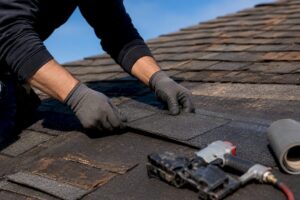

If your commercial flat roof is leaking, protect what’s inside first, then map the drip back to its source before anyone touches a repair. A hose test or professional diagnostic confirms the actual breach, which usually sits well uphill of the interior stain. If the leak keeps coming back or you’re seeing standing water past 48 hours, you’re likely looking at a system problem, not a patch, and it’s worth calling a diagnostician before you sign off on any fix.
TL;DR:
- Hose testing and infrared moisture scanning are essential to accurately identify the leak source, especially when water travels along the deck and seams.
- A moisture map with dated photos and test results is critical evidence for insurance claims and to prevent repetitive repairs.
- Temporary fixes should match the membrane type, be documented with photos and dates, and never be seen as permanent solutions.
- Ponding water beyond 48 hours indicates failure of drainage or slope, which must be addressed to prevent membrane deterioration.
- Major structural or recurring leaks require professional diagnosis and should not be repaired with simple patches to avoid costly full-system replacements later.
Table of Contents
- How Do You Find the Real Source of a Commercial Flat Roof Leak?
- What Should You Do the Moment You Discover a Leak?
- Patch, Repair, Coating, or Replacement: How Do You Choose?
- Where Do Flat Roofs Leak Most Often?
- How Can You Prevent Most Flat Roof Leaks Before They Start?
- What Should You Ask a Roofing Contractor Before You Sign?
- How Does a Licensed Contractor Document a Commercial Roof Inspection?
- Why Recurring Leaks Are a Budget Problem, Not a Repair Problem
- Get a Documented Roof Inspection Instead of Another Guess
- Where to Verify These Standards Yourself
- Sources
- FAQ
How Do You Find the Real Source of a Commercial Flat Roof Leak?
Water rarely drips straight down from where it entered. On a low-slope membrane, it travels along the deck, follows seams and insulation joints, and shows up inside the building feet, sometimes yards, from the actual breach. That gap between symptom and cause is why so many “repaired” roofs leak again within a season.
Here’s the sequence worth following, whether you’re doing it yourself or checking a contractor’s work:
- Measure and mark. Find the interior drip point, measure its distance from two fixed walls, and transfer those measurements to the roof to establish a search zone.
- Inspect that zone visually. Look for blistering, open seams, cracked flashing, or ponding before you flood anything.
- Run a hose test. Starting at the low end of the search zone, wet a small section for 10 to 15 minutes while someone watches inside, then move uphill section by section, documenting time and location as you go.
- Escalate if the hose test comes up empty. Infrared moisture scanning, done under ASTM C1153, reads temperature differences in wet versus dry insulation and works best after a warm, sunny day cools into a clear night. Electronic leak detection pinpoints breaches on single-ply membranes with more precision but less reliability on ballasted systems.
- Build a moisture map. Plot every wet reading and confirmed breach on a roof diagram with dates.
That map becomes your evidence file. Insurers and manufacturers rarely take a verbal description of “it leaks somewhere over the loading dock” seriously, but a dated diagram with hose test results and IR readings changes the conversation entirely.
Pro Tip: Never run a hose test during or right before a forecasted storm. You need a clean, documented result, not a flooded roof deck competing with real rainwater.
What Should You Do the Moment You Discover a Leak?
Stopping interior damage matters more than diagnosing the roof in the first hour. Move inventory, equipment, and files away from the drip line, and get a tarp or containment barrel in place immediately. Photograph everything with a timestamp, including the ceiling stain, any pooled water, and damaged stock, since this becomes your record for insurance or warranty disputes later.
Temporary roof-level fixes need to match the membrane. A compatible liquid flashing or seam tape works as a short-term stopgap on EPDM or TPO, but the wrong patch material can react badly with the existing membrane or void a manufacturer’s warranty outright.
Keep these triage rules in mind:
- Never nail, screw, or cut into a membrane you don’t recognize. Confirm the roof system first.
- Skip tar-based patches on single-ply membranes. They rarely bond correctly and often make later repairs harder.
- Log every temporary fix with a photo, a date, and a follow-up deadline. A tarp is a delay, not a solution.
- Call your property insurer early if damage is significant. Waiting to report often complicates a claim.
Every temporary measure should have an expiration date attached to it in your own notes. A patch that’s still there in six months isn’t a fix, it’s a liability.
Patch, Repair, Coating, or Replacement: How Do You Choose?
The right fix depends on how much of the system has failed, not just how big the leak looks from inside. A patch handles a single, isolated breach on a membrane that’s otherwise sound. A section repair addresses wet insulation, a soft deck, or seams that keep opening. A restoration coating extends a roof’s life when the surface is still structurally intact. Full replacement becomes the only real option once the system itself has failed.
- Patch: Appropriate for a confirmed, isolated puncture or seam failure on EPDM, TPO, PVC, modified bitumen, or built-up roofing, provided the surrounding membrane and insulation are dry.
- Targeted system repair: Necessary when you find wet insulation, a soft or spongy deck, or seams that have failed in multiple spots. Reroofing over wet insulation traps moisture and accelerates decay, so this step usually means cutting out and replacing the wet section.
- Restoration coating: Fits roofs with sound decking and manageable ponding, generally applied to extend service life by several years rather than to fix an active structural problem.
- Full replacement: Triggered by widespread wet insulation, structural deck damage, repeated failed repairs, or a membrane past its expected service life.
Ponding water is the single most common cause of premature single-ply membrane failure, and the NRCA’s 48-hour threshold is the benchmark manufacturers and insurers use to decide whether a warranty claim holds up.
Skipping the diagnostic step and jumping straight to a coating or patch on a roof with hidden wet insulation is how a $2,000 fix becomes a $20,000 replacement eighteen months later.
Where Do Flat Roofs Leak Most Often?
Four failure points account for most commercial flat roof leaks, and they rarely act alone. Ponding water sits at the top of that list because it’s both a symptom and a cause: water that should drain in under two days instead sits, softens the membrane, and works its way through the smallest flaw. The NRCA and IBC treat any ponding beyond 48 hours as a design or maintenance failure, not a cosmetic issue.
Flashing around curbs, pipe penetrations, and roof edges fails almost as often, usually from sealant that’s dried out or metal that’s pulled away from thermal movement. Seam adhesive on single-ply systems degrades with age and UV exposure, and once one seam opens, nearby seams under similar stress tend to follow. Clogged drains, compressed insulation, and a deflecting deck round out the list, and each one shows up differently on inspection.
| Failure point | What to check first | What it usually signals |
|---|---|---|
| Ponding water | Standing water 48+ hours after rain | Drainage or slope failure |
| Flashing/penetrations | Cracked sealant, lifted metal edges | Age, thermal movement |
| Seams (single-ply) | Adhesive separation, lifted edges | Membrane aging, UV exposure |
| Drains/deck | Clogged strainers, soft spots underfoot | Deferred maintenance, structural wear |
How Can You Prevent Most Flat Roof Leaks Before They Start?
A lean maintenance program catches most problems long before they become interior damage. Twice-yearly inspections, plus a walkthrough after any major storm, catch the flashing and seam issues before they turn into breaches.
- Inspect in spring and fall, checking flashing, seams, and drain strainers at every visit.
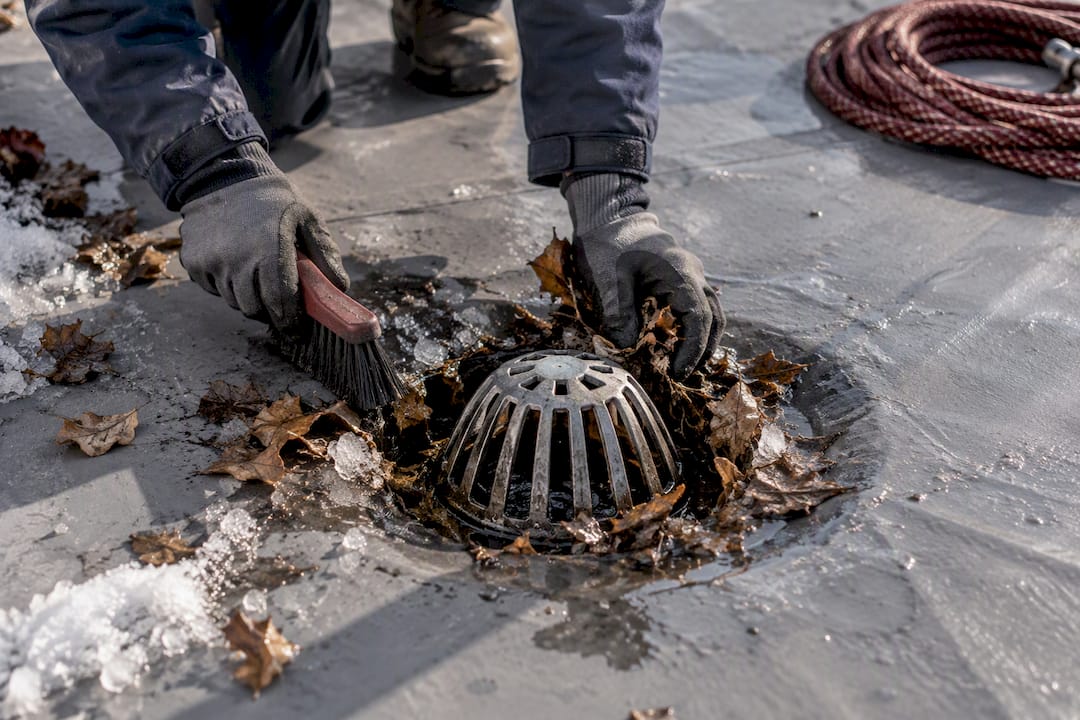
- Clean drains and scuppers on a fixed schedule, especially before the fall leaf drop and after any wind event.
- Keep a written roof log with dated photos, moisture map updates, temporary repair records, and every contractor report you receive.
- Plan drainage corrections when ponding is chronic, not seasonal. Adding a drain near a shallow, localized low spot typically costs far less than a full tapered insulation retrofit, but a widespread ponding problem across the whole field usually needs the tapered system to actually solve it.
Pro Tip: If the same corner ponds every spring, stop scheduling patch repairs and start budgeting for a drainage fix. You’re paying for the same problem twice otherwise.
FM Global’s own loss-control guidance recommends marking drain locations before winter and clearing them ahead of snow load season, a step many maintenance teams skip until it’s already a problem. Our guide on preventive roof maintenance covers a full inspection cadence you can hand directly to your maintenance staff.
What Should You Ask a Roofing Contractor Before You Sign?
Certain conditions mean it’s time to stop troubleshooting and call a licensed contractor: a soft or spongy deck underfoot, a leak that’s returned after a previous repair, ponding that’s lasted more than 48 hours, or any sign of saturated insulation. These aren’t cosmetic problems, and DIY patches on any of them tend to buy a few months at best.
Before you approve a scope of work, ask for:
- Hose test results with dates, locations, and outcomes.
- Infrared or electronic leak detection reports if the hose test didn’t isolate the breach.
- A moisture map showing every wet reading across the roof.
- Core sample recommendations where insulation condition is uncertain.
- An itemized scope tied specifically to your membrane type, not a generic “reroof” line item.
Any bid that skips diagnostics and jumps straight to a price is a red flag. Ask what warranty covers the repair itself, not just materials, and get it in writing before work starts.
How Does a Licensed Contractor Document a Commercial Roof Inspection?
A proper inspection includes a full roof walk, a drain test, a hose test on any suspect zone, and escalation to infrared or electronic leak detection when the source stays hidden. Every finding gets logged on a moisture map with photos, not just a verbal summary.
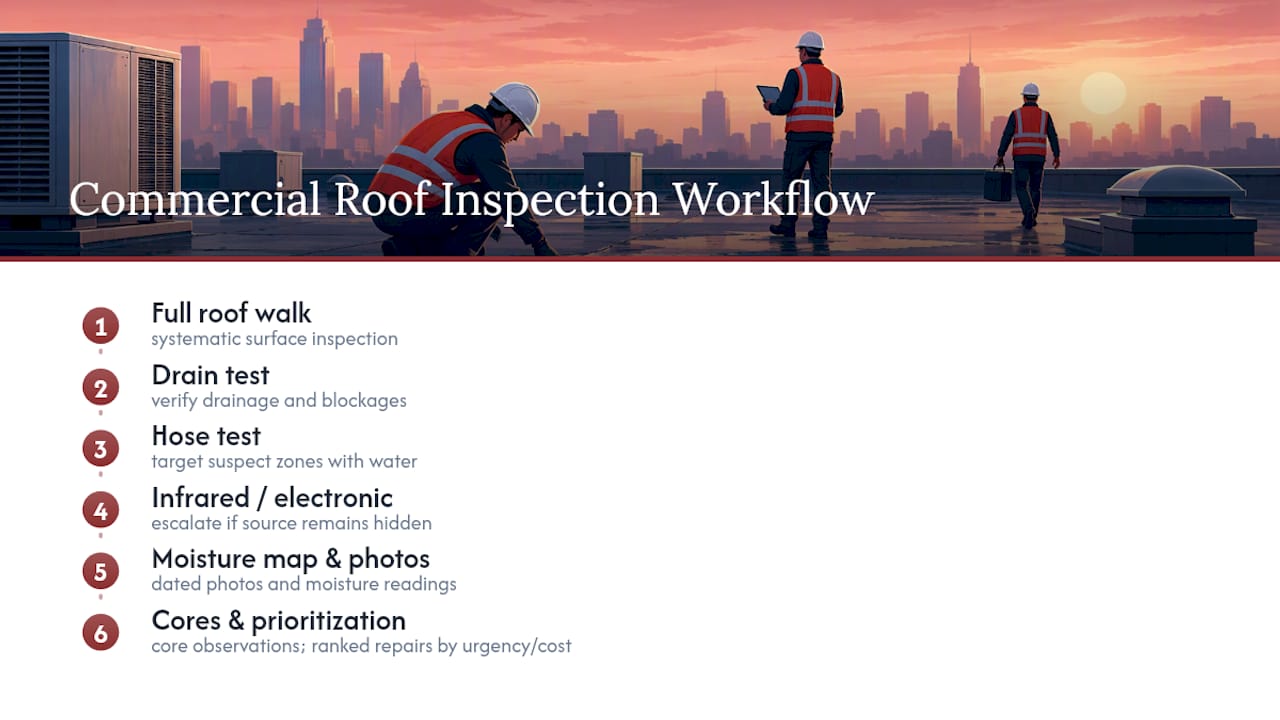
Managers should insist on dated photo documentation, actual moisture readings rather than a pass/fail note, core or cut observations where insulation condition is in question, and a prioritized repair list ranked by urgency and cost…
Why Recurring Leaks Are a Budget Problem, Not a Repair Problem
Recurring leaks rarely mean you need a better patch. They usually mean the roof is telling you it’s time for capital planning, not another Band-Aid. I’d rather see a manager spend on a proper hose test and moisture map upfront than pay three contractors over two years to chase the same breach.
Protect what’s inside the building first, diagnose thoroughly, then decide between repair and replacement with real data in hand, not guesswork.
— Adam
Get a Documented Roof Inspection Instead of Another Guess
One approach that stands out from the common patch-and-hope cycle is to include a documented moisture map, hose test results, and a prioritized repair list with every inspection, rather than a verbal opinion and a rough estimate. The company emphasizes finishing jobs on schedule and within budget.

Book an inspection and you’ll get a clear picture of what’s actually happening on your roof: where the breach sits, what caused it, and whether a targeted repair, a restoration coating, or replacement makes the most financial sense for your building. That documentation also gives you real leverage if you need to file an insurance or warranty claim later. Explore Roofing Services to see what’s included, or head straight to the Connecticut roofing contractor page to schedule a visit.
Where to Verify These Standards Yourself
The 48-hour ponding rule and minimum slope requirements come from NRCA and IBC guidance, while membrane-specific failure factors are detailed in GSA’s technical procedures. For drainage design questions beyond basic maintenance, Futuregen Consulting’s roof drainage guidance covers code-backed engineering considerations. Always cross-check any repair decision against your specific manufacturer’s warranty language before work begins.
Sources
FAQ
What Are the Most Common Causes of a Flat Roof Leak?
Ponding water, failed flashing around curbs and penetrations, degraded seams on single-ply membranes, and clogged drains cause most commercial flat roof leaks. Ponding beyond 48 hours is considered the single strongest predictor of premature membrane failure.
Does Commercial Insurance Cover Flat Roof Leaks?
Coverage depends on the cause and your policy’s specific exclusions, and many commercial policies exclude damage tied to ponding water or deferred maintenance. Documented moisture maps and inspection reports are usually what separates an approved claim from a denied one.
Where Do Flat Roofs Leak the Most?
Low spots that hold ponding water and flashing around roof penetrations account for the majority of leaks. Seams on aging single-ply membranes are the next most common source, especially near roof edges and equipment curbs.
Can a Temporary Patch Void My Roof Warranty?
Yes, using an incompatible sealant or patch material on a membrane it wasn’t designed for can void a manufacturer’s warranty. Confirm your membrane type before applying anything, and treat every temporary fix as a dated, photographed stopgap rather than a permanent solution.
How Much Does a Flat Roof Leak Repair Typically Cost?
Costs vary widely depending on whether the fix is a simple patch, a section repair, a restoration coating, or a drainage correction like adding a drain versus a full tapered insulation retrofit. Jsignorexteriors provides itemized quotes tied to your specific membrane and diagnostic findings rather than a flat rate, available through a documented inspection.