
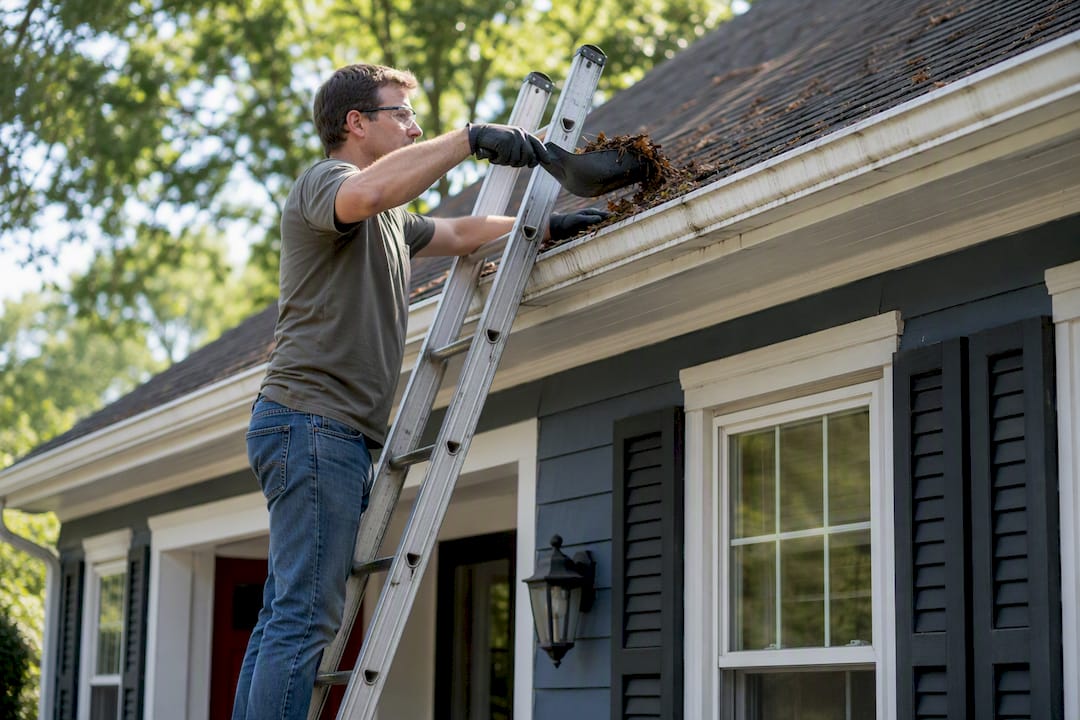
Clean and inspect your gutters at least twice a year, spring and fall, and more often if your roofline sits under heavy tree cover. Success looks simple: water moves freely through the entire system with no standing pools or overflow when you flush it with a hose. That single test tells you more than a visual check ever will.
The safest approach avoids unnecessary ladder time. Ground-based tools handle light debris on one-story homes, while two-story roofs, steep pitches, or visible rot are signals to bring in a professional instead of pushing your luck on an extension ladder.
- Baseline cadence: twice yearly, spring and fall, more with heavy tree coverage
- Core verification: flush every run and downspout, watch for standing water
- Safety rule: minimize ladder exposure; call a pro for two-story or steep-pitch roofs
Key Takeaways
Gutters stay functional when homeowners flush and inspect them at least twice a year and hand off any job involving height, rot, or structural sagging to a licensed contractor.
| Point | Details |
|---|---|
| Clean twice a year minimum | Spring and fall cleanings cover most homes; add a summer check under heavy tree cover. |
| Flush to verify success | Standing water after flushing signals a slope problem, not just leftover debris. |
| Prioritize ground-based safety | Use telescoping wands or blower attachments on one-story homes before reaching for a ladder. |
| Guards reduce, don’t eliminate, upkeep | Inspect guarded systems annually since grit and pine needles still get through. |
| Call a pro for structural signs | Jsignorexteriors handles re-hanging, pitch correction, and seamless installation when rot or sagging spreads. |
Table of Contents
- What Tools Do You Need for Gutter Maintenance?
- How Often Should You Clean Your Gutters?
- What’s the Right Way to Clean Gutters Step by Step?
- How Do You Inspect and Repair Gutters After Cleaning?
- Do You Still Need to Inspect Gutters With Guards Installed?
- When Should a Contractor Handle Your Gutters?
- Get a Professional Gutter Inspection From J. Signor Exteriors
- Sources
What Tools Do You Need for Gutter Maintenance?
The right equipment turns a messy chore into a manageable one. A sturdy extension ladder with a stabilizer bar, a plastic gutter scoop, heavy-duty gloves, and eye protection cover the basics. For flushing, a garden hose with a nozzle or a telescoping wand reaches long runs without repositioning constantly. A leaf-blower attachment or wet/dry vac attachment clears dry debris fast, and a plumber’s snake or downspout auger breaks up stubborn clogs deep in the pipe.
Ladder safety isn’t optional. Extend the ladder at least 3 feet above the gutter line, keep your belt buckle between the rails at all times, and set up on level ground with a ladder stabilizer to keep the rungs from crushing the gutter edge. Always work with a spotter on the ground.
For one-story homes, a telescoping wand or blower attachment handles light debris safely from the ground, though it won’t dislodge compacted sludge or reveal hidden structural problems the way a hands-on inspection does.
- Ladder + stabilizer bar
- Gutter scoop and heavy gloves
- Garden hose with nozzle or telescoping wand
- Leaf-blower or wet/dry vac attachment
- Plumber’s snake or downspout auger
Pro Tip: Skip the ladder entirely if your roof is over two stories, sits near power lines, has a steep pitch, or shows soft, discolored fascia boards. None of those situations are worth the risk.
How Often Should You Clean Your Gutters?
Twice a year is the baseline that works for most homes: once in spring to clear pollen, seed pods, and winter grit, and once in fall before hard freezes set in. Homes surrounded by pines or heavy tree canopy may need additional cleanings during the year due to faster accumulation of needles and leaf litter.
Watch for signs that push you off schedule: visible debris spilling over the edge, small plants sprouting in the channel, sagging sections, or water splashing at ground level during rain. Any of those mean it’s time now, not next season.
- Spring: full clean after trees finish shedding seed pods and pollen
- Summer: quick visual spot-check after storms, especially near overhanging branches
- Fall: deep clean before the first hard freeze to prevent ice-dam risk
- Winter: monitor for ice buildup and clear downspout outlets after snow events
What’s the Right Way to Clean Gutters Step by Step?
Pick a dry day, gather your tools, and lay a tarp along the drop zone so debris doesn’t land on flower beds or walkways. Wear gloves and eye protection before you climb.
- Start at the downspout end, not the far end. Working toward the outlet keeps loosened debris moving in the direction it needs to drain.
- Scoop bulk debris with a gutter scoop or gloved hand, dropping it onto the tarp or into a bucket hung from the ladder.
- Flush the run with a hose, working from the far end back toward the downspout to push remaining sediment through. Home Depot’s cleaning guide recommends this direction specifically to test flow as you go.
- Flush the downspout itself. If water backs up, feed a plumber’s snake down from the top, or remove the lower elbow joint to clear the blockage from below, then reattach and retest.
- Watch for standing water. Any section that holds a puddle after flushing has a slope problem, not just a clog.
That last step matters more than most homeowners realize. A properly pitched gutter drains completely within a minute or two of flushing. If water lingers, the recommended slope is roughly a quarter inch drop per 10 feet toward the downspout, and a section sitting flat or reverse-pitched needs a hanger adjustment. Our guide to gutter pitch breaks down how to measure and correct that slope without guessing.
How Do You Inspect and Repair Gutters After Cleaning?
Cleaning clears the debris; inspecting tells you whether the system is actually sound. Walk the roofline and check each run for these problems:
- Sagging sections between hangers
- Loose, bent, or missing hangers
- Leaking seams at joints and corners
- Rust spots or small holes in metal gutters
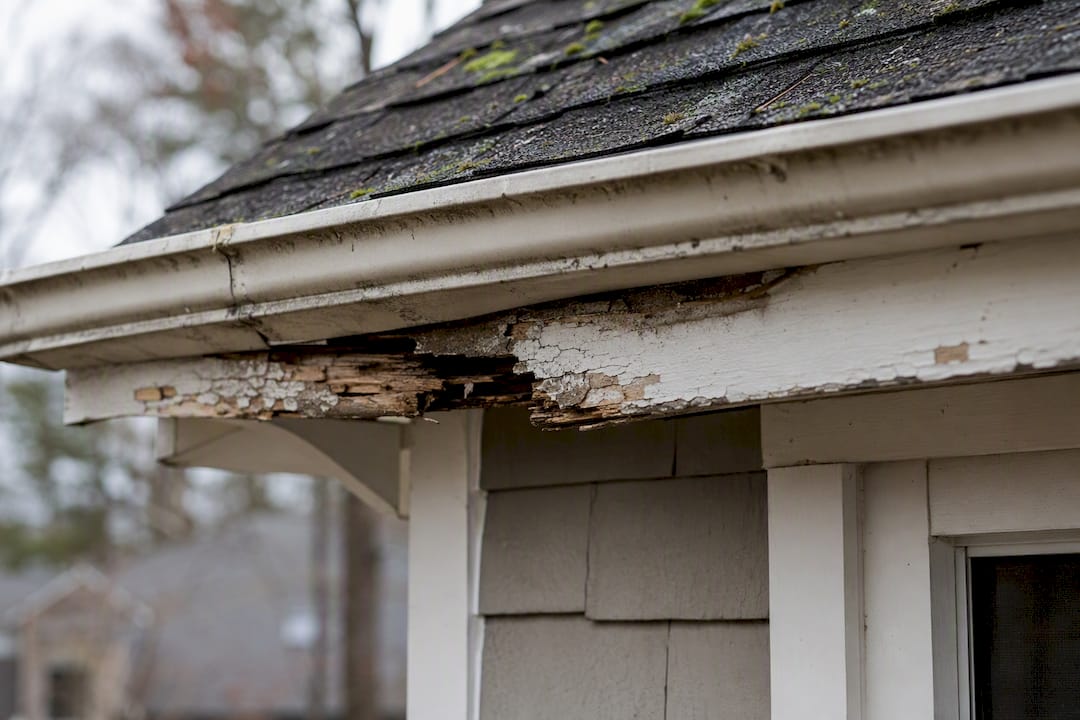
- Soft or discolored fascia board behind the gutter
- Cracked or disconnected downspout outlets at the base
Small problems have small fixes. Reseal a leaking seam with gutter sealant, patch a pinhole with a metal patch kit, swap out a bent hanger, or tighten loose fasteners. Adjusting pitch on a single sagging section is often a matter of repositioning one or two hangers.
Some issues cross the line from DIY project to contractor job: fascia rot spreading across multiple sections, several runs sagging at once, or drainage blockages buried underground where the downspout ties into a drain line. Trying to patch structural rot with sealant just delays a bigger repair bill later.
Do You Still Need to Inspect Gutters With Guards Installed?
Gutter guards cut down how often you climb the ladder, but they don’t erase maintenance entirely. Mesh and micro-mesh guards block leaves well but let fine grit and pine needles slip through over time. Reverse-curve guards shed heavy leaves efficiently but struggle with wind-driven debris. Foam inserts and brush-style guards are budget-friendly but tend to trap seeds and moss inside the material itself.
Every guard type still needs an annual check. This Old House’s maintenance guidance notes that grit and needles accumulate inside mesh systems even when the surface looks clean. Brush the tops clear, rinse off pollen film, check that seams and fasteners are secure, and flush the system to confirm nothing has built up underneath.
- Mesh/micro-mesh: fine debris resistant, still needs annual grit checks
- Reverse-curve: sheds leaves well, weaker against wind-blown debris
- Foam/brush inserts: affordable, prone to trapping seeds and moss
When Should a Contractor Handle Your Gutters?
Recurring clogs after every cleaning, sagging across multiple runs, or fascia rot are your clearest signals to call a professional. Two-story homes and steep roof pitches raise the stakes enough that the labor cost is worth the reduced fall risk alone.
Contractors typically handle full inspections, re-hanging with corrected pitch, section replacement, seamless gutter installation, and drainage rework where underground lines are involved. Before hiring anyone, ask for proof of license and insurance, a portfolio or references from past jobs, a written estimate, and specifics on materials and warranty coverage. A contractor who hesitates on any of those four is one to skip.

Get a Professional Gutter Inspection From J. Signor Exteriors
If your gutters need more than a seasonal cleaning, Jsignorexteriors handles the work a ladder and a Saturday afternoon can’t fix, at a fraction of the risk. Where a DIY repair patches one bad seam, a full contractor inspection catches the sagging run three feet over that you haven’t noticed yet.

Jsignorexteriors offers gutter installation, repair, re-hanging with corrected pitch, and seamless gutter options built to hold up through Connecticut winters, backed by more than 30 years of exterior remodeling experience. When rot has spread into the fascia, our team can also assess whether nearby roofing or flashing details are contributing to the moisture problem, since gutter failure and roof drainage issues often trace back to the same root cause.
If your last flush test left standing water or you spotted rust and rot during inspection, request an estimate through our gutter installation page and get a professional read on what your system actually needs.
Sources
- Long-term maintenance for gutter guards
- How to Clean Gutters – The Home Depot
- How to clean gutters and downspouts safely – State Farm
- How to Clean & Repair Gutters | Lowe’s