If your fascia boards are peeling paint or sagging, but the wood underneath is still solid, repair it. If you see widespread rot, insect damage, or boards pulling away from the roofline in multiple spots, plan on full fascia and soffit replacement. Most professional jobs run $1,050 to $3,300 for an average home, averaging near $2,500, or roughly $6 to $20 per linear foot depending on material.
- Get a roofline inspection before you commit to either option
- Collect 2-3 written contractor quotes that spell out material and scope
- Compare per-linear-foot pricing, not just the total project number
Key Takeaways
Fascia and soffit replacement cost depends primarily on material choice and the extent of hidden rot in the rafter tails and subfascia, not just linear footage.
| Point | Details |
|---|---|
| Use the 40% rule | Replace instead of repair once significant rot covers roughly 40% of a run or more. |
| Budget realistically | Expect $1,050 to $3,300 for a typical whole-home project, or $6 to $20 per linear foot. |
| Choose low-maintenance materials | Aluminum and PVC cost more upfront but need no repainting over a 25 to 30 year lifespan. |
| Preserve attic ventilation | Match or improve vented soffit airflow during replacement to protect your roof deck. |
| Hire for multi-story or structural work | Jsignorexteriors provides licensed, insured roofline inspections and replacement across Connecticut. |
Table of Contents
- What Fascia and Soffit Replacement Involves
- How Do You Know If You Need Repair or Full Replacement?
- Which Material Is Best for Fascia and Soffit Replacement?
- What Happens During a Fascia and Soffit Replacement Project
- What Drives the Cost of Soffit and Fascia Replacement?
- Can You Replace Fascia and Soffit Yourself?
- How Often Should You Maintain Fascia and Soffit?
- Why Contractors Recommend Aluminum and PVC for Fascia
- How to Measure Fascia and Soffit for an Accurate Budget
- Comparing Soffit Ventilation Options
- Environmental Impact of Fascia and Soffit Materials
- Does Fascia and Soffit Replacement Affect Insurance or Building Codes?
- Fix the Structure First, Then Worry About Looks
- How Jsignorexteriors Handles Fascia and Soffit Replacement
- Frequently Asked Questions
- Sources
What Fascia and Soffit Replacement Involves
Fascia is the straight board that runs along the edge of your roofline, right where your gutters attach. Soffit is the material underneath the eaves, the part you see when you look up from your porch or driveway, and it’s usually perforated to let attic air escape. Together they form the finished edge of your roof system, and they do more work than most homeowners realize.
Fascia carries the weight of your gutters and shields the exposed ends of your rafters, called rafter tails, from rain and sun. Soffit ventilates your attic, keeps birds and squirrels out of your roof cavity, and hides the underside framing. When either one fails, the damage doesn’t stay cosmetic for long.
- Rotted fascia lets gutters sag or tear loose from the fasciae entirely
- Damaged soffit lets moist attic air stagnate, which speeds up mold growth and can warp roof decking from underneath
How Do You Know If You Need Repair or Full Replacement?
Not every roofline problem calls for a full tear-off. Look for these signs before you decide:
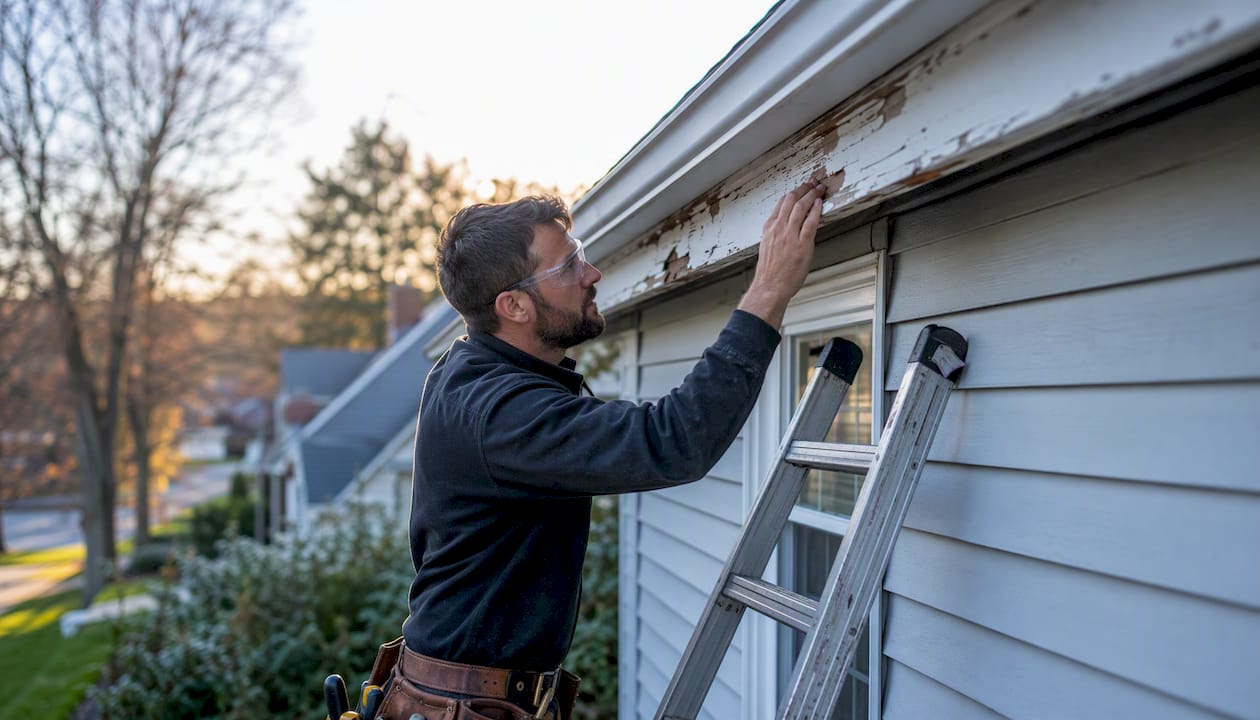
- Peeling or bubbling paint on fascia boards
- Visible sagging or waviness along the roof edge
- Soft, spongy wood when you press on it (a screwdriver test works well)
- Insect holes, sawdust trails, or actual nests in the soffit
- Water stains on the fascia or on siding just below it
- Gutters pulling away from the house or sitting at an odd angle
- Soffit vents that are painted shut, crushed, or blocked with debris
Contractors often apply a practical rule of thumb here: if more than roughly 40% of a given run shows significant rot, or if patch repairs would cost close to 60% of full replacement, replacement is the smarter long-term investment. Anything less isolated usually justifies a targeted repair instead.
Pro Tip: Ask your inspector to check the rafter tails and subfascia, not just the visible trim. Rot often starts behind the boards you can see, and a contractor who skips this step is only treating the surface.
Which Material Is Best for Fascia and Soffit Replacement?
Material choice drives most of your total cost, and it also determines how much time you’ll spend maintaining the roofline for the next 20 years. Here’s how the five common options stack up.
| Material | Cost per linear foot | Lifespan | Maintenance | Rot/weather resistance |
|---|---|---|---|---|
| Wood | $6-$20 | 10–20 years | Repaint every 3–5 years | Vulnerable to rot and insects without upkeep |
| Vinyl | $5-$10 | 20–30 years | Occasional cleaning | Good, but can crack in extreme cold |
| Aluminum | $6-$15 | 25-30+ years | Virtually none | Excellent; resists rot, pests, and moisture |
| PVC | $6-$20 | 25-30+ years | Virtually none | Excellent; won’t rot or absorb water |
| Composite | $10-$20 | 20–25 years | Minimal | Good, resists moisture better than raw wood |
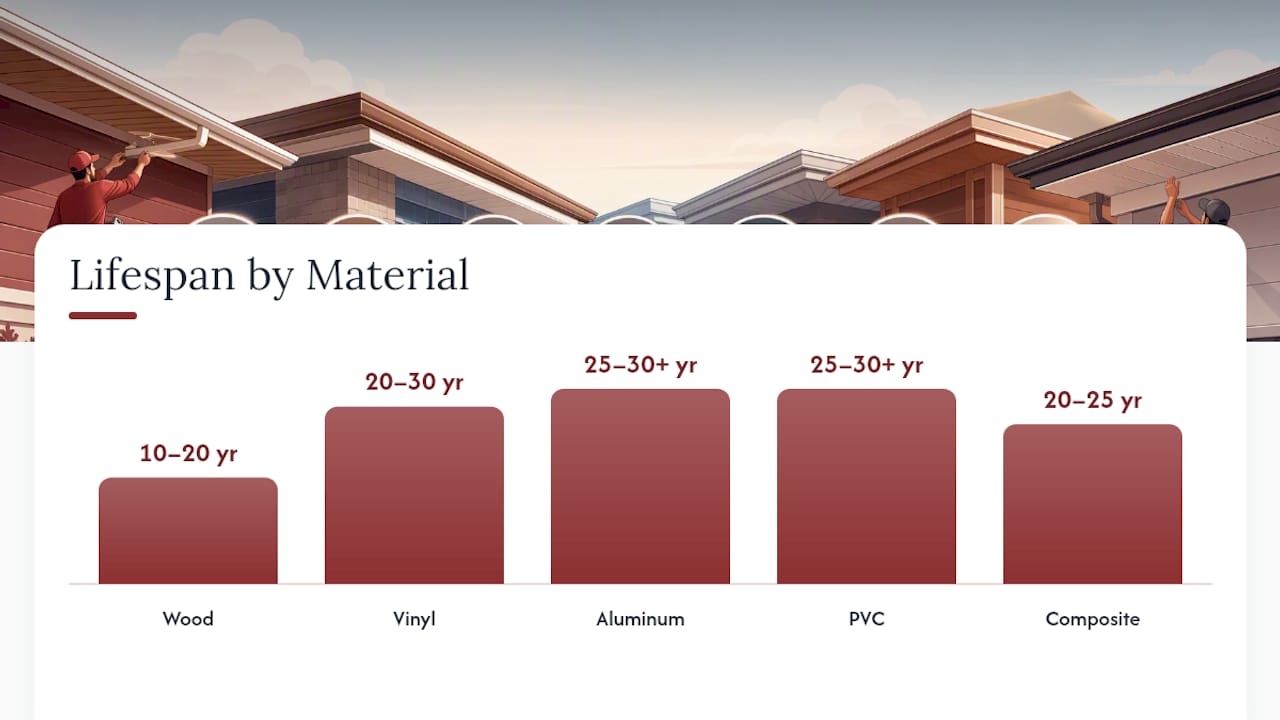
Wood remains the go-to for historic homes or anyone matching an existing trim profile, but it’s the highest-maintenance option on this list by a wide margin. Vinyl costs less upfront and handles moisture reasonably well, though cheaper vinyl products can become brittle in a Connecticut winter. Aluminum and PVC dominate the professional replacement market for a reason: once installed correctly, they don’t need scraping, priming, or repainting, and both resist the moisture and pest damage that eventually undoes wood trim. Composite splits the difference, offering better moisture resistance than raw wood with a look closer to natural grain than vinyl or aluminum provide.
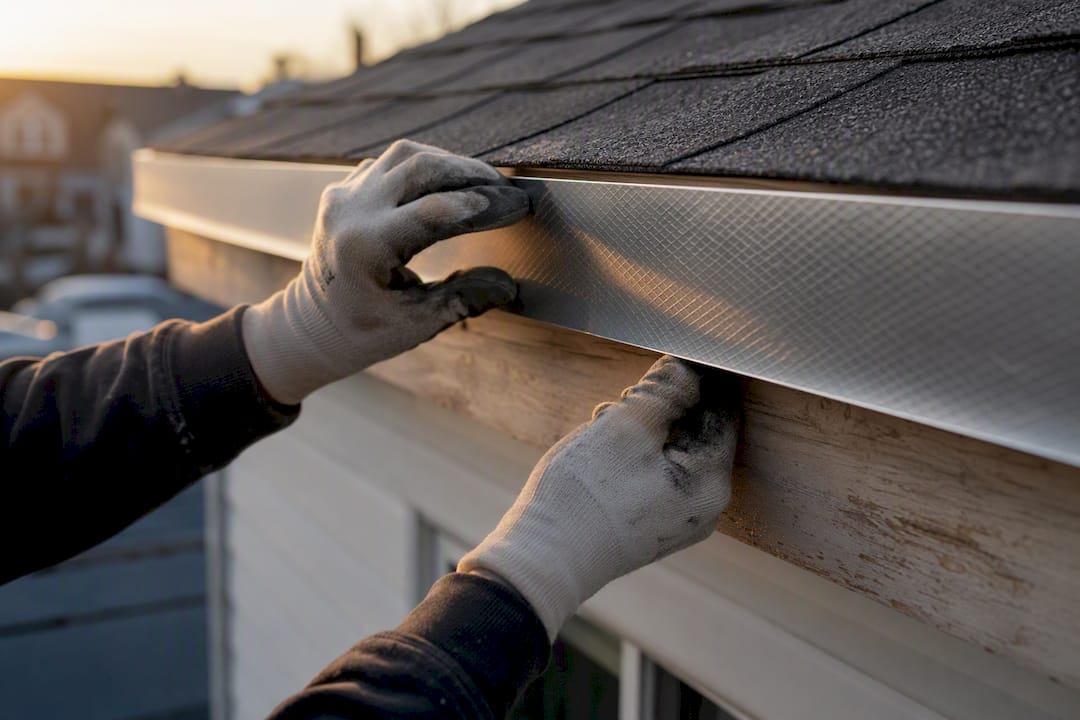
Pro Tip: If your existing wood fascia is still structurally sound and just cosmetically worn, wrapping it in aluminum trim coil can extend its life for a fraction of full replacement cost. If the wood underneath is soft or rotted, wrapping just hides a problem that will keep getting worse.
What Happens During a Fascia and Soffit Replacement Project
A full replacement follows a predictable sequence, and knowing the order helps you understand what a contractor’s quote should actually cover.
- Inspect the roofline and identify every section of damaged fascia, soffit, and hidden framing
- Remove gutters and any drip edge trim to access the boards underneath
- Strip out old fascia and soffit material
- Check rafter tails, lookouts, and subfascia for rot, and repair or sister in new framing where needed
- Install new fascia boards, cut and fastened to the repaired framing
- Install new soffit, matching ventilation to the home’s existing attic airflow needs
- Reinstall gutters and drip edge, checking that slope and alignment are correct
- Caulk, seal, and paint if the material requires it
Most single-family homes take one to three days for a complete replacement, depending on square footage, roofline complexity, and how much hidden rot turns up once the old boards come off. Complex cornices, dormers, and multiple roof elevations all add time. Gutters typically come off as a matter of access, since installing new fascia behind attached gutters is nearly impossible to do correctly, and a misaligned reinstallation can throw off the pitch that keeps water draining toward your downspouts instead of pooling.
What Drives the Cost of Soffit and Fascia Replacement?
Two homes with identical square footage can get quotes that differ by thousands of dollars, and the gap almost always comes down to a handful of variables.
- Material choice: aluminum and PVC cost more per foot than vinyl but need zero repainting
- Linear footage: larger homes and complex rooflines with multiple gables simply need more material
- Extent of hidden rot: structural repairs to rafter tails or lookouts can add a few hundred to a few thousand dollars depending on severity
- Gutter work: removing and reinstalling gutters, or replacing them outright, adds labor time
- Painting: wood fascia that needs primer and two coats adds a separate line item
- Access and height: two-story and three-story homes require scaffolding or lift rental, which raises labor cost
- Local permit and labor rates: these vary by region and by contractor overhead
Bundling fascia and soffit work with a full roof replacement or gutter installation often lowers the effective per-foot price, since the crew is already on site with scaffolding up and access secured.
Can You Replace Fascia and Soffit Yourself?
DIY makes sense in narrow circumstances: a single-story home, a small section of visibly damaged board, and enough comfort on a ladder to work safely at the eave line. Retail how-to guides walk homeowners through the basic tool list and cutting steps for exactly this kind of limited job.
Everything else belongs with a professional. Multi-story homes, structural rot, ventilation changes, or any project that touches your gutters is safer and more reliable in a contractor’s hands, because these projects involve height risk and directly affect drainage and attic airflow. A licensed exterior contractor brings safe access equipment, framing inspection experience, correct fastener choices for your climate, and a written warranty on the finished work.
Before signing anything, ask a contractor:
- Are you licensed and insured, and can you show proof?
- What’s included in the written scope, down to the material spec?
- Will you inspect and repair rafter tails or subfascia if you find rot?
- What warranty do you offer on materials and labor?
Pro Tip: A bid that comes in dramatically lower than the others, or one with no written scope at all, is the fastest way to end up with a callback six months later.
How Often Should You Maintain Fascia and Soffit?
Walk your roofline twice a year, ideally spring and fall, and look for the same warning signs covered earlier: peeling paint, blocked vents, and any nesting activity. Clear debris from gutters so water doesn’t sit against the fascia board.
Vented soffit is what lets fresh air move through your attic, pulling moisture out before it condenses on the underside of your roof deck. Any replacement project should preserve or improve that airflow, not restrict it.
- Wood: repaint every 3–5 years, inspect annually
- Vinyl, aluminum, and PVC: rinse occasionally, inspect annually, no repainting
Pro Tip: If you’re replacing soffit anyway, it costs little extra to upgrade to a higher-airflow vented panel, and better attic ventilation can extend the life of your roof shingles.
Why Contractors Recommend Aluminum and PVC for Fascia
Contractor-grade aluminum fascia typically uses .019-inch material with a baked-enamel finish, often backed by a 15-year warranty against chipping or cracking. Custom-bent profiles with an integrated roof edge reduce seams and direct water into the gutter more reliably than piecemeal trim.
When you’re comparing bids, ask what gauge aluminum is specified. Thin, non-warrantied trim coil is a different product than true .019-inch contractor-grade material, and the price difference between the two usually shows up again in five years. Wrapping existing wood fascia with aluminum coil works when the wood underneath is dry and structurally sound; full replacement is the right call once framing is compromised.
How to Measure Fascia and Soffit for an Accurate Budget
Measuring correctly before you call a contractor helps you sanity-check any quote you receive, since fascia and soffit are both priced by the linear foot.
Start with fascia: measure the total linear footage along every roof edge where board is visible, including gables, dormers, and any bump-outs. Walk the entire perimeter rather than estimating from one side and doubling it, since most homes aren’t perfectly symmetrical. Add the height of the fascia board itself, typically 6 to 8 inches on newer construction, since taller boards use more material per foot.
Soffit measures differently because it covers a horizontal area, not just a line. Measure the depth of the eave overhang (the distance from the wall to the edge of the fascia) and multiply it by the same linear footage you calculated for fascia. A 1-foot-deep overhang running 150 linear feet works out to roughly 150 square feet of soffit panel.
Don’t forget waste. Material typically comes in fixed lengths, and cutting around corners, vents, and light fixtures creates offcuts you can’t reuse. Add 10 to 15% to your raw measurement before pricing materials. If your home has complex rooflines with multiple elevations, measure each section separately rather than trying to average the whole house, since gable ends and porch overhangs often need different soffit widths than the main roofline.
Bring these numbers to your contractor consultation. A pro who quotes without ever measuring your home, relying only on a drive-by estimate, is more likely to under-order material or miss a section entirely.
Comparing Soffit Ventilation Options
Soffit isn’t just a trim piece, it’s usually your attic’s primary intake vent, working alongside ridge vents or gable vents to keep air moving through the roof cavity. Getting the ventilation type right during replacement matters as much as picking the material.
Continuous vented soffit runs a perforated strip along the entire eave, providing steady, even airflow. This is the standard choice for most residential replacements because it doesn’t rely on precise spacing the way individual vents do.
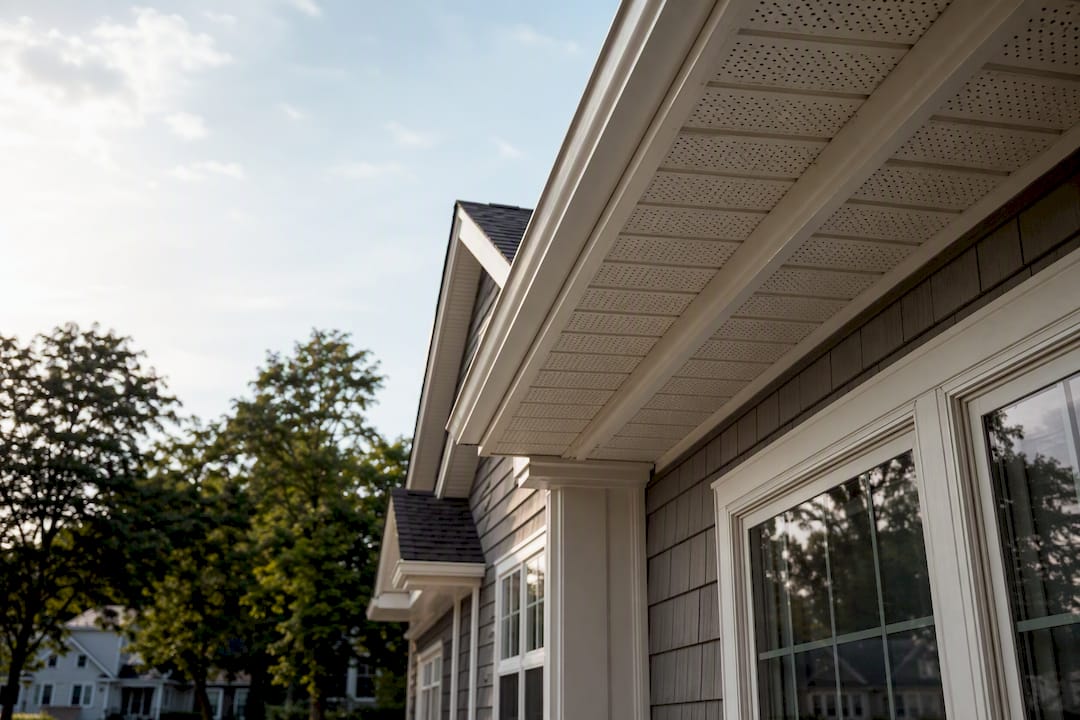
Individual round or rectangular vents are inserted into solid soffit panels at intervals. They’re less expensive to install but provide less consistent airflow, and they’re more prone to getting blocked by insulation pushed against them from inside the attic.
Solid, unvented soffit is sometimes used on homes with a different ventilation strategy, such as a fully vented ridge combined with gable vents, or on additions where the attic space above doesn’t connect to the main cavity. Installing solid soffit where the attic actually needs intake air is one of the more common ventilation mistakes homeowners run into after a replacement.
When you replace soffit, match or improve the net free vent area you’re starting with. Reducing ventilation during a cosmetic upgrade is an easy way to trap moisture in an attic that was previously balanced, and that moisture buildup can shorten the life of your roof deck and shingles well before either would otherwise need replacing.
Environmental Impact of Fascia and Soffit Materials
Material choice affects more than your maintenance schedule. It also shapes the environmental footprint of your roofline for the next few decades.
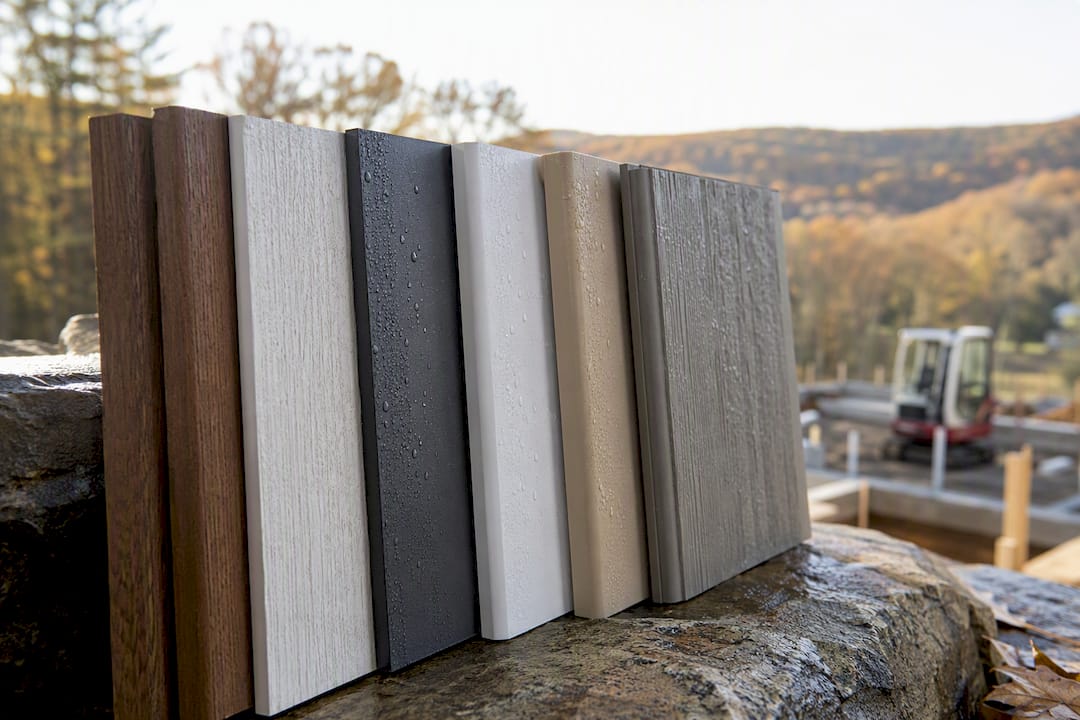
Wood is a renewable resource and, when sustainably harvested, has a lower manufacturing footprint than manufactured alternatives. But its shorter functional lifespan (10 to 20 years before rot or repeated repainting becomes an issue) means more frequent replacement, more paint and stain chemicals over time, and more waste headed to landfills.
Vinyl is petroleum-based and doesn’t biodegrade, but its 20 to 30 year lifespan means fewer replacement cycles than wood, and many manufacturers now offer recycling programs for vinyl trim scraps.
Aluminum has a real sustainability advantage that’s easy to overlook: it’s highly recyclable, and a large share of aluminum building products contain recycled content already. Its 25 to 30 plus year lifespan, combined with essentially zero maintenance chemicals over that span, gives it one of the lower lifetime environmental footprints among common fascia materials.
PVC shares aluminum’s low-maintenance profile but is harder to recycle in most residential waste streams, so its environmental case rests more on longevity than on end-of-life recyclability.
Composite materials, often made from wood fiber and recycled plastic, use waste streams from other manufacturing processes, which gives them a reasonable sustainability story even though their raw components aren’t naturally occurring.
If long-term environmental impact factors into your decision, weigh lifespan and maintenance chemical use alongside the material’s origin, not just whether it started as a “natural” product.
Does Fascia and Soffit Replacement Affect Insurance or Building Codes?
Homeowners insurance rarely has a line item specifically for fascia and soffit, but roofline condition still matters to your policy in indirect ways. Insurers evaluating a claim for water damage or interior mold sometimes look at whether deteriorated fascia or soffit contributed to the problem, since ongoing neglect of a known issue can complicate a claim compared to sudden, accidental damage.
Replacing damaged fascia and soffit promptly, and keeping receipts or photos of the work, gives you documentation if you ever need to demonstrate that you maintained your roofline properly.
Building codes come into play mostly around ventilation requirements. Most residential codes specify a minimum ratio of attic ventilation to attic floor area, split between intake (soffit) and exhaust (ridge or gable vents). If you’re replacing soffit as part of a larger renovation or a full roof replacement, your contractor should confirm the new vented soffit meets your local code’s net free area requirement, since undersized ventilation can occasionally surface as an issue during a home sale inspection or an insurance underwriting review. Permit requirements for fascia and soffit replacement alone are typically minimal, but any project that also touches structural framing or the roof deck may require a permit depending on your municipality.
Fix the Structure First, Then Worry About Looks
Cosmetic fixes on top of rotten framing just delay the real repair and waste money twice. Get the structural work right, then choose the material that fits your budget and maintenance tolerance. Jsignorexteriors approaches every roofline project with that order of operations, backed by more than 30 years of exterior remodeling experience.
How Jsignorexteriors Handles Fascia and Soffit Replacement
If you’ve been comparing DIY tutorials against contractor quotes and still aren’t sure which way to go, an on-site inspection settles the question faster than any article can. Jsignorexteriors sends a licensed, insured crew to look at your rafter tails and subfascia in person, not just the visible trim, so you get a scope of work built on what’s actually happening behind your gutters.

As a family-owned contractor serving Connecticut for more than 30 years, Jsignorexteriors handles fascia, soffit, gutter, and full roofline work under one crew and one warranty, which means no finger-pointing between separate trades if something doesn’t line up later. That matters most on jobs where fascia repair overlaps with gutter reinstallation or attic ventilation changes, the exact points where a lot of DIY and single-trade jobs run into trouble. If your roofline shows any of the warning signs covered above, request a written estimate from Jsignorexteriors and get a real number to compare against the ranges in this guide.
Frequently Asked Questions
How much does fascia and soffit replacement typically cost?
Most whole-home projects run $1,050 to $3,300, averaging near $2,500, or $6 to $20 per linear foot depending on material and complexity.
Can I replace fascia without removing my gutters?
Not usually. Gutters typically need to come off to access the fascia board properly, and reinstalling them correctly afterward protects your roof’s drainage slope.
Is aluminum or wood better for fascia replacement?
Aluminum requires virtually no maintenance and resists rot and pests for 25 to 30 plus years, while wood needs repainting every 3 to 5 years but may suit historic homes better aesthetically.
How long does a fascia and soffit replacement project take?
Most single-family homes take one to three days, depending on square footage, roofline complexity, and how much hidden rot the crew finds once the old boards come off.
Do I need a permit to replace fascia and soffit?
Fascia and soffit replacement alone typically doesn’t require a permit, but projects that also involve structural framing or roof deck work may, depending on your municipality.
Sources
- Understanding fascia and soffit repair
- Cost to Replace or Repair Fascia and Soffits
- Aluminum Fascia With Roof Edge | Trim Bender
- When and How To Replace or Repair Damaged Roof Fascia Board