

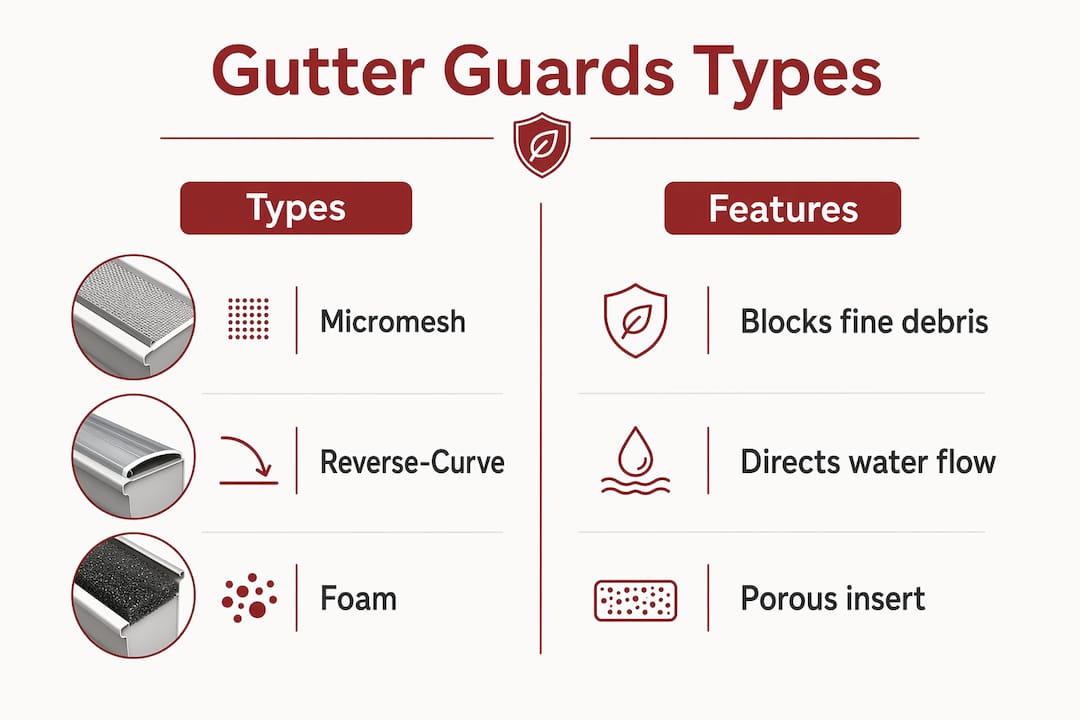
A gutter guard is defined as a protective cover, insert, or filtration system installed over or inside rain gutters to block debris while allowing water to pass through freely. The gutter guard definition covers five primary types: mesh/micromesh, reverse-curve, foam inserts, brush cylinders, and integrated gutter/guard systems. Each type works differently, but all share the same core purpose. They protect your drainage system from leaves, twigs, pine needles, and other debris that cause clogs, overflow, and costly water damage. Understanding what a gutter guard does, and which type fits your property, is the first step toward a lower-maintenance, better-protected home.
What is a gutter guard, and what types are available?
Gutter guards are protective covers or filtration systems installed over or inside gutters to block debris while water flows through. The five main types each handle debris and water differently, and choosing the wrong one for your environment leads to poor performance.
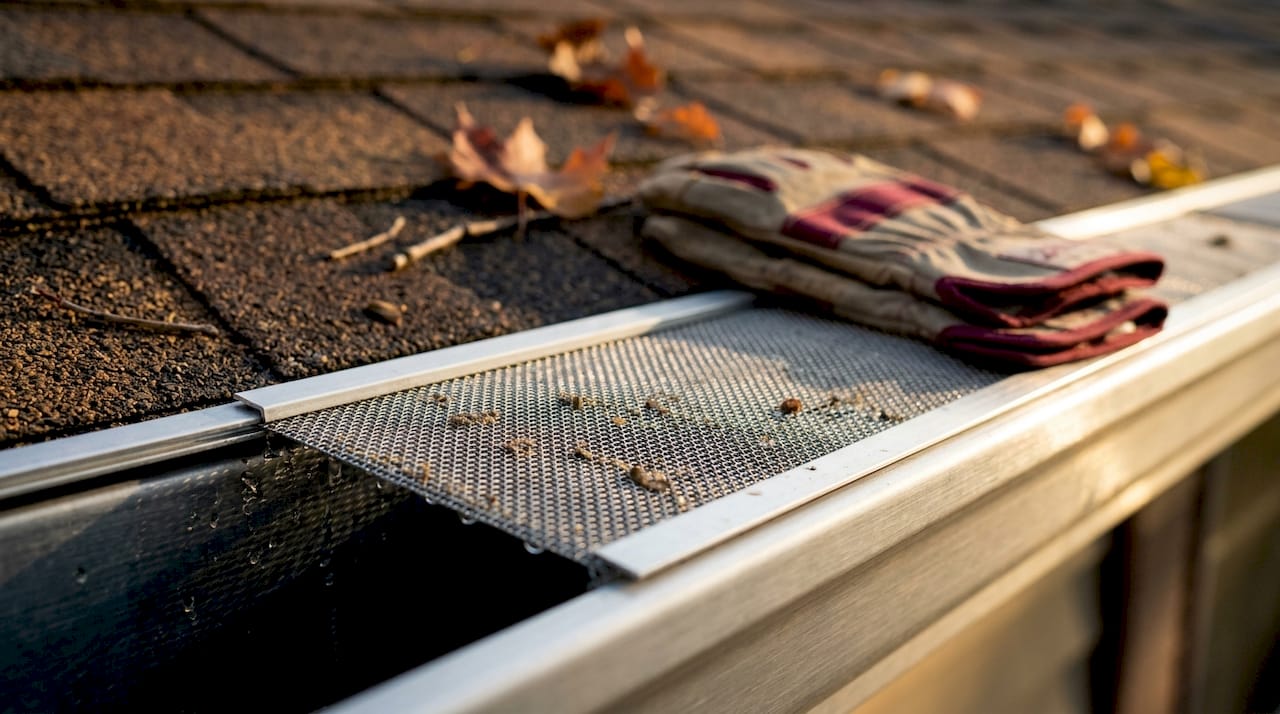
Mesh and micromesh guards use a fine screen stretched across the gutter opening. Water passes through the tiny holes while leaves and debris sit on top and blow away. Micromesh is the gold standard in areas with fine debris like pine needles and pollen. It performs well in heavy rain because the mesh surface sheds water quickly into the gutter below.
Reverse-curve guards use surface tension to direct water over a curved lip and into the gutter while debris falls to the ground. They work well with large, dry leaves but can struggle during heavy rainfall when water overshoots the curve entirely. They also tend to be more visible from the street.
Foam inserts sit inside the gutter channel and allow water to seep through the porous material while blocking debris on top. They are easy to install but prone to debris buildup in shaded, wet climates. Moss and algae can grow inside the foam over time, reducing effectiveness.
Brush cylinder guards work similarly to foam inserts. A cylindrical brush sits inside the gutter, and water flows around the bristles while debris rests on top. They are simple to install but require more frequent cleaning because debris gets tangled in the bristles.
Integrated systems combine the gutter and guard into a single unit. These are typically installed during new construction or full gutter replacement. They offer the cleanest look and often the best long-term performance, but they cost more upfront.
| Guard type | Best for | Weakness | Maintenance need |
|---|---|---|---|
| Micromesh | Fine debris, heavy rain | Higher cost | Low |
| Reverse-curve | Large dry leaves | Heavy rain overflow | Low to medium |
| Foam insert | Easy DIY install | Algae, moss growth | Medium to high |
| Brush cylinder | Simple setup | Debris tangles in bristles | Medium to high |
| Integrated system | New builds, full replacements | Higher upfront cost | Low |
Pro Tip: If your property has pine trees nearby, skip foam and brush options entirely. Pine needles work their way into both materials and are difficult to remove without pulling the guard out completely.
How do gutter guards improve roof drainage and reduce maintenance?
Gutter guards reduce the frequency of clogs, which directly lowers the risk of overflow, fascia rot, soffit damage, and foundation erosion. When gutters overflow consistently, water saturates the fascia board behind the gutter and begins to rot the wood. That rot spreads to the soffit and eventually into the roof deck itself. Guards interrupt that chain of damage by keeping the gutter channel clear.
Gutter guards help prevent water damage to fascia and soffit, reduce overflow, and mitigate ice dam formation in cold-weather climates like Connecticut. Ice dams form when water backs up in a clogged gutter, freezes, and forces ice under the shingles. A clear gutter drains before freezing occurs.
The benefits of gutter guards include:
- Fewer manual cleanings per year
- Reduced risk of fascia and soffit rot
- Lower chance of ice dam formation in winter
- Protection against foundation erosion from overflow
- Reduced fire hazard in dry climates where dry debris accumulates
The critical misconception to correct here is the idea that guards are “maintenance-free.” “Maintenance-reduced” is a more accurate term for what guards actually deliver. You still need periodic inspection and cleaning. The interval between cleanings extends, but it does not disappear. Gutter guards reduce maintenance frequency but do not eliminate the need for professional inspection at least once a year.
Pro Tip: After a major storm, do a quick visual check from the ground. If you see water spilling over the front edge of the gutter, debris has likely built up on top of the guard and needs to be cleared.
What considerations are critical when selecting gutter guards?
Matching the guard type to your specific environment and existing gutter system is more important than picking the most expensive option. A guard that performs well in Arizona will fail in Connecticut’s wet, leaf-heavy falls.
-
Assess your debris type. Pine needles require micromesh. Large oak leaves work with reverse-curve or micromesh. Heavy pollen and shingle grit require micromesh with very fine openings. Knowing what falls on your roof determines which guard can actually stop it.
-
Measure your gutter size and profile. Standard residential gutters are 5 inches wide. Homeowner-grade guards fit standard 5-inch gutters, so measuring before purchasing is necessary. Commercial gutters often run 7 to 11 inches wide and require specialized products. Using an undersized guard on a wide commercial gutter leaves gaps that defeat the entire purpose.
-
Evaluate your gutter’s current condition. Installing guards on undersized or badly pitched gutters causes overflow. Guards do not fix poor drainage design. If your gutters already overflow in moderate rain, the problem is the gutter system itself, not the absence of a guard.
-
Consider your rainfall intensity. Heavy rain events require guards with high water-flow capacity. Micromesh and integrated systems handle high-volume rainfall better than foam or brush options.
-
Residential vs. commercial requirements. Residential guards prioritize ease of installation and aesthetics. What is commercial gutter guard protection? It prioritizes load capacity, gutter size compatibility, and durability under heavy debris volume. Large commercial gutters often require heavy-duty brushes or wide-profile micromesh systems due to their larger dimensions. Property managers overseeing multiple buildings should treat guard selection as a system decision, not a product decision.
Pro Tip: Before buying any guard, clean your gutters completely and check the pitch with a level. A gutter that holds standing water after rain needs to be re-pitched before a guard goes on. No guard compensates for a drainage design problem.
How to maintain gutter guards effectively for long-term performance
Gutter guards extend the interval between cleanings, but they do not remove themselves from the maintenance schedule. Fine particles like pollen, shingle grit, and seed pods bypass most guard types and accumulate inside the gutter channel over time. Annual or biannual inspection is necessary because this fine debris accumulates on guards and impedes water flow if not removed.
Effective maintenance practices include:
- Annual professional inspection. A trained eye catches early signs of sagging, separation, or debris buildup that a ground-level visual check misses.
- Biannual cleaning in high-debris environments. Properties surrounded by deciduous trees or pine trees need cleaning in late fall after leaf drop and again in spring after pollen season.
- Surface clearing after storms. Wet leaves mat down on top of guards and block the surface. A soft brush or low-pressure rinse clears them without damaging the guard material.
- Check for guard separation. Guards that have lifted or shifted at the edges allow debris to enter the gutter directly. Catching this early prevents a full clog from forming.
No gutter guard is completely maintenance-free. The honest expectation is that a well-chosen, properly installed guard cuts your cleaning visits from four times a year to once or twice. That is a meaningful reduction, but not an elimination. Professional installation is recommended for complex roofs or commercial structures to ensure proper fit and long-term durability. DIY installation can cause poor alignment, which leads to leaks or guard failure within the first season.
Pro Tip: When cleaning micromesh guards, use a soft brush and rinse from above. Pressure washing from below forces debris through the mesh into the gutter, which defeats the purpose of the guard entirely.
Key takeaways
Gutter guards reduce maintenance and protect your home’s drainage system, but only when matched to the right debris type, gutter size, and climate conditions.
| Point | Details |
|---|---|
| Gutter guard definition | A protective cover or filter installed over gutters to block debris while allowing water to flow through. |
| Five guard types | Micromesh, reverse-curve, foam, brush, and integrated systems each suit different debris types and climates. |
| Not maintenance-free | Guards extend cleaning intervals but require annual inspection and periodic surface clearing. |
| Size and condition matter | Guards installed on undersized or poorly pitched gutters cause overflow rather than prevent it. |
| Commercial needs differ | Gutters over 7 inches wide require specialized heavy-duty or wide-profile guards designed for larger profiles. |
What 30 years of gutter work taught me about guard expectations
The most common frustration I hear from homeowners is that their gutter guards “stopped working.” When I look at the installation, the guard itself is usually fine. The problem is almost always one of two things: the guard was installed on a gutter that was already failing, or the homeowner expected zero maintenance forever.
Guards are not a set-and-forget solution. They are a maintenance-reduction tool. A property with mature oak trees in Connecticut is going to need at least one cleaning per year no matter what guard type you install. What the guard does is prevent the gutter from filling completely between those visits. That matters a lot during a heavy October rain when you are not on a ladder.
The other lesson I have learned from working on commercial properties is that guard selection has to match the building, not just the budget. A property manager who installs residential-grade guards on 8-inch commercial gutters is going to have overflow problems within a season. The commercial gutter systems on larger buildings need products built for their scale. Getting that wrong costs more to fix than getting it right the first time.
My honest advice: before you buy any guard, have your gutters inspected. If the pitch is off or the gutters are undersized, fix that first. A guard on a healthy, properly sized gutter system will perform exactly as expected. A guard on a compromised system will give you a false sense of security and a wet basement.
— Adam
Jsignorexteriors offers professional gutter guard installation in Connecticut
Choosing the right gutter protection system is straightforward when you have the right team evaluating your property. Jsignorexteriors has served Connecticut homeowners and property managers for more than 30 years, handling everything from gutter sizing and condition assessment to full guard installation on residential and commercial buildings.

Getting the installation right the first time protects your fascia, soffit, and foundation from water damage for years. Jsignorexteriors provides professional gutter installation backed by decades of hands-on experience with Connecticut’s specific climate and debris conditions. Whether you need a guard system for a single-family home or a large commercial property, the team at Jsignorexteriors can assess your gutters, recommend the right product, and install it correctly. Contact Jsignorexteriors to schedule an inspection with a Connecticut roofing contractor who understands your local conditions.
FAQ
What is a gutter guard, exactly?
A gutter guard is a protective cover or filtration system installed over or inside a rain gutter to block leaves, twigs, and debris while allowing water to flow through. The five main types are mesh/micromesh, reverse-curve, foam inserts, brush cylinders, and integrated systems.
Are gutter guards really maintenance-free?
No. Gutter guards are maintenance-reduced, not maintenance-free. Fine debris like pollen, shingle grit, and pine needles can bypass most guard types, so annual inspection and periodic cleaning remain necessary.
What type of gutter guard works best for pine needles?
Micromesh guards are the most effective option for pine needles because their fine openings block narrow debris that passes through standard mesh or brush-style guards.
Do gutter guards work on commercial buildings?
Yes, but commercial properties with gutters wider than 7 inches require specialized heavy-duty brushes or wide-profile micromesh systems. Standard residential-grade guards do not fit larger commercial gutter profiles correctly.
Can I install gutter guards myself?
DIY installation is possible on simple, single-story rooflines with standard 5-inch gutters. For complex roofs, multi-story buildings, or commercial structures, professional installation is recommended to prevent misalignment, leaks, and guard failure.