A seamless gutter is a continuous piece of metal custom-formed on-site to match the exact length of your roofline, with no joints along straight runs. Unlike traditional sectional gutters, which connect pre-cut pieces every few feet, seamless systems eliminate the joints that cause most leaks and failures. For homeowners and property managers in Connecticut and beyond, understanding this distinction is the first step toward making a smarter, longer-lasting investment in your home’s exterior.
What is a seamless gutter and how does it differ from traditional gutters?
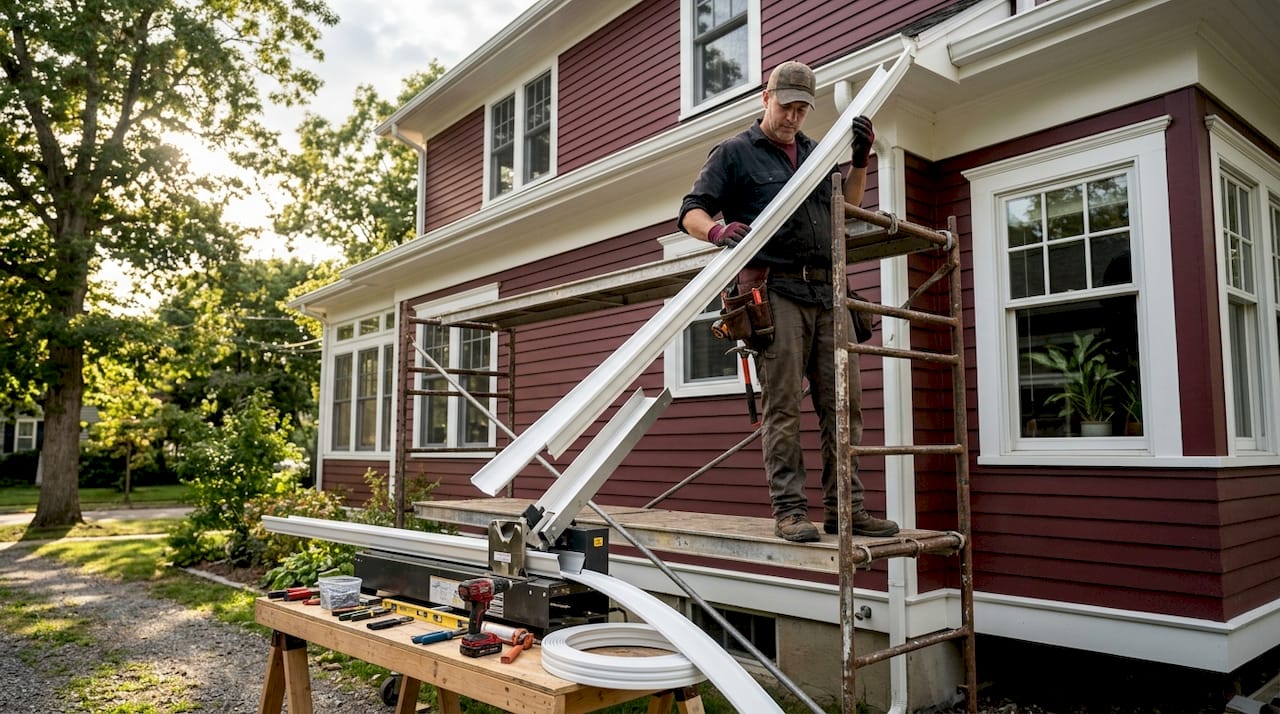
Seamless gutters are fabricated on-site using a roll-forming machine that shapes a coil of metal into a continuous gutter profile sized precisely for your home. The installer brings a trailer-mounted machine to your property, feeds in a metal coil, and produces a single-piece gutter run cut to the exact measurement of each section of your roofline. No pre-cut sections. No guesswork.
Traditional sectional gutters, by contrast, come in 10-foot or 12-foot pieces that workers connect with slip joints and sealant. Those joints are where problems start. Sealant degrades over time, joints pull apart under the weight of debris and ice, and water finds its way through. The result is dripping, staining, and eventually wood rot behind the fascia board.
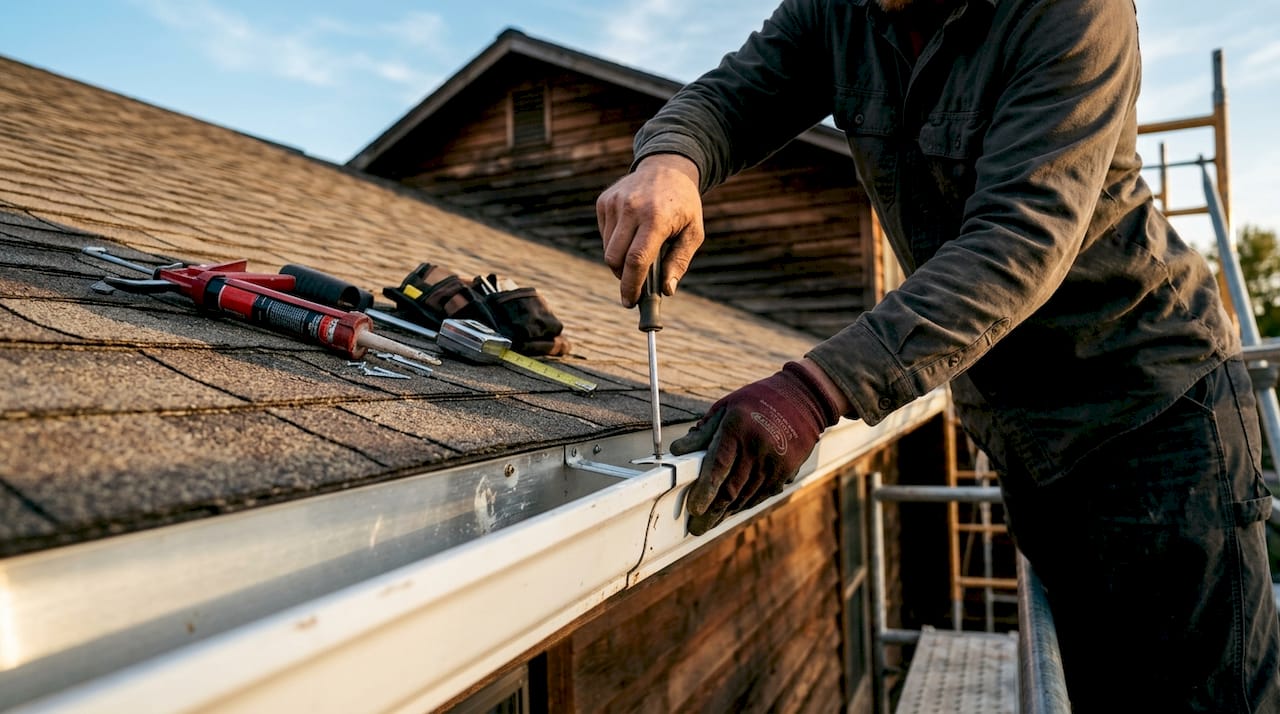
Seamless systems do still have joints at corners and downspout outlets. That is unavoidable given how gutters wrap around a home. But those are the only connection points, and a skilled installer seals them properly during installation.
Here is what sets the two systems apart:
- Joints along straight runs: Sectional gutters have them every 10–12 feet. Seamless gutters have none.
- Sealant reliance: Sectional systems depend heavily on sealant at every joint. Seamless systems use sealant only at corners and downspouts.
- Leak risk: Fewer joints mean fewer failure points, period.
- Appearance: Seamless gutters present a clean, unbroken line along the roofline. Sectional gutters show visible seams and overlaps.
- Installation: Sectional gutters can be a DIY project. Seamless gutters require a professional with specialized equipment.
Pro Tip: Ask your installer to show you the roll-forming machine before work begins. A reputable contractor brings it to your property and fabricates on-site. If they show up with pre-cut pieces, you are not getting a true seamless system.
What are the key benefits of seamless gutters for homeowners?
The primary benefit of seamless gutters is a dramatic reduction in leak risk. Seamless systems have 80%–90% fewer seams than sectional systems. That reduction directly translates to fewer points where water can escape and damage your fascia, siding, or foundation.

Durability is the second major advantage. Properly installed seamless aluminum gutters last 20–30 years, outperforming sectional systems by a wide margin. That lifespan advantage comes largely from the reduced reliance on sealant. Fewer seams mean less sealant dependence, and sealant is the primary failure point in any gutter system.
The benefits homeowners notice most:
- Leak resistance: With 80%–90% fewer seams, water stays in the gutter where it belongs.
- Longer service life: A 20–30 year lifespan means fewer full replacements over the life of your home.
- Cleaner appearance: A continuous gutter line looks sharper and adds to curb appeal, especially on newer or recently renovated homes.
- Lower long-term maintenance: Fewer joints mean fewer spots to reseal, inspect, or patch over the years.
- Custom fit: Every run is cut to your exact roofline, so there are no awkward gaps or overlapping sections.
Aesthetic appeal matters more than most homeowners expect. A sectional gutter with visible seams every 10 feet can look patched and dated, especially on a home with fresh siding or new paint. A continuous gutter run looks intentional and finished.
Pro Tip: Aluminum is the most popular material for a reason. It does not rust, it comes in dozens of colors, and it holds paint well. If you want a premium look, copper gutters develop a natural patina over time and can last 50 years or more, though the upfront cost is significantly higher.
How is a seamless gutter installed and what should homeowners expect?
Seamless gutter installation follows a specific sequence that differs meaningfully from a sectional job. Here is what the process looks like from start to finish:
- Measurement and planning. The installer measures each run of your roofline precisely. They account for the pitch needed to move water toward the downspouts, typically a quarter-inch drop for every 10 feet of gutter run.
- On-site fabrication. The installer feeds a metal coil into the trailer-mounted roll-forming machine and produces each gutter section to the exact length measured. This happens in your driveway.
- Hanger installation. Hidden heavy-duty hangers spaced every 2 feet are fastened to the fascia board. Proper hanger spacing is what keeps the gutter from sagging and maintains the correct pitch over years of use.
- Gutter mounting. The fabricated sections are lifted into place and secured to the hangers. The installer checks pitch with a level at multiple points.
- Corner and downspout sealing. Mitered corners and downspout outlets are sealed with gutter sealant. These are the only joints in the system, and a good installer applies sealant thoroughly on both the inside and outside of each connection.
- Final inspection. The installer runs water through the system to confirm flow direction, check for pooling, and verify all downspouts drain away from the foundation.
The two most common profiles are K-style and half-round. K-style gutters have a flat back and a decorative front profile that resembles crown molding. They handle more water volume and are the standard choice for most American homes. Half-round gutters have a curved, open profile and are common on older or historic homes.
Accurate pitch setting is the detail most homeowners overlook when evaluating an installation. A gutter installed even slightly off-pitch will pool water, breed mosquitoes, and add unnecessary weight that pulls hangers loose over time.
What maintenance do seamless gutters require?
Seamless does not mean maintenance-free. Routine inspection and cleaning remain necessary to prevent overflow, clogs, and the water damage that follows. The good news is that the maintenance list is shorter than with sectional systems.
What you need to do regularly:
- Clean gutters at least twice a year. Spring and fall cleanings remove leaves, seed pods, and debris before they compact and block flow. Homes with heavy tree cover may need quarterly cleaning.
- Inspect corners and downspout outlets. These are the only joints in a seamless system, and they can develop small gaps over time. Check them annually and reseal if you see any separation or staining below the joint.
- Check hanger tightness. Gutters that sag in the middle have lost hanger contact with the fascia. Tighten or replace loose hangers before the sag worsens and affects pitch.
- Clear downspout openings. A clogged downspout backs water up into the gutter and defeats the entire system. Run a garden hose down each downspout to confirm clear flow.
- Look for paint peeling or rust streaks. On aluminum gutters, these signs point to standing water or a pitch problem that needs correction before it causes fascia damage.
The maintenance frequency depends heavily on your environment. A home surrounded by mature oaks or maples will need more frequent cleaning than a home on an open lot. Gutter guards can reduce debris buildup, but they do not eliminate the need for inspection entirely.
Are seamless gutters worth the cost?
Seamless gutters cost 20%–30% more upfront than traditional sectional systems. That premium reflects the specialized equipment, skilled labor, and custom fabrication involved. For a homeowner planning to sell in two years, that gap might feel hard to justify. For a homeowner planning to stay for decades, the math shifts considerably.
| Factor | Sectional gutters | Seamless gutters |
|---|---|---|
| Upfront cost | Lower | 20%–30% higher |
| Typical lifespan | 10–15 years | 20–30 years |
| Leak frequency | Higher (joint failure) | Lower (fewer joints) |
| Sealant reapplication | Every 3–5 years | Corners and outlets only |
| Long-term repair costs | Higher | Lower |
For homeowners planning long-term residence, seamless gutters represent better total cost of ownership despite the higher starting price. Fewer repairs, fewer replacements, and less labor over a 20-year period add up to real savings.
“The upfront cost of seamless gutters is balanced by long-term savings in repair and replacement. For permanent homeowners, the economics favor seamless systems clearly over time.”
The total cost of ownership concept is straightforward. If sectional gutters need resealing every few years and full replacement in 12 years, while seamless gutters run 25 years with minimal intervention, the lifetime cost of the cheaper option is often higher. You can also factor in the cost of water damage repairs that leak-prone sectional systems cause, which can reach into thousands of dollars if fascia boards, soffits, or foundations are affected.
Key Takeaways
Seamless gutters outperform sectional systems on leak resistance, lifespan, and long-term cost, making them the stronger choice for homeowners who plan to stay in their homes.
| Point | Details |
|---|---|
| Fewer seams, fewer leaks | Seamless systems have 80%–90% fewer seams, directly reducing leak risk. |
| Longer service life | Properly installed aluminum seamless gutters last 20–30 years. |
| Higher upfront cost | Expect to pay 20%–30% more than sectional gutters at installation. |
| Maintenance still required | Clean twice yearly and inspect corners and downspouts annually. |
| Best for long-term owners | Total cost of ownership favors seamless gutters for homeowners staying 10+ years. |
Why I always recommend seamless gutters for Connecticut homes
After working on exterior projects across Connecticut for years, I have seen what happens when homeowners choose the cheaper sectional option. Within five years, the joints start pulling apart. Water drips behind the fascia, the wood softens, and what started as a gutter problem becomes a fascia replacement and sometimes a soffit repair too. The repair bill almost always exceeds what the homeowner saved by going with sectional gutters.
The thing most people do not realize is that the seams in sectional gutters are not just a leak risk. They are a structural weakness. Every joint is a point where debris catches, ice builds up, and weight concentrates. Seamless systems distribute load evenly across the entire run, which is why they hold their pitch better over time.
One misconception I hear often is that seamless gutters never need attention. They do. The corners and downspout outlets still need periodic inspection, and debris still accumulates. What changes is the frequency and cost of that upkeep. You are not resealing every joint every few years. You are checking two or three connection points per corner and moving on.
My advice: pair your gutter installation with a full exterior assessment. Gutters do not work in isolation. The fascia condition, roof pitch, and downspout placement all affect how well any gutter system performs. Get those details right at installation and you will not be back on a ladder every spring wondering why water is running down your siding.
— Adam
Jsignorexteriors brings expert gutter installation to Connecticut homeowners
Jsignorexteriors has served Connecticut homeowners and property managers for more than 30 years, and seamless gutter installation is one of the services the team handles with the most precision. Every job starts with on-site measurement and custom fabrication, so your gutters fit your roofline exactly, not approximately.

Whether you are replacing aging sectional gutters or installing a new system on a renovated home, Jsignorexteriors brings the equipment, experience, and attention to detail that the job requires. The team handles everything from pitch setting to downspout placement, and every installation is backed by the quality standards that have kept this family business running for three decades. Contact Jsignorexteriors today to schedule a consultation with a Connecticut roofing contractor who understands your home’s specific needs.
FAQ
What is a seamless gutter, exactly?
A seamless gutter is a continuous metal channel custom-fabricated on-site to fit your roofline without joints along straight runs. It is formed using a roll-forming machine that shapes a metal coil into the exact length needed for each section of your home.
How long do seamless gutters last?
Properly installed seamless aluminum gutters last 20–30 years, significantly longer than traditional sectional systems. Lifespan depends on material quality, hanger spacing, and routine maintenance.
Do seamless gutters have any seams at all?
Yes. Seamless gutters still have joints at corners and downspout outlets. Those connection points require periodic inspection and occasional resealing, but they are far fewer than the joints found in sectional systems.
Are seamless gutters worth the higher cost?
For homeowners planning to stay in their home long term, seamless gutters offer better total cost of ownership. The 20%–30% higher upfront cost is offset by fewer repairs, less sealant maintenance, and a longer service life.
What materials are seamless gutters made from?
The most common material is aluminum, which resists rust, accepts paint well, and offers a 20–30 year lifespan. Copper is a premium option that can last 50 years or more and develops a natural patina. Steel is also available and suits climates with heavy snow loads.