
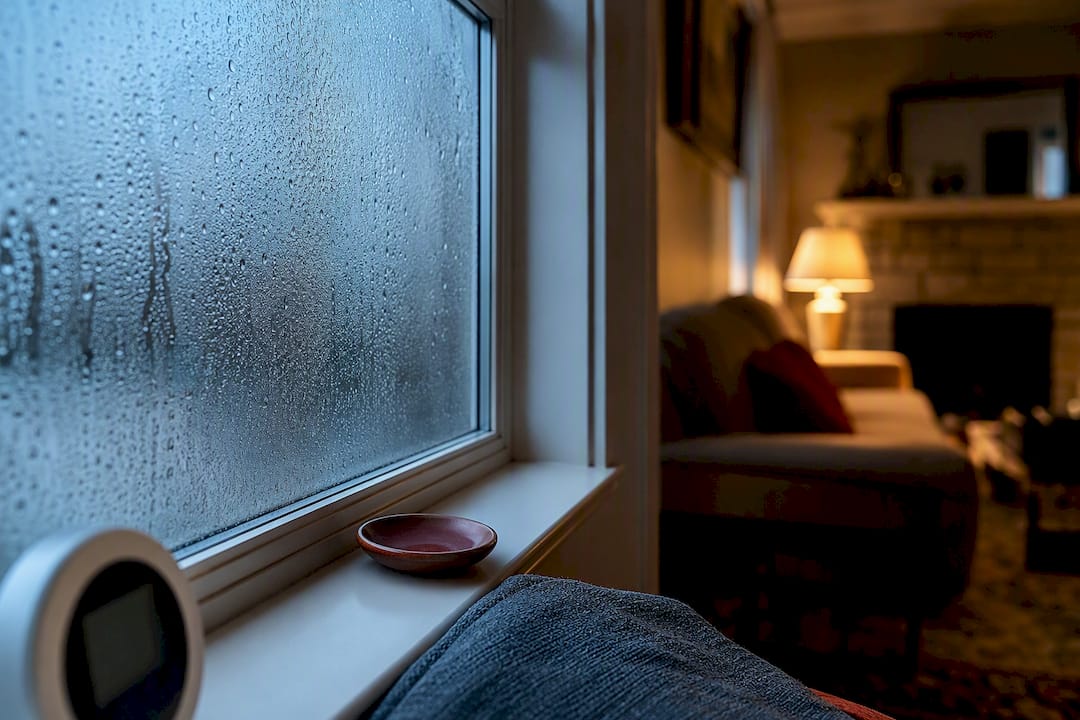
Window condensation inside happens when warm, moisture-laden indoor air touches cold glass and cools past its dew point. If the fog clears by midday, start with ventilation and humidity control. If it sits between the panes or pools for hours, you’re likely looking at a failed seal that needs inspection.
TL;DR:
- Most condensation issues can be resolved by improving ventilation and controlling indoor humidity, especially below 40% RH in winter.
- Seal failures in insulated glass units are the primary cause of moisture between panes, requiring replacement or specialized repair services.
- Upgrading to Low-E glass with argon fill significantly reduces condensation by keeping interior glass surfaces warmer.
- Regularly monitor indoor humidity with a hygrometer and avoid venting exhaust fans into attics or basements, which can worsen moisture problems.
- Persistent fog that appears between panes indicates a failed seal, making full window replacement or IGU repair necessary.
Table of Contents
- What Causes Window Condensation Inside Your Home?
- Is It Humidity or a Window Problem? How to Tell
- What Actually Fixes Condensation on Windows?
- When Is Window Condensation a Sign of Failure?
- What a Contractor Actually Checks During a Window Inspection
- An Editorial Take on Fixing Condensation the Right Way
- Ready for a Professional Window Assessment?
- Sources
What Causes Window Condensation Inside Your Home?
Dew point is the temperature at which air can no longer hold its water vapor, so the moisture condenses into liquid on the nearest cold surface. Indoor temperature and relative humidity (RH) determine that threshold.
Glass surface temperature is the other half of the equation, and it’s where window quality matters most. A single-pane window can run 15 to 20 degrees colder than the room air on a winter night. Double-pane units with a decent U-factor run warmer. Triple-pane glass with Low-E coatings and argon gas fill keeps the interior surface closer to room temperature, which is exactly why upgraded windows fog far less than older ones.
Indoor humidity doesn’t come from nowhere. Common sources include:
- People breathing and sweating (a surprisingly large contributor overnight)
- Cooking, boiling water, and running the dishwasher without venting
- Showers and baths without an exhaust fan
- Drying laundry indoors on a rack
- Houseplants and aquariums, which release moisture continuously
A household of four generates roughly 7.4 liters of water vapor daily just from breathing, cooking, and bathing. That’s nearly two gallons of water added to your indoor air every single day, with nowhere to go but the coldest surfaces in the house.
Air leakage compounds the problem in an odd way. Drafts around a poorly sealed frame let cold outdoor air chill the glass and the surrounding wall cavity, creating a thermal bridge. According to the NDSU Extension, controlling that indoor humidity and improving airflow are the two primary levers for stopping condensation, regardless of window age.
Is It Humidity or a Window Problem? How to Tell
Start with a $10 to $50 digital hygrometer placed in the room that fogs up most, away from direct airflow from vents. Check it first thing in the morning, before you’ve showered or made coffee, since that’s when indoor air is coldest and humidity readings are most honest.
- Read the number. Winter RH should sit around 35 to 40%. Above that, condensation risk climbs fast on standard double-pane glass.
- Track the pattern by room. Bedrooms often fog in the lower corners overnight from body moisture and lower nighttime temperatures. Bathrooms fog across the whole pane during showers. Kitchens fog on upper sashes while something’s boiling.
- Run the wipe test. Clear the moisture, then check again in an hour. If it returns quickly on the same interior surface, humidity is the driver. If the fog reappears between the panes rather than on the room-side surface, that’s a different problem entirely.
- Look for permanent haze or mineral streaking between panes. That indicates a failed seal, not a humidity issue, and no amount of ventilation will fix it.
Building-science sources note that condensation showing up in the same spot two mornings running usually points to a localized cold spot, whether that’s a thermal bridge or an installation gap around the frame.
Pro Tip: Log your hygrometer reading every morning for a week before you call anyone. That week of data tells a contractor exactly what’s happening and saves you paying for a diagnostic visit you didn’t need.
What Actually Fixes Condensation on Windows?
Work through these in order. Most households solve interior condensation with the first two steps and never need the last one.
- Behavior changes, no cost. Run bathroom and kitchen exhaust fans during and after showers or cooking. Open drapes and blinds during the day to let warmer room air reach the glass. Move houseplants away from windows and dry laundry outside or in a vented dryer, not on an indoor rack.
- Cheap and temporary. Shrink-fit window insulating film adds a warmer air gap over the glass for the season. Cracking a window slightly or using a trickle vent lets moist air escape. Wipe sills dry daily so standing water doesn’t seep into wood.
- Small equipment. A portable dehumidifier sized for the room, paired with a humidistat that shuts the unit off once target RH is hit, keeps humidity steady without babysitting it. In a tightly sealed, newer home, a balanced ERV or HRV system is worth considering since it swaps stale humid air for fresh outdoor air while recovering heat.
- Sealing and thermal upgrades. Fresh weatherstripping, caulking gaps, and adding storm windows or interior glazing all raise the interior glass temperature enough to push the dew point out of reach.
One detail people miss: any exhaust fan needs to vent straight outdoors. A bathroom fan dumping into the attic just relocates the moisture problem to a space you can’t see, where it rots sheathing instead of fogging your mirror.
Basements need their own approach. Vent the dryer outside, not into the basement, and check window wells for standing water after rain.
When Is Window Condensation a Sign of Failure?
Fog that lives between the panes, not on the interior glass surface, means the insulated glass unit (IGU) has lost its seal and the desiccant inside has stopped absorbing moisture. No amount of ventilation touches this, since the moisture is sealed inside the glass assembly itself. Our breakdown of why windows fog between panes covers the mechanics in more detail.
Your options at that point:
- IGU replacement. Swapping just the glass unit inside an otherwise sound frame is often cheaper than a full window replacement, provided the frame and hardware are still in good shape.
- “Drill-and-dry” services. These offer a temporary fix by drilling a small vent hole and clearing the trapped moisture, but the seal is still compromised and fog typically returns within a year or two.
- Full window replacement. This makes sense when the frame is also failing, when you’re dealing with older single-pane glass, or when several units in the house have failed around the same time.
Upgrading to Low-E coated glass with argon gas fill raises the interior glass surface temperature noticeably compared to older clear double-pane units, which is a meaningful part of why newer windows resist condensation better even in the same room and the same humidity level.
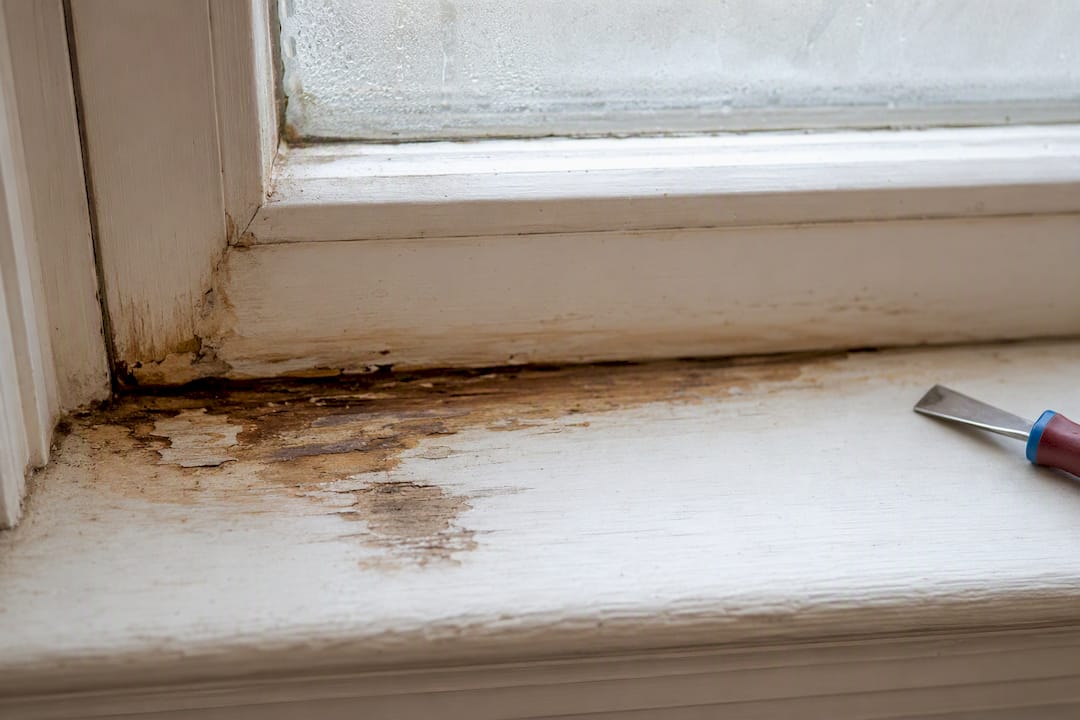
If you’re seeing staining, soft wood, or a musty smell around the sill, stop troubleshooting the humidity and call a contractor. EPA guidance on mold is clear that sustained moisture exposure creates conditions where mold establishes within 24 to 48 hours, and by the time you can see damage on painted trim, there’s often more underneath.
What a Contractor Actually Checks During a Window Inspection
A proper inspection starts before anyone touches the window: we review any humidity log you’ve kept, since a week of morning hygrometer readings tells us more than a single site visit ever could. From there, a thorough check covers:
- Flashing and sill pan condition, since gaps in flashing or insulation around the frame are often the real source of a “cold spot” that fogs in the same corner every morning
- Frame seals and weatherstripping for gaps, cracking, or compression loss
- Concealed moisture in the sill or surrounding wall cavity using a moisture meter
- Whether the fog is a room-side humidity issue or trapped between the panes
Common fixes include resealing and recaulking, retrofitting storm windows, correcting sill flashing, or replacing the IGU outright. Straightforward reseals often wrap up in a day; full window replacement projects run longer depending on the number of openings and materials involved.
An Editorial Take on Fixing Condensation the Right Way
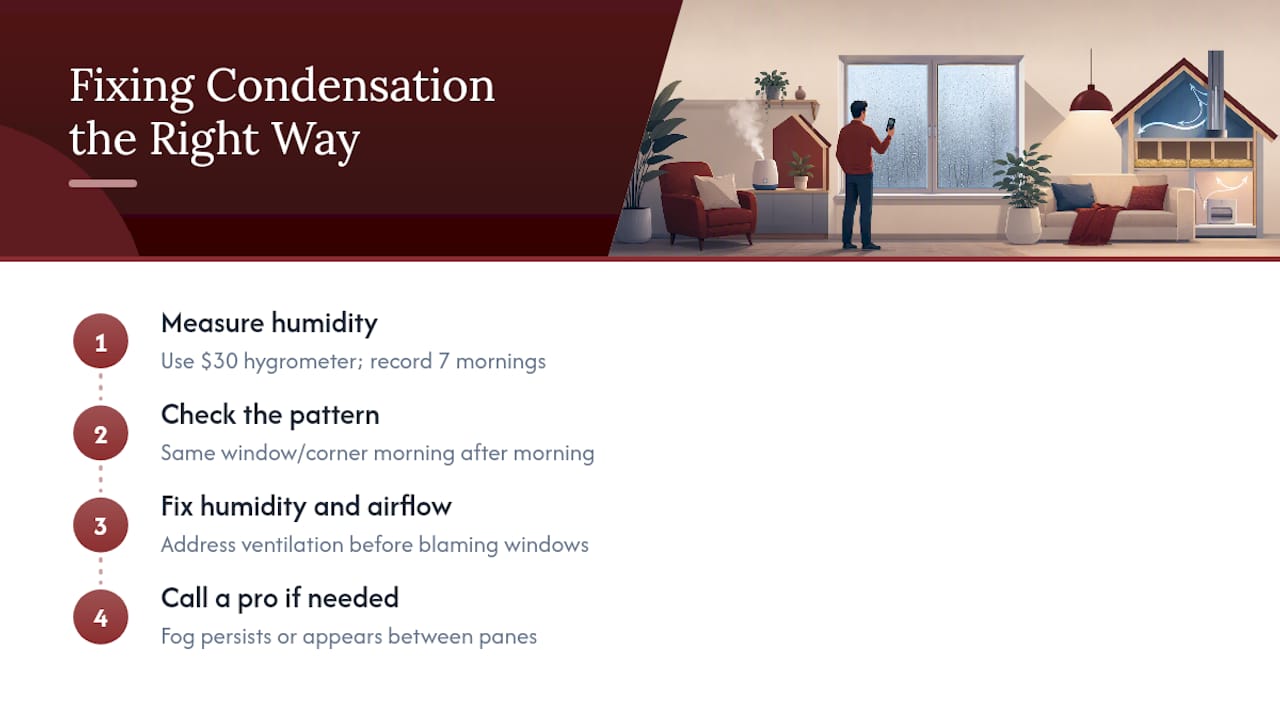
Most condensation advice online skips straight to “buy new windows,” and that’s backward thinking dressed up as urgency. The research is consistent on this: interior fogging is almost always a humidity and ventilation problem first, a window problem second. A $30 hygrometer and a week of morning readings will tell you more than a sales visit will, and it costs you nothing but seven days of patience.
Where I think homeowners get tripped up is treating every window as suspect the moment one fogs. Check the pattern. If it’s the same window, same corner, morning after morning, that’s a localized clue worth investigating, not proof the whole house needs new glass. Fix the humidity and airflow basics first. If the fog persists after that, or shows up between the panes rather than on the room side, then you’re dealing with a real defect, and that’s the moment a professional inspection earns its cost.
— Adam
Ready for a Professional Window Assessment?
If you’ve run the hygrometer test, fixed the ventilation, and the fog still won’t quit, or if you’re seeing haze trapped between the panes, it’s time for a second opinion. Jsignorexteriors gives Connecticut homeowners something a quick online search can’t: an on-site assessment that separates a $20 caulking fix from a window that genuinely needs replacing, so you’re not guessing or overpaying either way.

During a visit, expect a technician to check frame seals, flashing, and sill condition, then walk you through honest options and a written estimate before any work starts. If your windows are older, drafty, or showing IGU failure across multiple rooms, our replacement windows page outlines what a full upgrade looks like, and our Connecticut window replacement cost guide breaks down what typically drives the price. Reach out through our services page to schedule an assessment and get a clear answer on what your windows actually need.
Sources
For deeper technical detail, the EPA’s mold guidance covers indoor moisture thresholds and health risks. Inspectapedia documents IGU failure signs and installation defects in depth. The Tompkins County extension fact sheet offers a practical remediation checklist, and Star Window Solutions provides additional homeowner-focused prevention methods worth reviewing.
- Window condensation common problem — NDSU Extension
- EPA — Mold course: Chapter 2
- Inspectapedia — Window condensation problems and fixes
- Moisture condensation at windows — fact sheet (Tompkins County / extension)