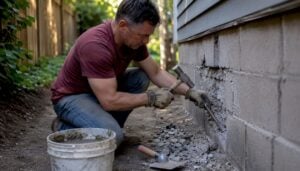
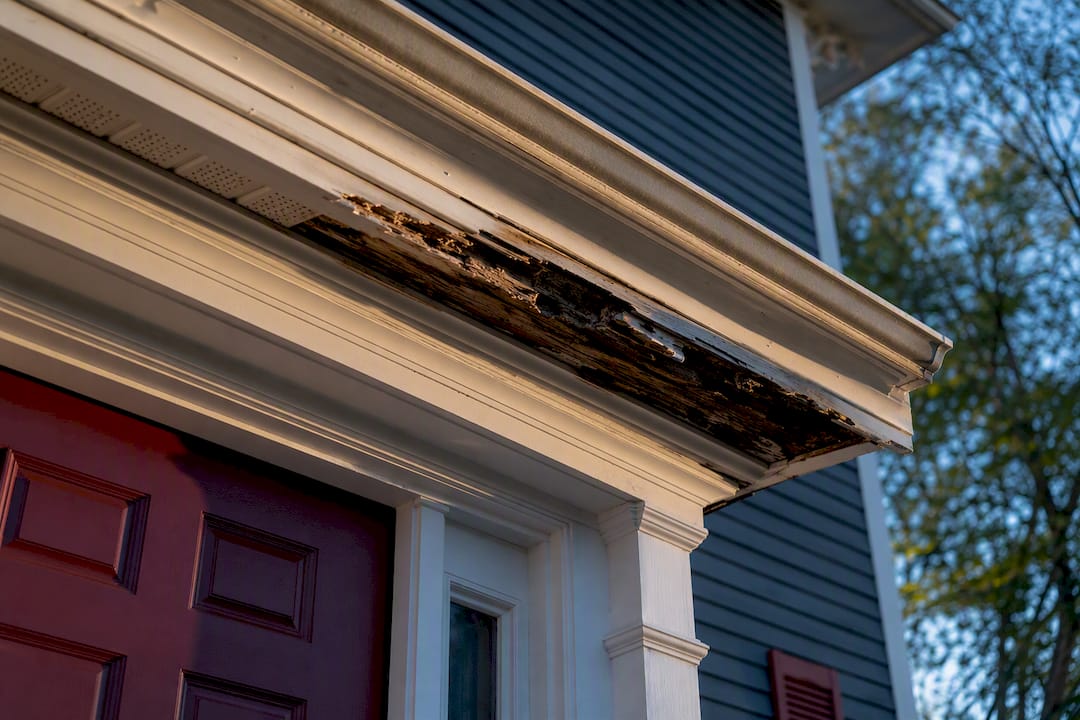
Minor rot on a single section of fascia or soffit is often a reasonable DIY project for a homeowner comfortable on a ladder, and it usually runs $6 to $20 per linear foot in materials and labor if you hire it out. Rot that has spread into the rafter tails, multi-story eaves, or wide sections calling for scaffolding is a job for a licensed contractor. Full replacement on many homes generally costs several thousand dollars. Before you pick up a pry bar, work through the inspection checklist below and the hiring criteria further down, because what looks like a cosmetic patch can hide a structural problem.
TL;DR:
- Small fascia or soffit repairs typically cost $6 to $20 per linear foot, but extensive damage involving structural rot or multi-story work can reach several thousand dollars.
- Inspection should include ground scans for visible damage, checking for daylight gaps, probing wood for rot, and attic assessments for water stains or soft wood.
- DIY repairs are feasible for minor, localized damage using basic tools, but any rot extending into the roof deck or involving active infestation requires professional contractor intervention.
- Hire licensed and insured contractors when facing multi-story work, widespread rot, or signs of active pests, and always confirm scope, materials, and warranties in writing.
- Routine maintenance like gutter cleaning, vent clearing, and timely sealing or repainting prevents water-related damage and reduces the need for costly repairs.
Table of Contents
- What Does Fascia and Soffit Repair Cost?
- How Do You Inspect Your Roofline for Damage?
- Can You DIY Fascia and Soffit Repair?
- When Should You Hire a Licensed Contractor?
- How Do You Prevent Fascia and Soffit Damage?
- What Do Contractors See Most Often in the Field?
- How J. Signor Exteriors Handles Fascia and Soffit Repair
- Where These Cost Figures and Repair Steps Came From
- Sources
What Does Fascia and Soffit Repair Cost?
Fascia and soffit repair costs swing widely depending on how much damage you’re dealing with and how hard it is to reach. Small, localized fixes, patching a rotted section or replacing a cracked fascia board, typically cost a few hundred to a few thousand dollars. Full replacement runs higher, often somewhere in the $1,050 to $5,000 range for an average home, with projects averaging around $2,500 once you factor in materials and labor for a one-story house.
On a per-linear-foot basis, expect $6 to $25 depending on material and job complexity, with most homeowner projects falling in the $6 to $20 window. Several variables push that number up or down:
- Material choice (wood costs less upfront than aluminum or composite)
- Access difficulty, second-story and three-story eaves need scaffolding, not just a ladder
- Hidden rot discovered once old boards come off
- Drip edge and flashing replacement bundled into the job
- Gutter removal and rehanging around the work area
- Regional labor rates
Here’s how that plays out in practice. A small patch repair of a few linear feet of rotted fascia on a one-story ranch often costs a few hundred dollars. Replacing fascia and soffit along one side of a one-story home commonly costs around a couple thousand dollars. A full-perimeter replacement on a two-story home, especially with scaffolding and hidden rafter damage, can cost several thousand dollars. Add scaffold rental, debris disposal, and any local permit fees on top of the base quote, particularly on projects that involve structural repair.
How Do You Inspect Your Roofline for Damage?
Most fascia and soffit failures start small and stay invisible until they’ve spread. Catching them early keeps a $400 patch from becoming a $3,000 rebuild.
Work through this checklist from the ground up:
- Scan from the ground with binoculars. Look for peeling paint, sagging gutters, dark streaks, or soffit panels that look uneven or missing.
- Check for daylight gaps where soffit meets the wall, a sign panels have pulled loose or rotted through.
- Probe suspect wood with a screwdriver. If it sinks in easily or crumbles, the wood has soft rot.
- Look for insect activity, mud tubes, small holes, or sawdust piles near the eaves often mean carpenter ants or termites.
- Get into the attic and check rafter tails for water stains, dark spots, or soft wood near the eave line.
- Inspect the drip edge where it meets the fascia for rust, gaps, or separation from the roof deck.
Use a stable ladder with a partner spotting you, never lean out past the ladder’s rails to reach a suspect spot.
Pro Tip: Take timestamped photos of every problem area you find, including a wide shot showing scale and a close-up of the damage. Contractors give tighter, more accurate quotes when they can see the actual condition before showing up.
Can You DIY Fascia and Soffit Repair?
Small, isolated repairs are within reach for a homeowner who’s comfortable with basic carpentry and ladder work. Here’s the tool list and workflow for a typical single-section job.
Tools and materials:
- Sturdy extension ladder or scaffold for anything above one story
- Flat pry bar and hammer
- Reciprocating saw or circular saw
- Stainless or coated exterior screws
- Replacement fascia board or matching profile
- Vented soffit panels (if replacing soffit)
- Drip edge flashing and exterior sealant
- Exterior primer and paint, or pre-finished PVC/composite trim
Step-by-step workflow:
- Remove the gutter section covering the damaged area, supporting it so it doesn’t fall.
- Pry off the damaged fascia board or soffit panel carefully to avoid splitting adjacent good material.
- Inspect the exposed rafter tails and roof deck edge for soft or discolored wood.
- If a rafter tail is compromised, sister a new pressure-treated board alongside it or cut back to solid wood and add a cleat for support. If rot extends deep into the rafter or roof deck, stop here and call a contractor.
- Cut and fit the new fascia board or soffit panel, priming and sealing all cut ends before installation.
- Reinstall or replace the drip edge and flashing so water sheds away from the fascia rather than behind it.
- Caulk seams, prime, paint (or skip priming if using pre-finished composite), then rehang the gutter section.
Material tradeoffs worth knowing: wood is the cheapest material upfront but needs repainting every few years to avoid repeat rot. PVC and composite boards cost more initially but shrug off moisture indefinitely. Aluminum fascia resists rot entirely but can dent and doesn’t repair easily, usually requiring a full section swap.
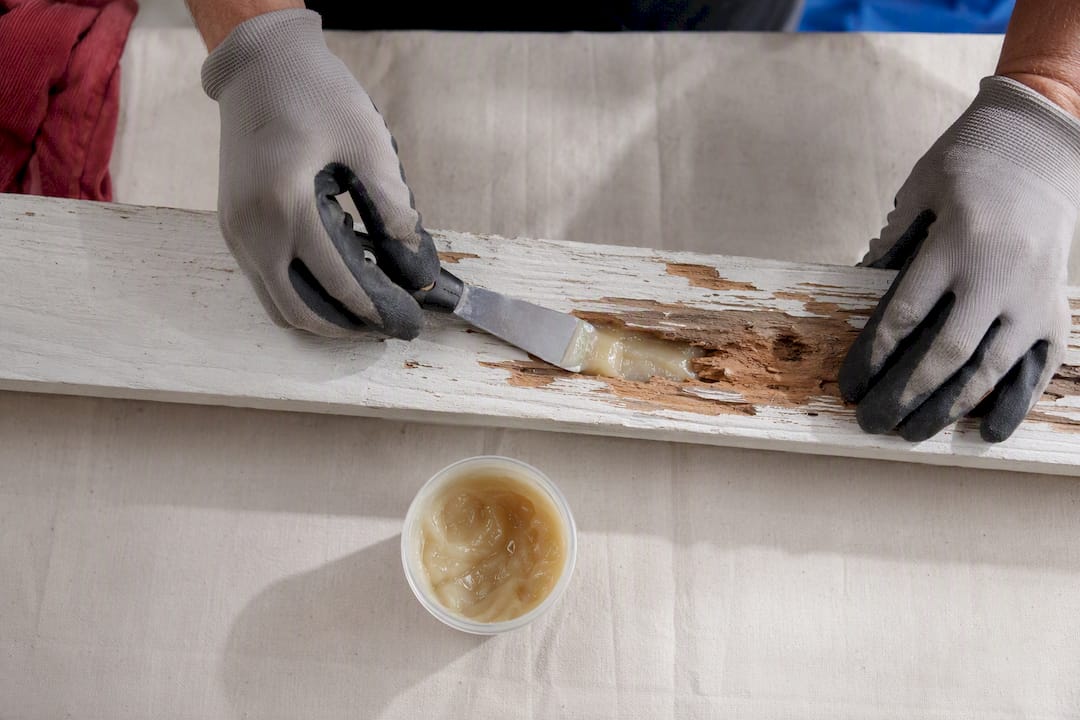
For surface rot that hasn’t gone structural, epoxy wood consolidant can save a board that would otherwise need full replacement, a reasonable patch if the core wood is still sound.
Pro Tip: Never skip priming the end grain of a new fascia board. Unsealed end grain soaks up water faster than any other part of the board, and it’s the number one reason DIY fascia repairs fail within two or three years.
Multi-story work, active insect infestations, or any rot reaching into the roof deck itself means it’s time to stop and bring in a licensed roofing contractor.
When Should You Hire a Licensed Contractor?
Certain conditions push a job past reasonable DIY territory. Call a contractor when you’re facing multi-story eaves that need scaffolding, rot that has spread into rafter tails or the roof deck, a full-perimeter replacement, or signs of an active insect infestation. Roofers or gutter specialists typically handle this work, and they’ll sometimes bring in pest control or a carpenter if the damage is more involved than a straight material swap.
When you’re comparing quotes, ask each contractor:
- Are you licensed and insured, and can I see proof?
- Does the quote break out labor, materials, and disposal separately?
- What happens if you find hidden rot once the old boards come off, is there an allowance built in?
- What brand of fascia, soffit, and flashing are you installing, and what’s the warranty?
- Will this require scaffolding, and is that cost already included?
Watch for red flags: a verbal-only quote with nothing in writing, a price well below every other bid with a vague scope, or a contractor who hesitates to show license and insurance documentation. Professionals evaluate the structure, confirm proper ventilation, and install flashing correctly, work that’s much harder to verify after the fact if you didn’t get it in writing upfront.
How Do You Prevent Fascia and Soffit Damage?
Most fascia and soffit failures trace back to water that had nowhere else to go. A little routine maintenance keeps you from repeating this repair in three years.
- Clean gutters at least twice a year, more often if you’re under heavy tree cover, and confirm downspouts carry water well away from the foundation.
- Keep soffit vents clear of insulation and debris, and check that ridge or gable vents are still moving air.
- Inspect drip edge and flashing every spring for rust, gaps, or separation.
- Repaint or reseal wood fascia every 5 to 7 years before the finish starts to fail.
- Walk the roofline each fall and spring, looking for the same signs covered in the inspection checklist above.
A properly maintained gutter system does more to protect fascia than almost any other single maintenance task on the house.
What Do Contractors See Most Often in the Field?
Nine times out of ten, the actual cause isn’t the fascia board, it’s a clogged gutter, a missing drip edge, or a soffit vent packed with insulation that’s been trapping moisture for years. Fixing the root cause matters more than the repair itself; cap over compromised wood without addressing why it rotted, and you’ll be back out there in two seasons.
We recommend full replacement over capping whenever rot has reached the rafter tail, capping just hides a structural problem instead of solving it. If you’re weighing a patch against a full section swap, get a second opinion before committing to the cheaper option.
— Adam
How J. Signor Exteriors Handles Fascia and Soffit Repair
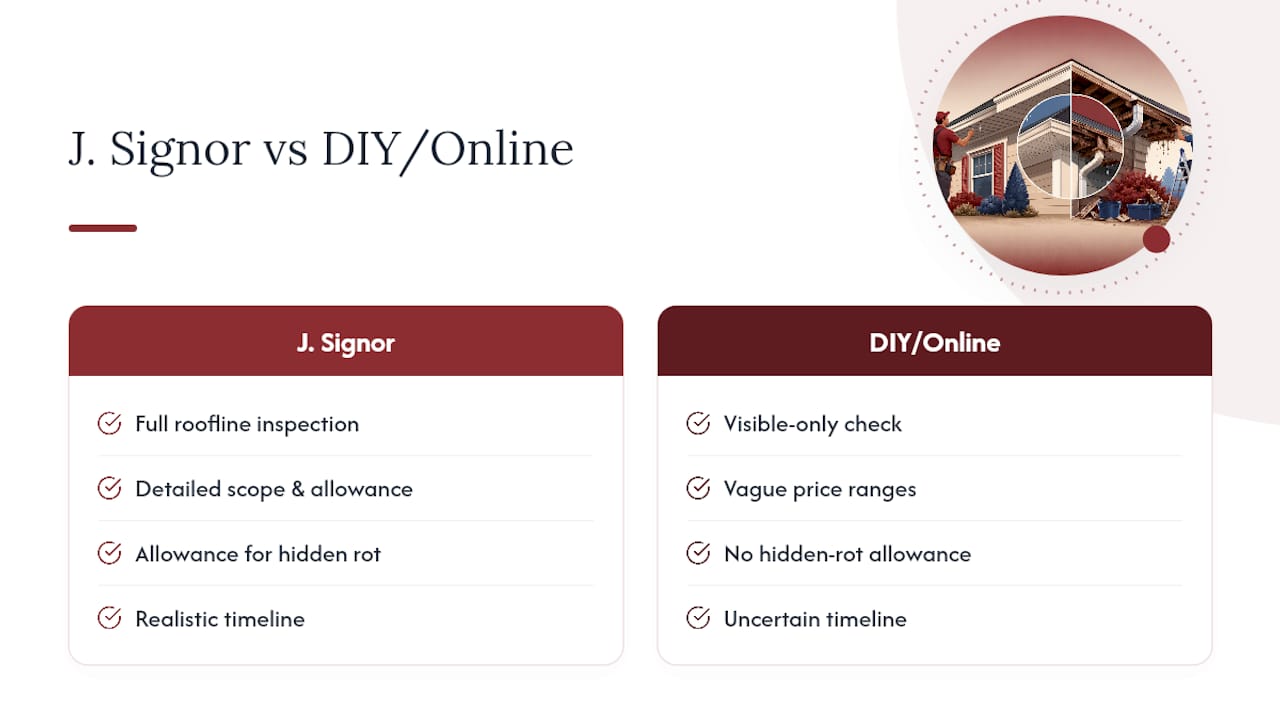
J. Signor Exteriors is the more direct path to a fixed, honest number instead of a guessing game between DIY estimates and vague online ranges. We inspect the full roofline, not just the visible damage, checking rafter tails, drip edge condition, and ventilation before quoting anything.

A quote from our team includes a detailed scope of work, a clear allowance for any hidden rot we find once boards come off, a realistic timeline, and a warranty on materials and labor. That’s the difference between a number scribbled on a business card and a contract you can actually hold someone to. Our work covers everything from rafter-tail repair and drip edge and flashing installation to full soffit and fascia replacement and gutter removal and reinstallation around the job site.
If you’re in Connecticut and want a straight answer on what your roofline actually needs, request a photo-based estimate or schedule an on-site inspection with our roofing team today.
Where These Cost Figures and Repair Steps Came From
Cost ranges and repair steps in this guide draw from established contractor and consumer resources, including detailed step-by-step repair guidance from This Old House, cost breakdowns from HomeAdvisor, Forbes Home’s pricing analysis, and technical drip edge guidance from Trussell Transforms.
Sources
- How Much Does Soffit Replacement Cost? 2026 Data | Angi
- How Much Does It Cost to Replace or Repair Fascia Boards and Soffits? 2025 Data | HomeAdvisor
- How Much Does Soffit And Fascia Repair Cost? – Forbes Home
- How to repair a rotted soffit | This Old House
- Who repairs soffit and fascia? – Bob Vila