
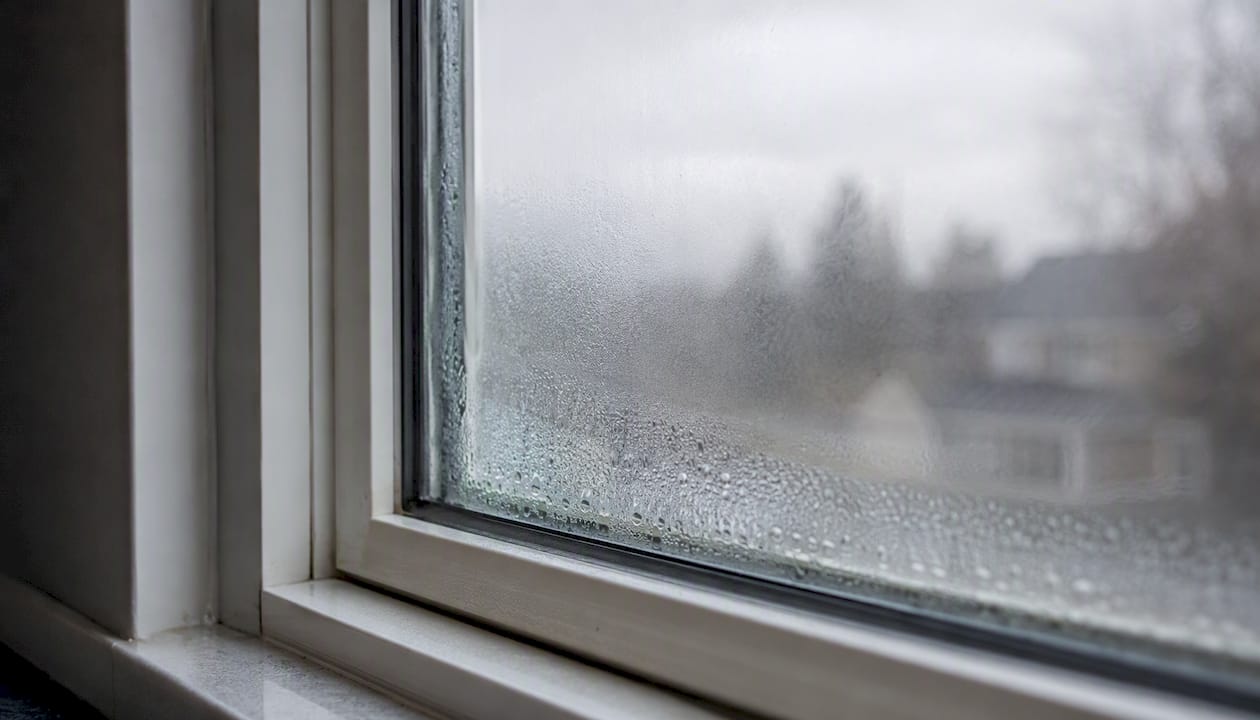
Fog between your window panes means the insulated glass unit’s seal has failed, letting humid air seep in where sealed gas used to sit. This isn’t a cleaning problem. It’s a mechanical failure inside the glass itself, and no amount of window cleaner reaches the space that’s actually clouded.
Start by figuring out exactly where the moisture sits. Touch both sides of the glass. If the haze is trapped between two panes that you cannot physically reach, you’re looking at a broken seal on an insulated glass unit (IGU), and the fix has to happen at the glass level, not the surface. Check your window’s age and any paperwork for a manufacturer or installer warranty, since many carry coverage on the sealed unit for a decade or longer. Then get a contractor out to look at the frame and sash before you commit to any single fix.
You generally have three paths forward, and This Old House confirms these are the standard options homeowners face once a seal fails:
- IGU replacement — swap only the glass unit while keeping your existing frame and sash.
- Full window replacement — replace the entire window when the frame or sash has its own problems.
- Professional defogging — a temporary, cosmetic clean-out that restores visibility but not insulation.
Key Takeaways
Fog between window panes always signals a failed IGU seal, and the right fix depends on whether your frame is sound or already compromised.
| Point | Details |
|---|---|
| Localize the moisture first | Use the touch and wipe tests to confirm the fog is trapped between panes, not on a surface you can reach. |
| Check age and warranty before spending | Seals commonly fail after 15 to 20 years; confirm whether manufacturer or installer warranty still applies. |
| Match the repair to frame condition | Sound frames usually only need IGU replacement; rot, warping, or repeat failures call for full window replacement. |
| Treat defogging as temporary only | Defogging restores clarity but not insulation, and it typically voids any remaining glass warranty. |
| Schedule a professional assessment | Jsignorexteriors inspects the frame and glass on-site and provides a written estimate before recommending IGU or full window replacement. |
Table of Contents
- Why Windows Fog Between Panes
- Is the Condensation on the Glass Surface or Trapped Inside?
- Comparing IGU Replacement, Full Window Replacement, and Defogging
- Choosing Between an IGU Swap and Full Replacement
- Why DIY Fixes for Fog Between Panes Don’t Work
- What a Contractor Checks During a Fogged-Window Assessment
- How J. Signor Exteriors Handles Foggy Window Repairs
- Frequently Asked Questions
- Sources
Why Windows Fog Between Panes
Every insulated glass unit is built the same basic way: two or three panes of glass separated by a metal or composite spacer, sealed at the edges, with a pocket of desiccant material tucked into that spacer to absorb stray moisture. Manufacturers then fill the sealed cavity with an inert gas, usually argon or krypton, because that gas conducts heat far more slowly than plain air. That gas fill is a big part of why a double-pane or triple-pane window outperforms a single sheet of glass.
The edge seal is the weak link. It’s a thin bead of sealant, often silicone or a similar polymer, asked to hold a gas-tight bond through decades of expansion and contraction. Every hot afternoon and cold night puts that seal through a small stretch-and-shrink cycle. Do that thousands of times over 15 to 20 years and the bond eventually gives, which is roughly the failure window Pella describes in its own manufacturer guidance on gas loss and seal aging.
Several factors push that timeline up dramatically. Improper installation is the biggest one: a unit set into a rough opening that isn’t square puts constant torque on the seal from day one. Direct, intense sun exposure heats the glass and spacer unevenly, stressing the bond further, and structural movement in the framing, common in older homes as they settle, keeps flexing a seal that was never designed to bend. Fine Homebuilding’s breakdown of window fogging walks through exactly how these accelerants compound over time. Vinyl frames deserve a specific mention here too, since vinyl expands and contracts more than wood or fiberglass with temperature swings, which can transfer extra stress onto the seal it’s holding.
Once humid air gets past a compromised seal, the desiccant packed into the spacer tries to soak it up. That works for a while. Eventually the desiccant saturates, and any moisture that follows has nowhere to go but onto the glass itself. That’s when you see the telltale milky haze, sometimes with visible droplets, and over months or years, repeated condensation and evaporation cycles can etch faint mineral deposits directly onto the interior glass surface. At that point, no amount of cleaning removes the marks, because they’re not on a surface you can reach.
Pro Tip: If your foggy window is under 10 years old and you’re seeing this on multiple windows in the same batch, ask your contractor about installation quality before assuming it’s just bad luck with the glass. Repeated early failures usually point to how the units were set, not a manufacturing defect.
Is the Condensation on the Glass Surface or Trapped Inside?
Not all foggy glass is a seal failure. Surface condensation, on the inside or outside of the window, is a humidity and temperature problem you can often fix without touching the glass at all. Between-pane fog is different: it’s stuck inside a sealed cavity you cannot wipe.
Run through these checks before you call anyone:
- Do the touch test. Press a dry finger against the fogged area. If it’s wet or damp, the moisture is on a surface you can reach. If the glass feels completely dry despite visible haze, the moisture is trapped between the panes.
- Wipe it and watch. Wipe the foggy spot with a cloth. Surface condensation disappears immediately. Fog between panes doesn’t move at all, because your cloth never touches it.
- Track the timing. Interior condensation tends to show up on the coldest mornings and clear as the room warms, a pattern InterNACHI’s inspector network ties directly to indoor humidity crossing the dew point against a cold glass surface. Between-pane fog often lingers all day regardless of temperature, or comes and goes with outdoor weather swings rather than indoor humidity.
- Look closely at the pattern. Surface droplets are usually beaded and clear. Trapped fog reads as a flat, milky haze, sometimes with faint white streaking where minerals have deposited on the inner glass.
Keep a running note of what you find. Window age, any visible mineral residue, and whether the fog is constant or tied to hot and cold spells all matter once a contractor shows up.
That said, some signs mean you should stop testing and pick up the phone right away:
- Soft or spongy wood at the sill or jamb, which suggests rot behind the frame.
- A sash that sticks, binds, or won’t latch properly.
- Visible water staining or active leaking around the window frame during rain.
- A window that’s already had its IGU replaced once and is fogging again.
Any of those point to a problem bigger than the glass, and Energy Vanguard’s explanation of surface versus between-pane condensation is worth reading if you want the fuller technical distinction before that call.
Comparing IGU Replacement, Full Window Replacement, and Defogging
Once you’ve confirmed the fog is trapped between panes, you’re choosing among three genuinely different repairs, not three versions of the same fix. Each restores something different, costs something different, and lasts a different amount of time.
IGU replacement swaps out just the sealed glass unit while your existing frame, sash, and hardware stay put. A technician measures the opening, orders a new insulated unit built to match your glazing specs, and pops out the old glass to install the replacement. This works well when the frame is structurally sound and the only problem is a failed seal, since a failed IGU rarely means the whole window needs to go if the surrounding parts are healthy. Expect a cost range of roughly a low to moderate few hundred dollars per unit for standard sizes, with larger or specialty glass running higher, and turnaround is often a single visit.
Full window replacement means the entire unit, frame and all, gets pulled and replaced. This becomes necessary when the frame has rot, warping, or water damage, when the window is old enough that its hardware and weatherstripping are also failing, or when you’re upgrading to better-performing glass anyway. Costs run considerably higher than an IGU swap, generally in the range of a few hundred to over a thousand dollars per window installed, but you also get new weatherstripping, updated hardware, and often a meaningfully better energy rating across the whole unit rather than just the glass. Disruption is longer too, since it involves removing and resetting the frame itself.
Professional defogging is the cheapest and fastest option on paper. A technician drills small holes into the sealed unit, flushes a cleaning solution through the cavity to clear the haze and mineral deposits, then caps the holes with small vented plugs. Visibility comes back within a day. But that process doesn’t restore the inert gas fill or the original seal, so the window’s insulating performance stays permanently compromised, and most manufacturer warranties on the sealed unit are void the moment it’s drilled.
| Repair option | Typical cost range | Permanence | Energy/insulation restored | Disruption / installation time |
|---|---|---|---|---|
| IGU replacement | a few hundred dollars per unit | Permanent (new sealed unit) | Fully restored, including gas fill | Single visit, hours |
| Full window replacement | $400–$1,200+ per window | Permanent | Fully restored, often improved | Half day to full day per window |
| Professional defogging | a few hundred dollars per unit | Temporary, cosmetic only | Not restored, gas fill remains lost | Same day, minimal |
If long-term performance and a real warranty matter to you, IGU or full replacement are the only two options that deliver that. Defogging buys you time and clear views, nothing more.
Choosing Between an IGU Swap and Full Replacement
Deciding which repair fits your situation comes down to a handful of concrete checks, not a gut call. Walk through these before you sign anything:
- Window age. Units under 15 years old with a single failed seal are usually good IGU replacement candidates. Windows pushing past 20 years often have failing hardware and weatherstripping alongside the glass.
- Frame and sash condition. Solid, square, undamaged wood, vinyl, or fiberglass supports an IGU swap. Soft wood, visible warping, or a sash that won’t seal tight points toward full replacement.
- History of repeat failures. One fogged unit in an otherwise healthy window is a normal seal failure. A second or third failure in the same window, especially when it tracks with known rough-opening or installation problems, signals a structural issue that a new IGU alone won’t fix.
- Warranty status. If the sealed unit is still under manufacturer or installer warranty, get that checked before paying for anything out of pocket.
- Energy priorities. If you’re already planning to upgrade to better low-E coatings or a higher-performance gas fill, full replacement lets you make that jump window by window rather than piecemeal.
- Budget and timeline. IGU replacement is cheaper and faster per window if your budget is tight and the frame checks out.
A rough rule of thumb: extensive rot, warping, or a second IGU failure on the same window usually means it’s time for full replacement. A single failed seal on a frame that’s otherwise in good shape is the textbook case for a straightforward IGU swap.
Why DIY Fixes for Fog Between Panes Don’t Work
Search around long enough and you’ll find plenty of suggested home remedies for foggy windows. Almost none of them address fog trapped between panes, and a few can make things worse.
Frost-free sprays and glass cleaners only ever touch the surfaces you can physically reach. Since the haze sits inside a sealed cavity, spraying or wiping the outside glass does nothing to the moisture on the other side of it. People also try caulking around the interior sash edges, hoping to “reseal” the unit from the inside, but that doesn’t repair the broken bond inside the glass itself; it just traps more moisture against a frame that may already be compromised.
Drilling into the glass yourself to try a DIY version of defogging is genuinely risky. Insulated units are under vacuum-like pressure differences at the edges, and an improperly drilled hole can crack the pane or shatter it outright. Adhesives and sealants applied at home can also degrade low-E coatings on contact, permanently damaging the exact performance layer you’re trying to protect.
Even professional defogging, done correctly, is a stopgap rather than a repair. It clears the view. It doesn’t put the argon or krypton back, and it doesn’t rebuild the seal. Homeowners considering it should go in knowing the insulating performance is gone for good and any remaining glass warranty likely goes with it.
What a Contractor Checks During a Fogged-Window Assessment
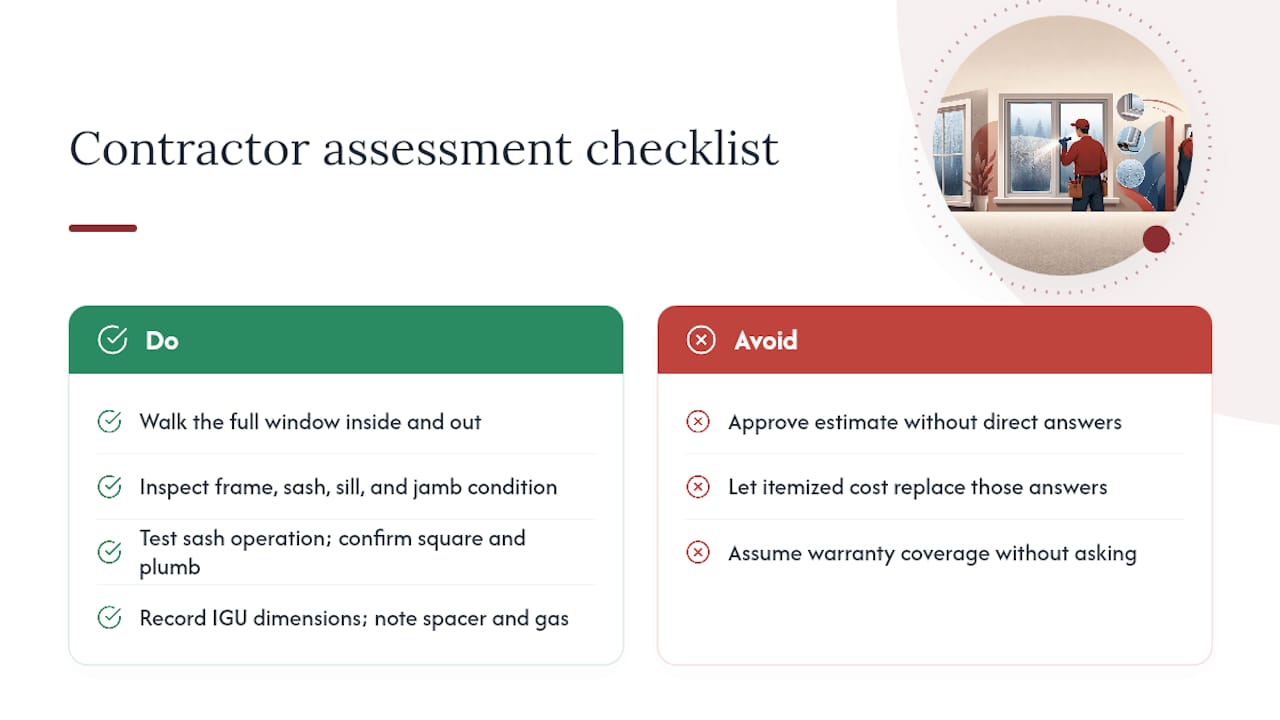
A thorough inspection covers more than the glass. A contractor worth hiring will walk the full window, inside and out, and document what they find before recommending a fix.
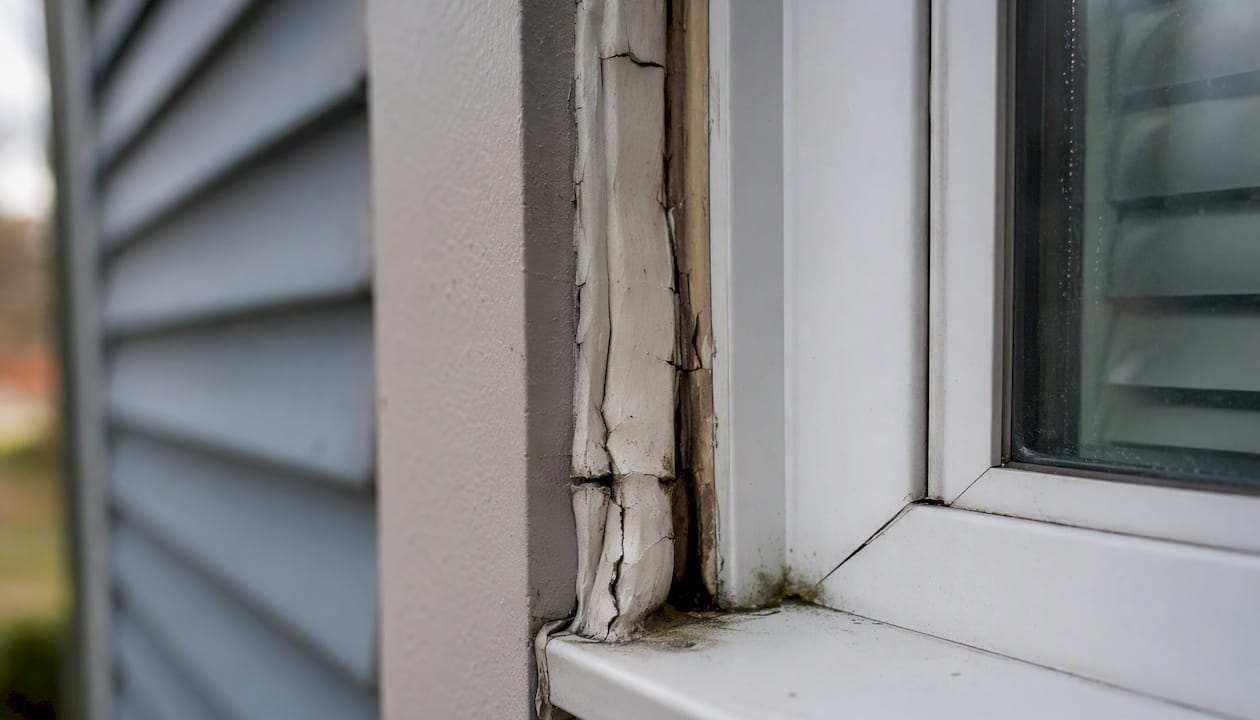
Expect them to check the frame and sash for warping, soft spots, or paint failure, then inspect the sill and jamb closely for rot, since installation-related movement is one of the most common drivers of premature seal failure and it usually shows up as stress at those exact points. They’ll also test whether the sash operates smoothly, check that the unit is still square and plumb in its opening, and look for signs of water intrusion around the flashing and trim.
On the measurement side, a pro will record the exact IGU dimensions, identify the spacer type, and confirm whether low-E coatings and a specific gas fill were part of the original build, information ENERGY STAR’s window performance guidance can help translate into what you’re actually gaining if you upgrade during replacement. They’ll also assess the current sealant condition around the unit’s edge.
Before you approve any estimate, ask a few direct questions: is the sealed unit still under manufacturer warranty, or does coverage fall to the installer instead? What’s the expected life of the new IGU they’re proposing? Are upgraded glass options, like better low-E coatings or krypton fill, available at this stage, and what do they add to the cost? A clear, itemized cost and timeline estimate should follow those answers, not replace them. If you’re weighing multiple exterior projects at once, an exterior remodeling checklist for planning contractor work can help you sequence window work alongside other repairs.
A Contractor’s View on Foggy Windows and What Actually Fixes Them
The mistake homeowners make most often isn’t picking the wrong repair. It’s skipping the frame inspection entirely and jumping straight to “just replace the glass” or “just replace the whole window” without anyone actually checking which one the situation calls for.
Repeat IGU failures almost always trace back to the same root cause: something about how that opening handles movement. A rough opening that wasn’t shimmed correctly, a sill that’s absorbing more water than it should, siding that’s letting moisture track down behind the trim. Fix the seal without addressing that underlying movement, and the new IGU is often on the same failure clock as the old one. This is part of why issues like siding that’s warping or pulling away from the wall deserve a look during a window assessment, not just a glance at the glass.
The pragmatic call, in most cases, comes down to this: if the frame is sound, an IGU swap gets you back to full clarity and insulation for a fraction of full replacement cost, and there’s no reason to spend more than that. But if you’re on your second failed unit in the same window, or the sill has any softness to it, spending on another IGU is spending twice. Full replacement, done once, correctly, beats two rounds of patchwork every time.
How J. Signor Exteriors Handles Foggy Window Repairs
You don’t have to guess which repair path fits your windows. Jsignorexteriors sends a licensed technician to your property who inspects the frame, sash, and sill in person, documents exactly what’s failing, and tells you plainly whether an IGU swap or a full window replacement makes sense, backed by a written estimate before any work starts.

That frame-first approach matters because a licensed, insured contractor stands behind the work with real warranty coverage, not a one-off patch job that leaves you exposed if the same window fogs again next year. Jsignorexteriors has spent more than 30 years serving homeowners across Connecticut, and that on-site assessment is the same starting point whether your project ends up being a single IGU replacement or a full run of new replacement windows across the house. If a window near you has started clouding up, request a free estimate and get a straight answer on what it actually needs.
Frequently Asked Questions
Can fog between window panes go away on its own?
No. Once the seal has failed and moisture is trapped inside the unit, it stays until the glass is repaired or replaced. The haze may fluctuate slightly with temperature and humidity, but it never fully clears without intervention.
How much does it cost to fix a foggy window between the panes?
IGU replacement generally runs a few hundred dollars per unit, while full window replacement typically costs several hundred to over a thousand dollars per window depending on size and materials. Professional defogging is typically less expensive upfront but is a temporary cosmetic fix rather than a repair.
Is it worth replacing just the glass instead of the whole window?
Yes, when the frame, sash, and hardware are still in good condition. IGU replacement restores clarity and insulating performance at a fraction of full replacement cost in that scenario.
Why does my window keep fogging up again after being fixed?
Repeat fogging on the same window usually points to a structural issue, like a rough opening that isn’t holding the unit properly or moisture intrusion at the sill, rather than a random second glass defect. That pattern is worth flagging to a contractor before ordering another replacement unit.
Does homeowners insurance cover foggy window repairs?
Standard homeowners insurance policies typically treat seal failure as normal wear and don’t cover it, since it’s considered a maintenance issue rather than sudden damage. Manufacturer or installer warranties on the sealed unit are the more common source of coverage.
Sources
Homeowners who want more technical depth on any of these points can go straight to the following references:
- Clearing up window fogging – Fine Homebuilding
- How to repair fogged windows – This Old House
- Fogged up? Clearing the air about window condensation – InterNACHI/ASHI Reporter