
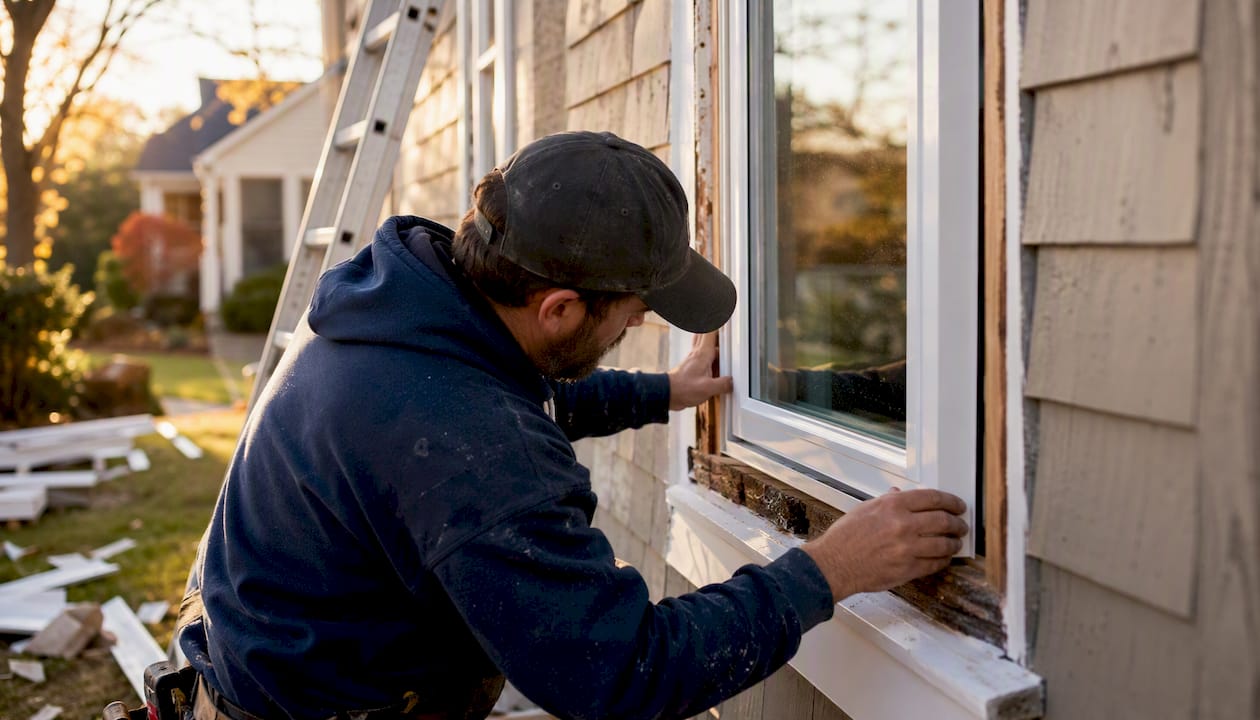
Most Connecticut homeowners pay between a few hundred to nearly a thousand dollars per window installed, including labor, for a standard residential replacement. A typical home with a dozen or more windows runs several thousand dollars, depending on frame material, glass package, and site conditions. Vinyl and fiberglass frames dominate CT installs because they hold up against freeze-thaw cycles without warping or rotting the way wood can.
Three factors move your number the most:
- Frame material: Vinyl is the budget-friendly baseline; fiberglass costs more upfront but lasts longer with less maintenance.
- Window type and size: A standard double-hung costs far less than a bay window or a custom-shaped unit.
- Installation complexity: Second-story access, masonry openings, or structural repairs add labor time and cost.
For a number you can actually plan around, request a free on-site estimate from J. Signor Exteriors, a licensed and insured Connecticut contractor with more than 30 years of local experience.
Key Takeaways
Connecticut window replacement generally costs several hundred dollars per window installed, with a typical home of a dozen windows costing several thousand dollars depending on frame material, glass package, and site conditions.
| Point | Details |
|---|---|
| Per-window cost range | Most CT homeowners pay $400–$900 per window installed, including labor, for standard replacements. |
| Whole-house budget | A 12–15 window home typically runs $5,000–$13,500; an 18-window whole-house project ranges $7,200–$16,200. |
| Top three cost drivers | Frame material, window type and size, and installation complexity move the budget more than any other factors. |
| Best material for CT climate | Premium vinyl suits most homes; fiberglass is the stronger long-term pick for exposed elevations and 15+ year ownership. |
| Incentives to check | Federal tax credits (up to 30%, capped at $600/year for windows) and Eversource/United Illuminating rebates require ENERGY STAR Northern zone certification. |
| Jsignorexteriors next step | Request a free on-site estimate from J. Signor Exteriors, a licensed CT contractor with 30+ years of local experience. |
Table of Contents
- How much does each window type cost in Connecticut?
- What actually drives your window replacement cost in Connecticut
- Which window types and materials make sense for Connecticut homes
- Energy efficiency options, Connecticut incentives, and realistic payback
- What to expect during the installation process in Connecticut
- How to pick a trustworthy Connecticut window contractor
- Sample budgets for common Connecticut window replacement projects
- Repair vs. replace: when new windows are actually worth it
- Why trust this guidance: J. Signor Exteriors’ Connecticut experience
- A Connecticut contractor’s honest take on window replacement
- Ready to get an accurate estimate for your Connecticut home
- Sources
How much does each window type cost in Connecticut?
The table below reflects installed costs for standard-size windows in Connecticut, assuming single-story access, removal of the existing window, and no structural repairs. Prices reflect typical 2026 local project ranges.
Assumptions behind these ranges: Standard rough opening (24"×36" to 36"×60"), single-story installation, existing window removal included, no rotted framing or masonry work required, and double-pane Low-E glass as the baseline glass package.
Several add-ons push costs above these ranges:
- Triple-pane glass: Adds $100–$250 per window over double-pane equivalents.
- Impact-resistant glass: Common for coastal CT properties; adds $150–$400 per window.
- Custom or non-standard sizing: Any opening outside standard rough-opening dimensions typically adds 20–40% to the unit cost.
- Interior or exterior grilles, specialty shapes, or divided lights: Each adds $50–$200 per window depending on complexity.
Bay and bow windows carry the widest range because they often require structural header work and custom framing, which varies significantly from house to house.
What actually drives your window replacement cost in Connecticut
Two quotes for the same house can differ by thousands of dollars. Understanding why helps you compare bids fairly and identify where you have room to negotiate.
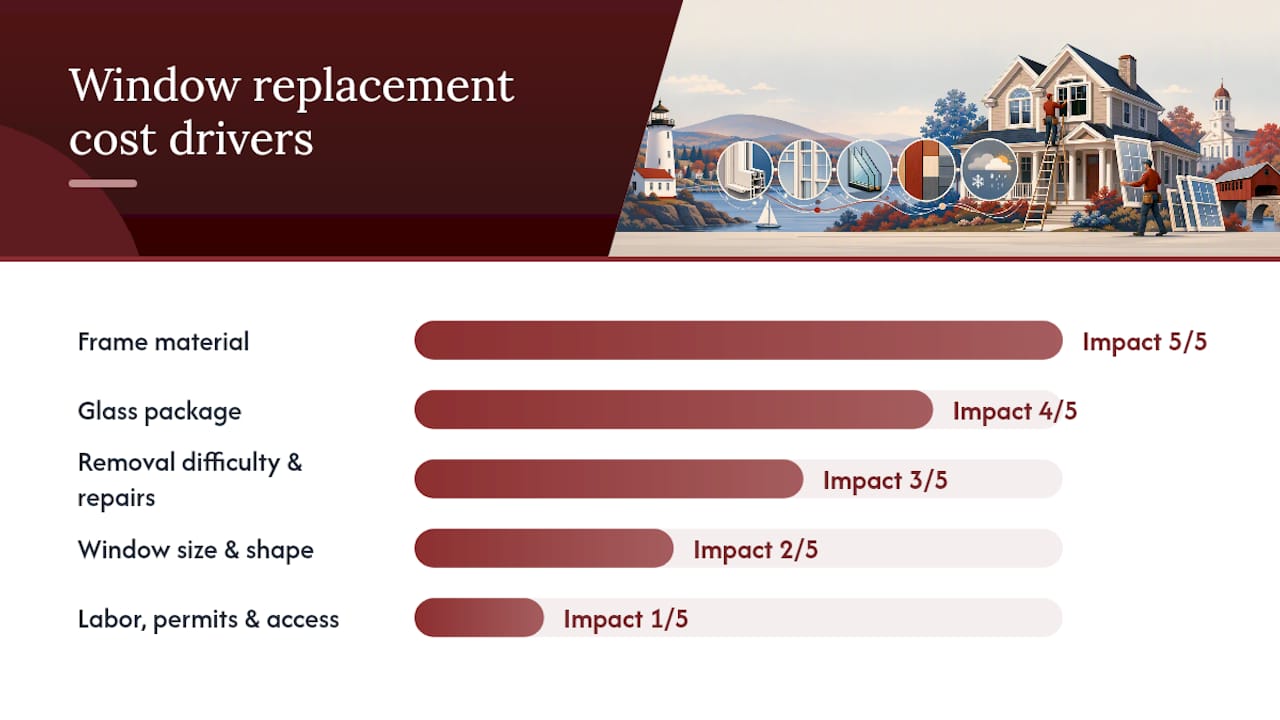
Frame material is the single largest variable you control. Vinyl is the most affordable and requires no painting, but premium vinyl (thicker profiles, multi-chamber construction) outperforms builder-grade vinyl significantly.
Glass package is the second major lever. Standard double-pane Low-E glass is the baseline for most CT installs. Upgrading to triple-pane or adding argon gas fill improves the U-factor (a measure of heat loss) and can meaningfully reduce heating costs in older homes. The upgrade cost is real, but so is the payback over time.
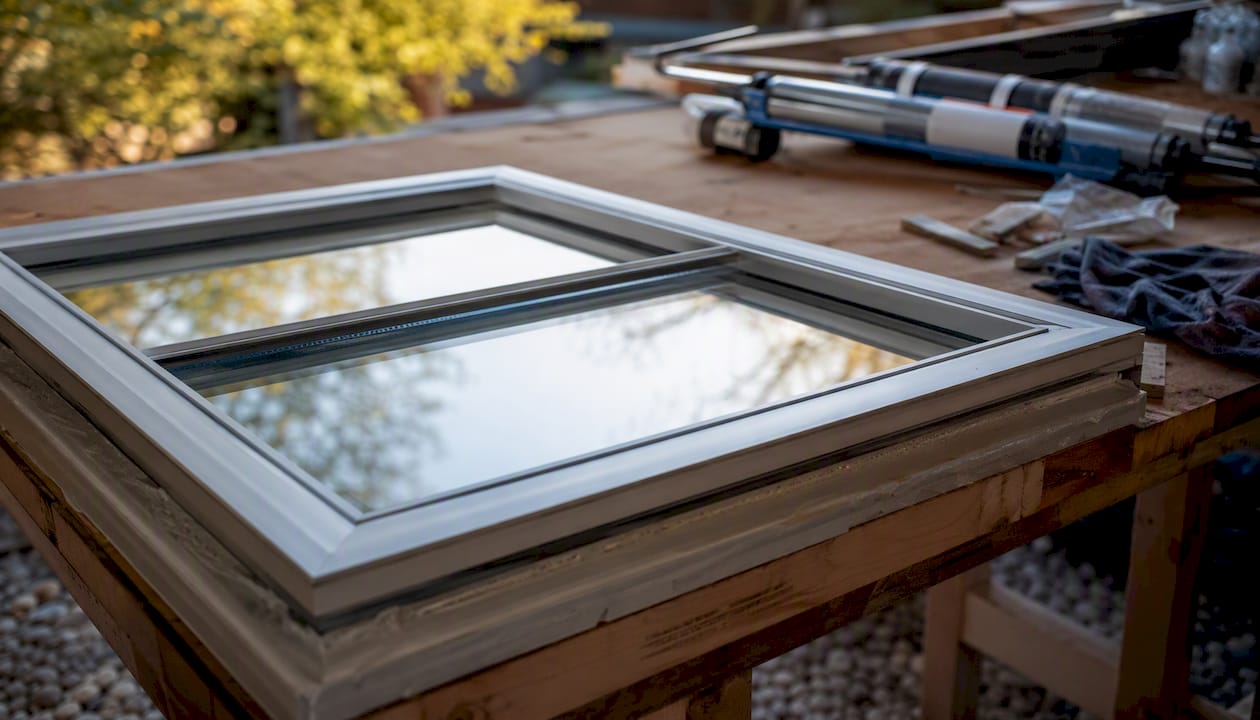
Window size and shape affect both the unit price and the labor time. A non-standard opening means a custom-ordered unit, which adds lead time and cost. Arched, octagonal, or other specialty shapes carry a significant premium.
Removal difficulty and structural repairs are the most unpredictable cost driver. Rotted sill plates, out-of-square openings, or windows set into masonry walls all add labor hours. A contractor cannot price these accurately from photos alone.
Labor rates and permit costs vary across Connecticut. Permit fees for window replacement in CT towns typically range from $50 to $200 per project, though some municipalities charge per opening. Always confirm whether your contractor pulls the permit or expects you to.
Site access and scaffolding matter on two-story or three-story homes. Ground-floor windows cost less to install than upper-floor units that require ladders, scaffolding, or lift equipment.
Save the wood option for historically significant windows where appearance is non-negotiable.*
Which window types and materials make sense for Connecticut homes
Connecticut’s climate is demanding. You get hard freezes, nor’easters, humid summers, and for coastal towns like Westport, Guilford, and Old Saybrook, salt air that degrades certain materials faster than inland conditions would.
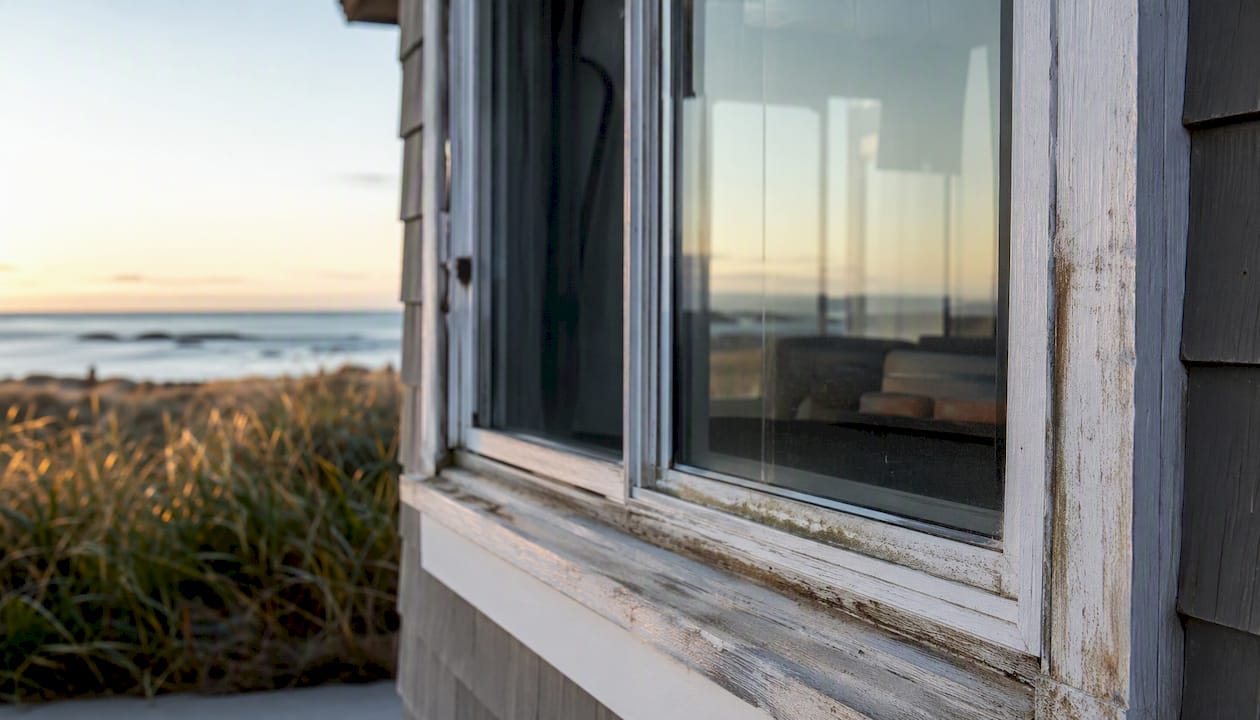
Double-hung windows are the most common choice for colonial, cape cod, and saltbox homes across CT. They tilt in for cleaning, suit traditional aesthetics, and are available in every frame material. Casement windows seal tighter against wind-driven rain, making them a strong choice for exposed elevations. Sliders work well in contemporary or ranch-style homes where a crank mechanism would be awkward. Picture windows maximize light in living areas but offer no ventilation, so they’re usually paired with operable units. Bay and bow windows add architectural interest and interior space, but they require more structural support and cost more to install and air-seal properly.
Frame material comparison for Connecticut conditions:
- Vinyl: Best budget pick. Resists moisture, never needs painting, and handles freeze-thaw well. Avoid the thinnest builder-grade profiles; look for multi-chamber construction and reinforced sashes.
- Fiberglass: Best long-term energy pick. Expands and contracts at nearly the same rate as glass, which keeps seals intact longer. Holds paint well for those who want a wood look without wood maintenance.
- Wood: Best for historic homes. Required by some local historic district commissions in towns like Litchfield, Woodbury, and Wethersfield. Demands regular painting and sealing; vulnerable to moisture if maintenance lapses.
- Aluminum: Best for coastal properties where salt-air corrosion is a concern, provided you choose thermally broken aluminum frames. Standard aluminum without a thermal break conducts cold directly into the home and performs poorly on energy metrics.
Pro Tip: For most Connecticut homes built between 1950 and 1990, a premium vinyl double-hung with Low-E glass and argon fill hits the best balance of cost, energy performance, and durability. Fiberglass is worth the extra spend if you plan to stay in the home for 15 or more years.
Energy efficiency options, Connecticut incentives, and realistic payback
Connecticut’s winters are long enough that energy performance genuinely matters. A window’s U-factor measures how much heat it loses; lower is better. ENERGY STAR-certified windows for the Northern climate zone (which covers all of Connecticut) require a U-factor of 0.27 or lower. Most quality double-pane Low-E windows with argon fill meet this threshold.
Common efficiency upgrades and what they do:
- Low-E coatings: A microscopically thin metallic layer on the glass that reflects infrared heat back into the room in winter and blocks solar heat gain in summer. Standard on most mid-grade and above windows today.
- Argon gas fill: Replaces air between panes with a denser, less conductive gas. Improves U-factor by roughly 10–15% over air-filled units.
- Triple-pane glass: Adds a third pane and a second gas-filled cavity. Best for north-facing windows or homes with very high heating bills; the payback period is longer than double-pane.
- SHGC (Solar Heat Gain Coefficient): For south-facing windows, a higher SHGC can reduce heating loads in winter. For west-facing windows, a lower SHGC reduces summer cooling costs.
Connecticut incentive sources to check:
- Eversource and United Illuminating rebates: Both utilities offer rebates for ENERGY STAR-certified window replacements. Eligibility and amounts change annually, so confirm current terms directly with your utility before purchasing.
- Connecticut Green Bank: Offers financing programs for energy-efficiency upgrades, including windows, through participating contractors.
- Federal tax credit: The Inflation Reduction Act provides a federal tax credit of up to 30% of the cost of qualifying energy-efficient windows, capped at $600 per year for windows. Confirm current eligibility with a tax professional.
- ENERGY STAR certification: Verify that the windows you select carry the ENERGY STAR Northern zone label, as this is typically required for rebate and tax credit eligibility.
A rough payback example: replacing 12 single-pane windows in a 1,800-square-foot CT home with double-pane Low-E units might reduce annual heating and cooling costs by $200–$400 depending on your current windows’ condition and your fuel type. At a project cost of $7,200 (mid-range), that suggests a payback period of 18–36 years on energy savings alone. The real financial case for replacement often rests more on comfort, reduced drafts, and resale value than on energy savings in isolation.
| Incentive Source | What to Check | Notes |
|---|---|---|
| Eversource / United Illuminating | Current rebate schedule | Requires ENERGY STAR Northern zone certification |
| Connecticut Green Bank | Financing programs | Works through participating contractors |
| Federal tax credit (IRA) | IRS Form 5695 | Up to 30%, capped at $600/year for windows |
What to expect during the installation process in Connecticut
A window replacement project in Connecticut typically moves through four phases from first call to finished install.
- On-site estimate (Week 1): A contractor visits, measures every opening, notes site conditions, and identifies any structural concerns. This visit is what makes the quote accurate.
- Order and lead time (Weeks 2–6): Custom or special-order windows typically carry a 3–6 week lead time from manufacturers. Stock-size vinyl windows can sometimes be sourced faster.
- Permit (if required): Most Connecticut municipalities require a building permit for window replacement, especially if the opening size changes. Your contractor should pull this permit; confirm it before signing a contract.
- Installation (1–3 days for a typical home): An experienced crew installs 8–12 standard windows per day under good conditions. Bay windows, masonry openings, or structural repairs slow the pace.
Homeowner prep checklist for installation day:
- Clear furniture, blinds, and curtains from all window areas (inside and out, 3–4 feet of clearance).
- Secure pets in a room away from the work area.
- Ensure driveway or street parking is available for the crew’s truck and materials.
- Remove any window treatments, security sensors, or alarm contacts before the crew arrives.
- Plan for some interior dust; cover nearby furniture with drop cloths if you have concerns.
Connecticut’s busiest window installation seasons are spring (April–June) and early fall (September–October). Scheduling during these periods often means longer lead times for contractor availability. If you can schedule in late winter or midsummer, you may get faster scheduling and sometimes more contractor attention on your project.
Pro Tip: Book your estimate in January or February. Contractors are less busy, lead times are shorter, and you’ll have your new windows installed before the spring heating-to-cooling transition, which is when drafts and energy waste are most noticeable.
How to pick a trustworthy Connecticut window contractor
The difference between a smooth project and a frustrating one usually comes down to the contractor, not the window brand. Here is what to ask and what to watch for.
Questions to ask on the first call:
- Are you licensed and insured in Connecticut? (Ask for the license number and verify it with the Connecticut Department of Consumer Protection.)
- Do you carry general liability and workers’ compensation insurance?
- Who performs the installation — your own crew or subcontractors?
- What warranty do you offer on labor, and who handles warranty claims?
- Can you provide references from CT homeowners who had similar work done in the past 12 months?
At the in-home estimate, also ask:
- Will you provide a written, itemized quote that specifies the window brand, series, glass package, and installation method?
- Does your quote include permit fees, debris removal, and interior/exterior trim work?
- What is your process if you discover rotted framing or structural issues once the old window is removed?
- How do you handle flashing and air-sealing around the new window?
- What is the payment schedule, and do you require a deposit?
Red flags to watch for:
- No written estimate or a quote that lists only a lump sum with no line items.
- Pressure to sign the same day or claims that pricing is only valid for 24 hours.
- No local references or an inability to show completed projects in Connecticut.
- Cash-only payment requests or a demand for full payment upfront.
- No mention of permits or a suggestion that permits “aren’t necessary.”
Trust signals that matter: a local business with a physical Connecticut address, a written labor warranty of at least one year (many reputable contractors offer longer), clear contract terms with a payment schedule tied to project milestones, and verifiable customer reviews on Google or the Better Business Bureau.
Sample budgets for common Connecticut window replacement projects
The three scenarios below reflect typical Connecticut project costs in 2026. All assume vinyl double-hung windows with double-pane Low-E glass, standard rough openings, single-story access, and no structural repairs unless noted.
What pushes a project from the typical range to the high end: custom or non-standard window sizes, bay or bow windows (which add structural work), premium fiberglass or wood frames, triple-pane glass upgrades, second or third-story installations requiring scaffolding, or discovery of rotted framing once the old windows come out.
- A single bay window replacement can add $1,500–$4,000 to a project budget on its own.
- Structural repairs to a rotted sill or header typically add $300–$800 per opening, depending on the extent of damage.
- Upgrading from vinyl to fiberglass across a 12-window project adds roughly $1,800–$3,600 to the total.
Pro Tip: Ask every contractor for an itemized quote, not just a project total. A line-item breakdown lets you compare bids accurately and see exactly what each contractor is including — or leaving out.
Repair vs. replace: when new windows are actually worth it
Not every aging window needs to be replaced. The decision comes down to what is failing and whether a repair can restore performance at a fraction of the cost.
Signs that replacement is warranted:
- Visible drafts you can feel with your hand near the frame on a cold day.
- Condensation or fogging between the panes (a failed seal that cannot be repaired without replacing the glass unit).
- Rotted wood frames or sills that have lost structural integrity.
- Windows that no longer open, close, or lock properly due to frame distortion.
- Single-pane glass with no storm window, which is a significant energy liability in Connecticut winters.
- Repeated ice damming at window sills, suggesting severe air leakage.
When repair is likely enough:
- Broken hardware (locks, cranks, balances) can usually be replaced for $50–$200 per window.
- Worn weatherstripping is a $10–$30 fix per window and can meaningfully reduce drafts.
- A failed glass seal (fogged pane) in an otherwise sound frame can sometimes be addressed by replacing just the glass unit, not the entire window.
- Routine cleaning of tracks, sills, and frames extends window life considerably. Professional window cleaning services in CT recommend cleaning most homes twice a year, with coastal or tree-lined properties benefiting from more frequent service.
On the resale side, window replacement consistently ranks among the exterior improvements that Connecticut buyers notice. A full window replacement on a 12-window home using mid-grade vinyl windows typically recoups a meaningful portion of its cost at resale, though the exact figure varies by neighborhood and buyer expectations. The comfort and energy improvement is immediate; the financial return comes over time.
Why trust this guidance: J. Signor Exteriors’ Connecticut experience
The cost ranges in this guide were developed from local project data, published Connecticut contractor pricing, and typical assumptions for standard residential installs across the state. They reflect what Connecticut homeowners actually pay in 2026, not national averages that often understate local labor costs.
The company is fully licensed and insured in Connecticut, carries workers’ compensation and general liability coverage, and completes projects with its own trained crews. Services cover the full scope of a window replacement project: measurement, permit coordination, removal of existing windows, installation, flashing, air-sealing, interior and exterior trim, and cleanup.
Key proof points:
- 30+ years of Connecticut exterior remodeling experience
- Licensed and insured contractor operating throughout the state
- Free on-site estimates with no obligation
- Written warranties on both products and labor
- Local references available for completed window projects
For homeowners also planning roof repair or replacement alongside windows, coordinating both projects with one contractor often reduces scheduling complexity and total mobilization costs.
Pro Tip: Before your estimate appointment, walk your home and note every window that has a draft, a fogged pane, or an operational problem. That list helps your contractor prioritize and gives you a clearer picture of whether a partial or full replacement makes more sense.
A Connecticut contractor’s honest take on window replacement
What homeowners most often overlook is the air-sealing step. A new window installed without proper flashing tape, backer rod, and low-expansion spray foam around the rough opening will underperform from day one, regardless of how good the window itself is. The glass and frame get all the attention, but the installation quality around the window is what determines long-term energy performance and whether you’ll see water intrusion in five years.
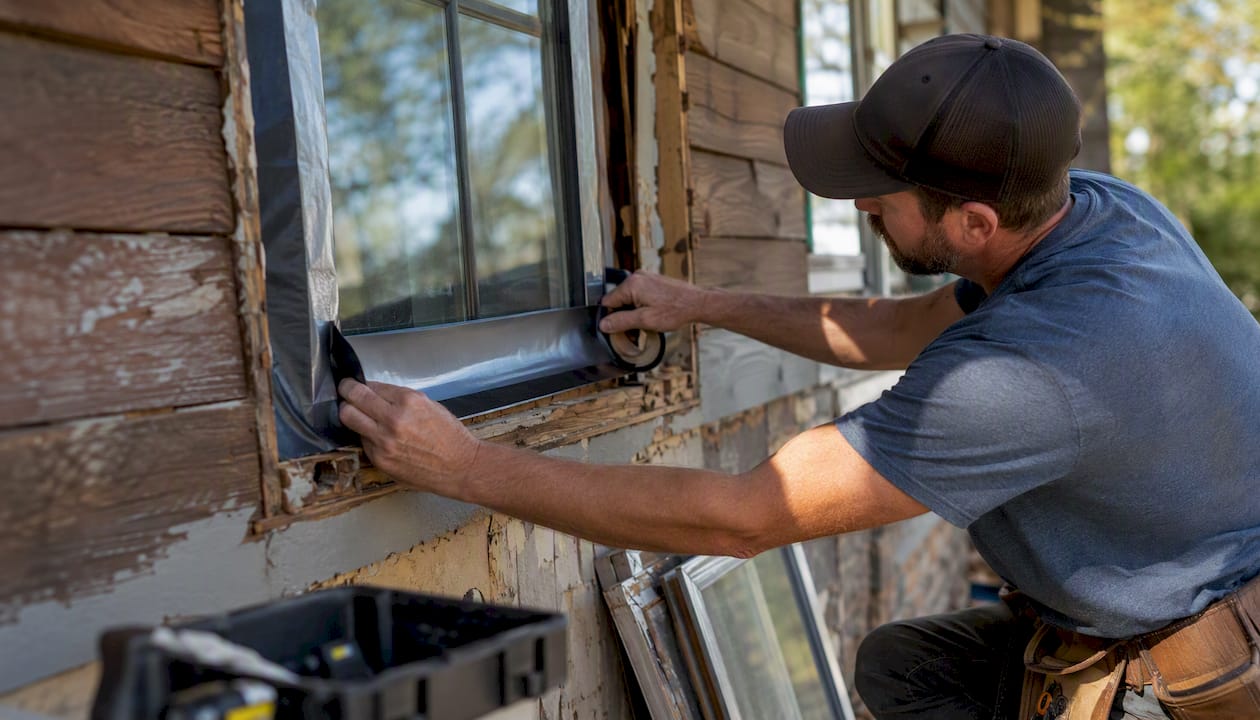
The one change that produces the biggest long-term value, in my experience working on Connecticut homes, is choosing a frame material that matches the home’s actual exposure. A vinyl window on a sheltered south-facing wall is a different product in practice than the same window on a north-facing elevation that takes the full force of a nor’easter. Fiberglass or reinforced vinyl on exposed elevations, and standard vinyl where conditions are milder, is a smarter allocation of budget than treating every window in the house identically.
Pro Tip: Ask your contractor specifically how they handle the rough opening after the old window comes out. If the answer is vague or they skip past it, that is a signal worth paying attention to.
Ready to get an accurate estimate for your Connecticut home
J. Signor Exteriors brings more than 30 years of hands-on Connecticut experience to every window replacement project, from a single problem window to a whole-house upgrade. As a fully licensed and insured local contractor, the company handles everything from measurement and permitting to installation, flashing, and final trim, so you’re not coordinating multiple trades or chasing subcontractors.
The best way to get a number you can actually plan around is a free on-site estimate. Visit the window replacement page to request yours, or explore the full range of exterior remodeling services if you’re also considering siding, roofing, or decks alongside your window project.
Sources
Use these resources to confirm incentive eligibility, verify contractor credentials, and learn more about window performance standards before your estimate appointment.
- CT Window Cleaning, Window Washers CT, Window Cleaners CT
Call your utility provider (Eversource or United Illuminating) directly to confirm current rebate amounts and eligibility requirements before purchasing windows. Rebate programs change annually, and the amount available at the time of your purchase may differ from what is published online. The Connecticut Department of Consumer Protection’s contractor license lookup tool lets you verify any contractor’s license status before signing a contract.