Selecting the right roofing material for New England homes means choosing options that combine weather resistance, longevity, and style suited to one of the harshest climates in the country. When you choose roofing material in New England, the decision directly affects your protection against Nor’easters, ice dams, and freeze-thaw cycles that repeat every winter. Architectural asphalt shingles and standing seam metal roofing are the two most common choices, each with distinct trade-offs in cost, lifespan, and maintenance. Getting this decision right the first time saves you thousands of dollars and years of headaches.
What roofing materials perform best in New England’s climate?
New England’s biggest roofing threat is ice damming. Materials with smooth surfaces or strong moisture barriers perform best against the freeze-thaw cycles that repeat from november through march. Understanding your options is the first step toward a roof that lasts.
Architectural asphalt shingles are the most widely installed option across Connecticut, Massachusetts, and Rhode Island. Architectural shingles last 25–50 years and cost $10,000–$22,000 installed on a 2,000 sq ft home. For New England performance, look for shingles with a wind rating of 110–130 mph, algae-resistant granules, and SBS-modified compounds that stay flexible in cold temperatures.
Standing seam metal roofing is the premium choice for homeowners who want to buy once and be done. Metal roofs last 40–70 years and cost $18,000–$35,000 installed. Snow slides off metal naturally, reducing ice dam risk and structural load. Standing seam designs use concealed fasteners, which eliminate the leak points common in exposed-fastener metal panels. Metal roofing with reflective coatings also reduces cooling costs 10–25%, adding real energy savings over the roof’s life.
Cedar shake gives New England homes a classic, textured look that suits Colonial and Cape Cod architecture well. The trade-off is maintenance. Cedar requires professional cleaning every 5–7 years to prevent moss and moisture damage. Many homeowners underestimate this cost when they first price out cedar.
Synthetic cedar alternatives replicate the natural look with lower maintenance and a longer lifespan than real cedar shakes. They resist moisture, insects, and UV degradation without the treatment schedule real wood demands.
Slate is the most durable option available, with lifespans exceeding 100 years on well-maintained homes. It suits historic New England properties beautifully but requires a structurally reinforced roof deck and a specialist installer.
| Material | Lifespan | Installed Cost (2,000 sq ft) | Maintenance Level |
|---|---|---|---|
| Architectural asphalt shingles | 25–50 years | $10,000–$22,000 | Low |
| Standing seam metal | 40–70 years | $18,000–$35,000 | Very low |
| Cedar shake | 20–30 years | $20,000–$30,000 | High |
| Synthetic cedar | 30–50 years | $15,000–$25,000 | Low |
| Slate | 75–100+ years | $30,000–$50,000+ | Low to moderate |
How do costs and long-term value compare for New England roofing?
Upfront price is the wrong number to focus on. Lifecycle cost determines the best roofing choice, and metal roofing often costs less per year than replacing asphalt shingles two or three times over the same period. A homeowner who pays $25,000 for a metal roof that lasts 60 years spends roughly $417 per year. Two asphalt replacements over that same period could easily total $35,000 or more.
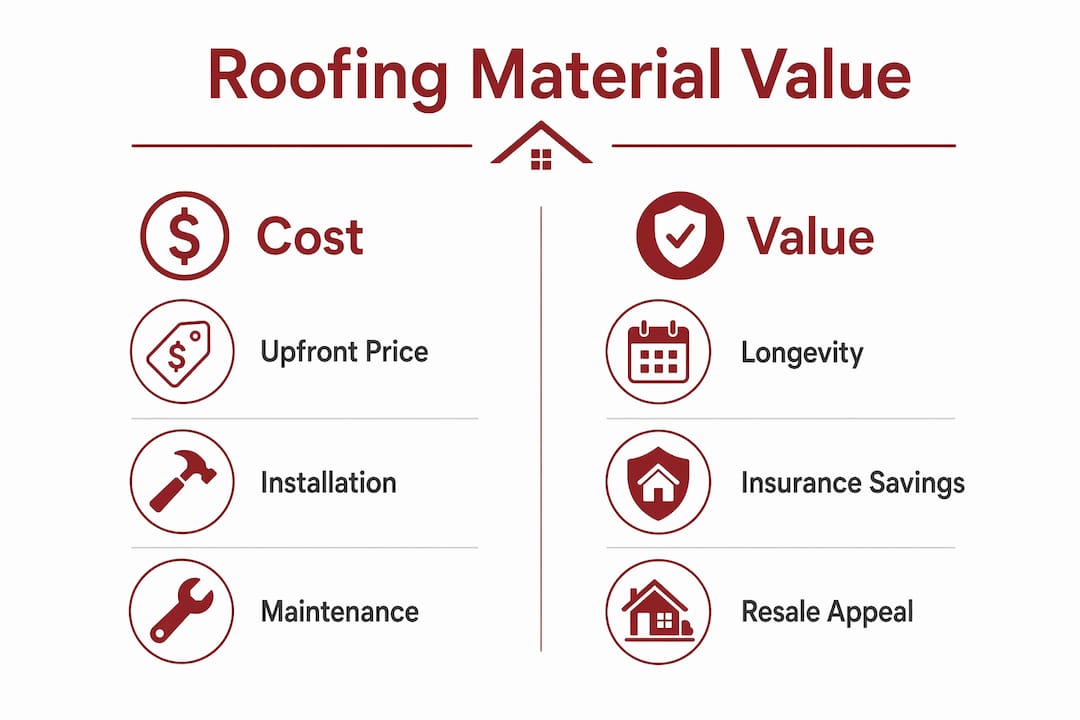
Insurance savings add another layer to the math. Impact-resistant roofing reduces insurance premiums 5%–12% depending on certifications and your provider. Over a decade, that discount can offset a meaningful portion of the upgrade cost.
Your ownership timeline matters too. Homeowners planning to sell within 15 years typically get better value from architectural asphalt shingles, which offer solid curb appeal and a lower upfront investment. Homeowners planning to stay long-term benefit more from metal or slate, where the reduced maintenance and longer lifespan pay off over time. You can review roof lifespan factors in detail to match your timeline to the right material.
Pro Tip: Ask your insurance agent specifically about Class 4 impact-resistant shingles before you sign a contract. That single certification can qualify you for the largest available premium discount in most New England states.
| Material | Avg. Annual Cost (lifecycle) | Insurance Discount Potential | Best For |
|---|---|---|---|
| Architectural asphalt | Moderate | Up to 12% with impact rating | Short to mid-term owners |
| Standing seam metal | Low | Up to 12% | Long-term owners |
| Slate | Very low | Moderate | Historic homes, long-term |
| Synthetic cedar | Low to moderate | Moderate | Mid to long-term owners |
What installation and maintenance details matter most in New England?
Installation quality separates a roof that lasts from one that fails in its first hard winter. The single most important detail is ice-and-water shield placement. The membrane must extend 24 inches past the interior wall line to protect against ice dam infiltration. This is a code-level requirement in most New England jurisdictions, but not all contractors follow it precisely.
Ventilation is equally critical. Proper ventilation combined with quality underlayment blocks moisture buildup under the roof deck and extends material life through freeze-thaw cycles. A poorly ventilated attic creates warm spots on the roof surface that melt snow, which then refreezes at the eaves and forms ice dams regardless of what material you chose.
Key maintenance tasks vary by material:
- Asphalt shingles: Inspect annually for cracked, curled, or missing shingles. Clear debris from valleys and gutters each fall.
- Metal roofing: Check fasteners and sealant at penetrations every few years. Metal requires minimal intervention otherwise.
- Cedar shake: Schedule professional cleaning and treatment every 5–7 years. Check for moss growth after wet seasons.
- Slate: Inspect for cracked or slipped tiles after major storms. Replace individual tiles promptly to prevent deck damage.
- Synthetic cedar: Rinse with water annually. No chemical treatments required.
Historic district rules add another layer of complexity. Towns like Concord and Medway, MA have local commissions that mandate specific roofing colors or material types. If your home sits in a designated historic district, confirm material approval before purchasing anything.
Pro Tip: Have your contractor show you the ice-and-water shield installation before they cover it with underlayment. That five-minute check prevents the most common and costly New England roofing failure.
How does your home style, location, and ownership plan affect material choice?
The right material for your neighbor’s house may be wrong for yours. Architecture, geography, and how long you plan to stay all shape the decision.
Match material to architectural style:
- Colonial and Federal homes suit slate, architectural shingles, or synthetic cedar for a period-appropriate look.
- Cape Cod and Craftsman styles pair well with cedar shake or high-quality architectural shingles with dimensional texture.
- Contemporary and modern homes benefit from standing seam metal, which reads as clean and intentional rather than industrial.
- Victorian and Queen Anne properties often require slate or synthetic slate to match original character, especially in historic districts.
Consider your location within New England:
Coastal homeowners in Connecticut, Rhode Island, and Massachusetts face salt air exposure that accelerates corrosion on standard metal products. Specify marine-grade coatings or aluminum panels if your home sits within a mile of the coast. Inland properties face heavier snow loads and more extreme temperature swings, making snow-shedding performance and SBS-modified shingle compounds especially important.
Factor in your ownership horizon:
If you plan to sell within a decade, a fresh architectural shingle roof with a strong warranty signals well to buyers without requiring a large upfront investment. If you are staying put for 20 or more years, the long-term value of metal or slate outweighs the higher initial cost. Synthetic alternatives offer a middle path, delivering low maintenance and good aesthetics at a price point between asphalt and premium materials. For a broader look at how material choices compare across property types, the Connecticut roofing material guide from Jsignorexteriors covers performance trade-offs in useful detail.
What I’ve learned after 30 years of New England roofing projects
The homeowners who regret their roofing decisions almost always made the same mistake: they chose the cheapest option available without accounting for what New England winters actually cost a roof over time.
I’ve seen beautiful cedar shake roofs installed on homes where the owners had no idea they were signing up for a maintenance program. Five years later, the moss has taken hold, the wood is saturated, and the repair bill rivals what a synthetic alternative would have cost upfront. Cedar is a great material on the right home with the right owner. It is a poor choice for someone who wants to set it and forget it.
Metal roofing gets dismissed as too expensive more often than it deserves. When you spread that cost over 60 years and factor in zero shingle replacements, reduced insurance premiums, and lower cooling bills, the math often favors metal for homeowners who plan to stay. The concealed fastener design on standing seam panels is a genuine engineering advantage, not marketing language. It eliminates the leak points that plague exposed-fastener systems after a decade of thermal expansion.
The detail I stress most to every homeowner is professional installation. A premium shingle installed poorly will fail faster than a mid-grade shingle installed correctly. Ice-and-water shield placement, ventilation balance, and flashing at every penetration point are where roofs succeed or fail in New England. The material matters. The installer matters more.
Warranties are worth reading before you sign. Manufacturer warranties cover defects. Workmanship warranties cover installation errors. You need both, and you need a contractor who will still be in business when you need to make a claim.
— Adam
Jsignorexteriors brings local expertise to your roofing decision
Choosing the right roofing material for a Connecticut home takes more than reading a guide. It takes someone who has installed roofs through decades of New England winters and knows exactly where the failures happen.
Jsignorexteriors has served Connecticut homeowners for more than 30 years, specializing in roofing installations that hold up to the region’s specific climate demands. The team provides personalized consultations to match your home’s architecture, location, and budget to the material that delivers the best long-term value. Whether you are weighing architectural shingles against standing seam metal or navigating historic district requirements, Jsignorexteriors brings the experience to guide you clearly. Contact a Connecticut roofing contractor from Jsignorexteriors to schedule your consultation and get a detailed material recommendation for your specific home.
FAQ
What is the best roofing material for New England winters?
Standing seam metal roofing performs best in New England winters due to its snow-shedding surface and 40–70 year lifespan. Architectural asphalt shingles with SBS-modified compounds and a 110–130 mph wind rating are the most practical and affordable alternative.
How much does a new roof cost in New England?
Architectural asphalt shingles run $10,000–$22,000 installed on a 2,000 sq ft home, while standing seam metal costs $18,000–$35,000. Slate installations typically start above $30,000 depending on roof complexity and structural requirements.
Can roofing material choice lower my homeowner’s insurance?
Yes. Impact-resistant roofing materials can reduce New England homeowner insurance premiums by 5%–12% depending on the certification level and your insurance provider. Class 4 impact-resistant shingles typically qualify for the largest discounts.
How do I prevent ice dams on my New England roof?
Ice dam prevention depends more on proper installation than material choice alone. The ice-and-water shield membrane must extend 24 inches past the interior wall line, and the attic must be properly ventilated to prevent warm spots that melt snow at the roof surface.
Does my home’s architectural style affect which roofing material I should choose?
Yes. Colonial and historic homes suit slate or dimensional asphalt shingles, while contemporary homes pair well with standing seam metal. Homeowners in designated historic districts may face material restrictions set by local commissions that limit available options.
Key takeaways
The best roofing material for a New England home balances climate performance, lifecycle cost, and architectural fit rather than upfront price alone.
| Point | Details |
|---|---|
| Climate performance first | Prioritize snow-shedding ability and ice dam resistance when selecting any New England roofing material. |
| Lifecycle cost beats sticker price | Metal roofing often costs less per year than replacing asphalt shingles multiple times over the same period. |
| Installation quality is decisive | Proper ice-and-water shield placement and attic ventilation determine long-term performance more than material brand. |
| Ownership timeline shapes the choice | Short-term owners get better value from asphalt shingles; long-term owners benefit more from metal or slate. |
| Insurance savings are real | Impact-resistant materials can reduce homeowner insurance premiums by 5%–12% with the right certifications. |