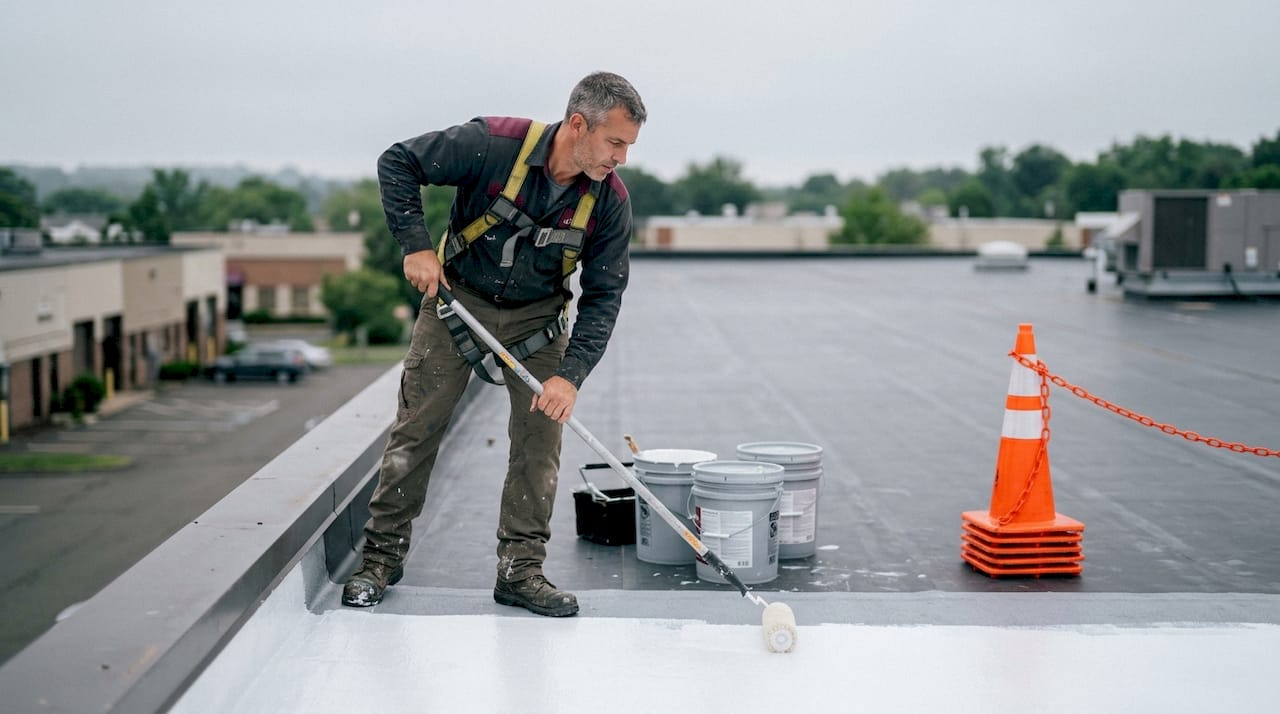
A roof coating system is a fluid-applied membrane that cures into a seamless, waterproof shield over an existing roof surface. Unlike paint, which sits on top without bonding structurally, a coating forms a monolithic membrane curing to 20–40 mils thick. That thickness is what separates a coating from a cosmetic fix. For Connecticut homeowners and business owners dealing with harsh winters, freeze-thaw cycles, and summer UV exposure, a properly installed coating can extend roof life by 10–20 years without a full tear-off. Jsignorexteriors has seen firsthand how the right coating system protects roofs across the state, saving owners thousands of dollars in premature replacement costs.
What is a roof coating system and how does it work?
A roof coating system works by bonding a liquid material directly to the existing roof substrate, then curing into a flexible, continuous membrane. That membrane seals seams, fills minor surface voids, and creates a uniform barrier against water intrusion. Three protection mechanisms make it effective: waterproofing, UV reflectivity, and elastic bridging.
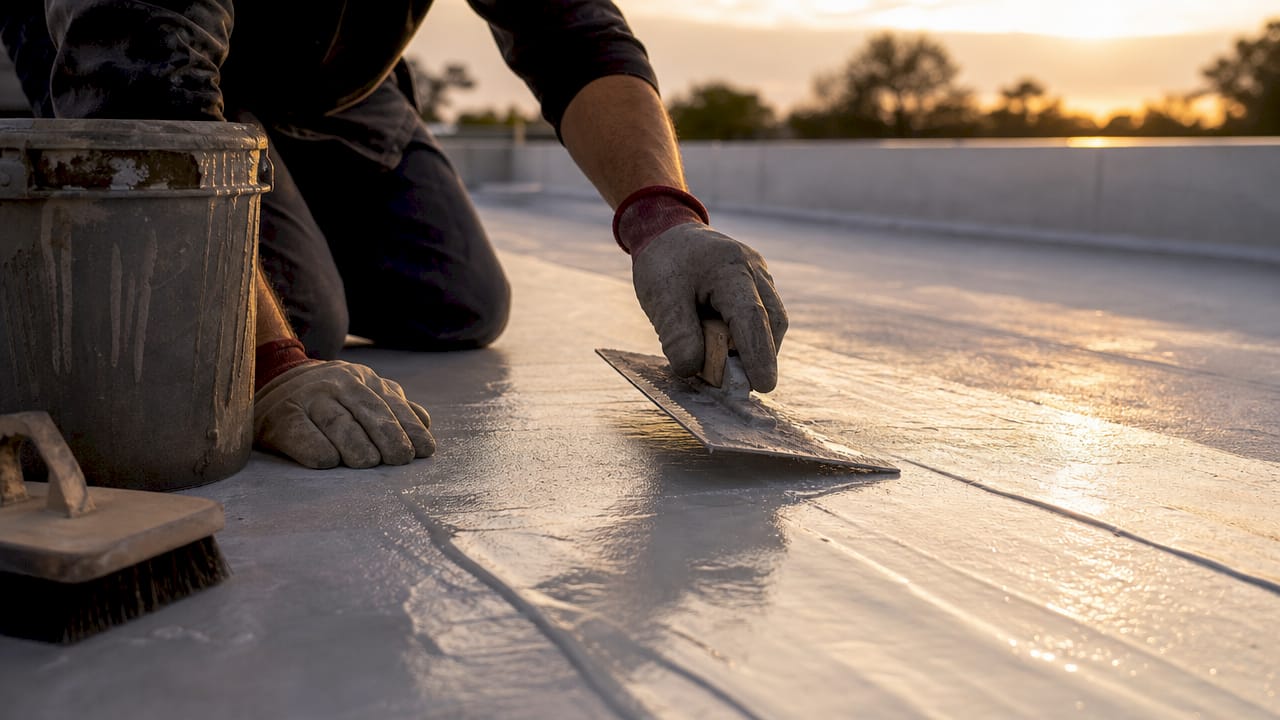
Waterproofing prevents rain and snowmelt from penetrating the roof deck. UV reflectivity reduces heat absorption, which matters significantly during Connecticut summers. Elastic bridging means the cured coating can flex with the roof as temperatures shift, preventing cracks at seams and joints during freeze-thaw cycles.
The three most common coating chemistries are acrylic, silicone, and polyurethane. Each has distinct properties:
- Acrylic coatings are water-based, easy to apply, and cost-effective. They perform well in areas with good drainage and moderate UV exposure but degrade under prolonged standing water.
- Silicone coatings resist ponding water indefinitely, making them the preferred choice for flat or low-slope roofs with drainage challenges. They also deliver strong UV resistance.
- Polyurethane coatings offer the highest impact resistance and are well-suited for roofs with foot traffic or mechanical equipment. They cost more but hold up under physical stress.
Pro Tip: If your Connecticut roof has any low spots where water pools after rain, silicone is the coating chemistry to request. Acrylic will break down in those areas within a few seasons.
What are the main benefits of roof coating systems vs. replacement?
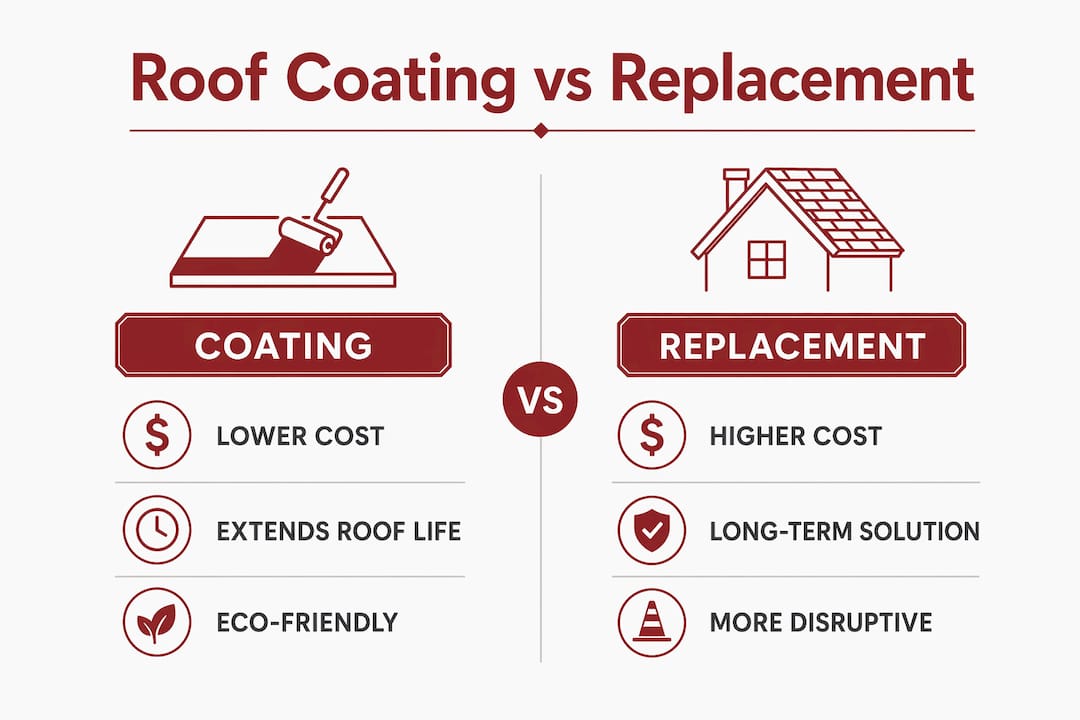
The financial case for coating over replacement is direct. Professional coating installation costs $2.50–$6.00 per square foot depending on material type, while full roof replacement typically runs two to three times that figure. That gap represents real savings for Connecticut property owners managing tight maintenance budgets.
Here are the core advantages coating systems deliver:
- Cost savings. Coating costs 50–70% less than full replacement. Silicone runs $3.50–$5.00 per square foot, acrylic $2.50–$3.50, and polyurethane $4.00–$6.00. Choosing the right type keeps costs predictable.
- Energy efficiency. Reflective coatings deflect up to 85% of solar radiation. That reduction in heat absorption lowers cooling demand during summer months, which shows up directly on your utility bill.
- Tax advantages for business owners. Many coating projects qualify as maintenance expenses under IRS classification, allowing full expensing in the year of application rather than depreciating the cost over years. That is a meaningful cash flow benefit for commercial property owners.
- Minimal disruption. Unlike a tear-off replacement, coating installation does not require evacuating tenants or shutting down operations. Work happens on the exterior with no interior access needed.
- Environmental benefit. Delaying a tear-off keeps roofing material out of landfills. For Connecticut owners with sustainability goals, that is a measurable advantage.
Comparing coating to full roof replacement costs makes the financial picture clear. Coating is not always the right answer, but when the underlying structure is sound, it delivers strong value per dollar spent.
What is the roof coating application process?
The application process determines whether a coating lasts 10 years or fails in 3. Surface preparation is the single most important factor. A coating applied over a dirty, wet, or damaged substrate will delaminate regardless of material quality.
The professional installation sequence follows these steps:
- Moisture survey. Before any work begins, a contractor performs an infrared thermography scan or core sampling to detect moisture-saturated substrate. Coating over wet insulation traps moisture and accelerates internal decay. This step is non-negotiable.
- High-pressure cleaning. The roof surface is power-washed to remove dirt, algae, oxidation, and loose material. Contaminants prevent proper adhesion.
- Repair of flashings and seams. All damaged flashings, open seams, and cracks are repaired before coating begins. Coating does not fix structural problems. It protects a sound surface. For existing damage, roof repair services address these issues before any coating work starts.
- Seam reinforcement with fabric mesh. High-stress areas like seams, penetrations, and corners receive a layer of polyester or fiberglass mesh embedded in the first coat. This reinforcement prevents cracking at the most vulnerable points.
- Coating application. The coating is applied in one or two passes using spray, roller, or brush depending on the material and roof geometry. Mil thickness is monitored throughout to meet manufacturer specifications.
- Adhesion testing. Pull tests on small patches verify bond strength before the full application proceeds. Many manufacturers require this step to qualify the project for a warranty.
- Cure time and inspection. The coating cures over 24–72 hours depending on temperature and humidity. A final inspection confirms uniform coverage and correct thickness.
Pro Tip: Ask your contractor for a written moisture survey report before signing any coating contract. If they skip that step, the warranty may be void before the coating even cures.
Which coating type works best for your roof and Connecticut’s climate?
Matching the coating to your roof substrate and local conditions is where most owners make mistakes. Connecticut’s climate presents a specific set of challenges: cold winters with freeze-thaw cycling, humid summers, coastal salt air in shoreline communities, and significant UV exposure from june through september.
Compatibility by roof type matters as much as climate:
- TPO and EPDM membranes accept acrylic and silicone coatings well. Silicone is the stronger choice for flat TPO roofs with drainage issues.
- Metal roofs work best with acrylic or polyurethane coatings. Acrylic handles expansion and contraction on metal panels without cracking.
- Modified bitumen roofs are compatible with acrylic and aluminum-based coatings. The coating seals the granule surface and adds reflectivity.
- Asphalt shingle roofs are less commonly coated, but elastomeric acrylic products can extend shingle life on residential roofs with good drainage.
Silicone coatings withstand ponding water indefinitely, which makes them the default recommendation for flat commercial roofs in Connecticut where drainage is imperfect. Acrylics perform better on sloped surfaces where water sheds quickly.
| Coating type | Best roof substrate | Key strength | Connecticut climate fit |
|---|---|---|---|
| Acrylic | Metal, modified bitumen, shingles | Cost-effective, UV reflective | Good for sloped roofs with drainage |
| Silicone | TPO, EPDM, flat roofs | Ponding water resistance | Excellent for flat commercial roofs |
| Polyurethane | Any with foot traffic | Impact and abrasion resistance | Strong for roofs with mechanical units |
One thing coatings cannot fix: structural failure. If your roof deck is rotting, your insulation is saturated, or your drainage system is failing, coating over those problems accelerates damage rather than preventing it. A thorough condition assessment, including reviewing commercial roofing material options, helps determine whether coating or replacement is the right path.
Key Takeaways
A roof coating system extends roof life and cuts costs only when the substrate is sound, the material matches the climate, and installation follows a rigorous preparation process.
| Point | Details |
|---|---|
| Definition matters | A roof coating is a fluid-applied membrane, not paint. It cures to a waterproof, seamless layer. |
| Cost advantage is real | Coating costs $2.50–$6.00 per square foot, saving 50–70% compared to full replacement. |
| Prep determines outcome | Moisture surveys, seam repairs, and adhesion testing are required before any coating is applied. |
| Material must match conditions | Silicone handles ponding water; acrylic suits sloped, well-drained roofs in Connecticut. |
| Warranties signal quality | NDL warranties cover all repair costs regardless of inflation, reflecting contractor confidence. |
What I’ve learned after 30 years of Connecticut roofing
The most common mistake I see is treating a roof coating as a shortcut. A property owner notices some wear, gets a quote for coating, and assumes the problem is solved. That thinking leads to expensive failures.
Coating is a restoration tool, not a patch. It works when the roof underneath is structurally sound and dry. The moment you coat over saturated insulation or failing seams, you seal in the damage and accelerate decay. I have seen roofs that needed a $15,000 coating job end up requiring a $60,000 replacement two years later because the moisture survey was skipped.
Material selection is the second place owners go wrong. Connecticut is not Arizona. We get freeze-thaw cycles, nor’easters, and humid summers. A coating that performs well in a dry southwestern climate may crack and delaminate here within two seasons. Silicone on a flat roof with drainage issues is not optional. It is the correct answer.
The contractors who deliver the best long-term results are the ones who push back on rushed timelines, insist on moisture testing, and back their work with No Dollar Limit warranties. Those warranties signal that the contractor and manufacturer both stand behind the installation. If a contractor cannot offer that, ask why.
— Adam
Roof coating services for Connecticut homes and businesses
Jsignorexteriors brings more than 30 years of exterior remodeling experience to every roofing project in Connecticut. Whether you own a residential property in Farmington or a commercial building in Hartford, the team evaluates your roof condition, recommends the right coating system, and installs it to manufacturer specifications.
Every project starts with a thorough inspection and moisture assessment, so you know exactly what your roof needs before any work begins. Jsignorexteriors is fully licensed and insured, and backs coating work with strong warranty coverage. For owners weighing coating against replacement, the team also handles full roof replacement in Connecticut and complete roofing services across the state. Contact Jsignorexteriors to schedule your roof assessment and get a clear, honest recommendation for your property.
FAQ
What is a roof coating system in simple terms?
A roof coating system is a liquid material applied over an existing roof that cures into a seamless, waterproof membrane. It extends roof life by 10–20 years without requiring a full tear-off.
How long does a roof coating last in Connecticut?
A professionally installed roof coating typically lasts 10–20 years depending on the material type, application quality, and how well the roof was prepared before coating.
Can a roof coating be applied over any roof type?
Most roof types accept coatings, including TPO, EPDM, metal, and modified bitumen. The coating chemistry must match the substrate and drainage conditions for the system to perform correctly.
Is a roof coating worth it compared to replacement?
Coating costs 50–70% less than full replacement and qualifies as a maintenance expense for tax purposes. It is worth it when the existing roof structure is sound and dry.
Does a roof coating stop leaks?
A roof coating seals minor seams and surface voids, but it does not fix structural damage or saturated insulation. Active leaks require professional roof repair before any coating is applied.