

An exterior remodel contract is a legally binding agreement that defines the scope of work, materials, timeline, payment schedule, and responsibilities for your home improvement project. Before you sign anything, you need to understand exterior remodel contract language well enough to spot gaps, red flags, and missing protections. Connecticut homeowners who skip this step often face cost overruns, disputes, and unfinished work. Tools like IsMyQuoteFair.ai and resources from the National Remodeling Authority exist specifically to help you evaluate what you are being asked to sign.
What are the essential elements of an exterior remodeling contract?
A comprehensive remodeling contract must explicitly state scope, timeline, itemized costs, warranty terms, and exclusions. Each of these elements protects you in a different way. Missing even one can create costly disputes down the road.
Here is what every exterior remodeling agreement should include:
- Detailed scope of work. Every task must be described in writing, including specific materials and brands. For example, a roofing contract should name the shingle product, such as GAF Timberline HDZ, not just “architectural shingles.” Vague descriptions invite substitutions.
- Project timeline. The contract must list a start date, key milestones, and a projected completion date. Milestones give you checkpoints to verify progress before releasing payments.
- Itemized costs. Labor and materials should be listed separately. Standard contractor markups on materials run 15–25%, which is normal and expected. Markups above 40% in aggregate are a red flag for inflated pricing.
- Payment schedule. Deposits should not exceed 25% of the total contract value. A typical schedule runs 10% at signing, 30% at framing, 30% at a mid-project milestone, and 30% at completion with a final 10% holdback.
- Warranty terms. Both labor and materials warranties must be spelled out, including duration and what voids them.
- Change order procedures. Any scope change must be approved in writing before work begins. Verbal agreements on changes are unenforceable and expensive.
- Permit responsibilities. The contract must state who pulls permits and who is responsible for code compliance. In Connecticut, licensed contractors typically handle this.
- Inclusions and exclusions. A clear exclusions list prevents surprise costs. If debris removal, landscaping protection, or dumpster placement is not listed, assume it is not included.
Pro Tip: Ask your contractor to provide a sample warranty certificate before signing. If they cannot produce one, their warranty promise is just words on paper.
How to read and compare exterior remodel contract quotes effectively

Comparing quotes without a shared scope of work is like comparing grocery bills from different stores with different shopping lists. Homeowners should write their own scope of work and send it to every contractor they are considering. This forces all bids to address the same tasks and materials, making price comparison accurate.
Follow these steps when reviewing and comparing exterior renovation terms across multiple bids:
- Demand itemized pricing. Lump sum quotes hide true costs and make it impossible to spot where money is going. Itemized quotes let you compare labor, materials, and markup line by line.
- Check the markup range. Materials markup of 15–25% is standard. Subcontractor labor markup of 10–20% is also normal. An aggregate markup above 35% signals overpricing.
- Review the payment schedule. Any deposit request above 25% of the total contract value is a warning sign. It may indicate the contractor lacks the capital to fund your project independently.
- Verify the inclusions and exclusions lists. A quote with no exclusions section is not thorough. It is incomplete. Missing exclusions are where surprise costs hide.
- Check material specifications. Generic descriptions like “premium siding” without a brand or grade are red flags. Insist on named products with model numbers where applicable.
- Use a benchmarking tool. IsMyQuoteFair.ai lets you compare your quote against market rates for similar exterior remodeling work. It takes the guesswork out of evaluating whether a price is fair.
Here is a quick comparison of pricing formats:
| Quote Type | Transparency | Risk Level | Best For |
|---|---|---|---|
| Lump sum | Low | High | Simple, small jobs only |
| Itemized | High | Low | All exterior remodel projects |
| Unit price | Medium | Medium | Projects with variable quantities |

Pro Tip: The cheapest quote often costs the most in the end. Vague scope and missing line items lead to frequent change orders that inflate the final price well beyond the original bid.
Common contract terms in Connecticut exterior renovation agreements
Connecticut homeowners need to understand the legal clauses in any home exterior project contract. These terms are not just formalities. They determine who pays when something goes wrong.
Key terms to know:
- Dispute resolution clause. This clause specifies whether disagreements go to mediation, arbitration, or court. Contracts that allocate risks clearly through defined dispute resolution terms reduce the chance of costly litigation. Arbitration is faster and cheaper than court but limits your appeal options.
- Lien waivers. A lien waiver is a document your contractor signs confirming they have been paid and waiving their right to place a lien on your property. Request conditional lien waivers at each payment milestone and a final unconditional lien waiver at project completion.
- Insurance and bonding. Connecticut law requires licensed contractors to carry general liability insurance and workers’ compensation. Ask for certificates of insurance naming you as an additional insured before work starts.
- Change order authorization. Every scope change must go through a written change order signed by both parties before work proceeds. Verbal approvals are not binding.
- Retainage clause. Holding back a final payment of approximately 10% gives you leverage to get punch list items completed. Make sure this is written into the contract, not just assumed.
- Permit compliance. The contract should name who is responsible for obtaining permits and scheduling inspections. In Connecticut, work done without permits can create title issues when you sell your home.
| Contract Term | What It Protects |
|---|---|
| Lien waiver | Your property title |
| Dispute resolution clause | Your right to fair resolution |
| Retainage clause | Punch list completion |
| Insurance certificate | Your liability exposure |
| Change order clause | Your budget and timeline |
How to protect yourself from common exterior remodel contract mistakes
Most homeowners who end up in contract disputes made the same avoidable mistakes. Knowing what they are puts you ahead of the problem before it starts.
- Never accept verbal scope changes. If your contractor suggests adding or removing work on the fly, stop and document it. A written change order protects both parties and keeps the project on budget.
- Reject deposits above 25%. Front-loading payments above 25% signals that a contractor may be undercapitalized. A well-run company funds your project from working capital, not your deposit.
- Do not accept lump sum quotes for large projects. Without line items, you cannot verify what you are paying for. You also lose the ability to negotiate or dispute individual charges.
- Watch for missing exclusions. If the contract does not say what is excluded, everything is theoretically included until the contractor says otherwise. That ambiguity always costs you money.
- Control the scope document yourself. Do not let a contractor write the only version of the scope. Write your own, or review theirs line by line before signing. Contractor-prepared scopes often favor the contractor.
- Hold the final 10%. Never release the last payment until every punch list item is complete and you have inspected the work. Once the contractor is paid in full, your leverage disappears.
- Do not reveal your timeline flexibility. If you tell a contractor you are in no hurry, your project moves to the bottom of their schedule. Keep your preferred timeline to yourself until the contract is signed.
Pro Tip: Before signing, walk through the contract with a highlighter and mark every term that is vague or missing. Then ask the contractor to address each one in writing. A good contractor will not hesitate.
What to expect after signing your exterior remodel contract
Signing the contract is not the start of construction. Exterior remodel work often begins up to two months after signing due to permit processing, material lead times, and scheduling. Understanding this timeline prevents frustration and miscommunication.
Here is what the post-signing process typically looks like:
- Permit phase (weeks 1–4). Your contractor submits permit applications to your local Connecticut municipality. Approval timelines vary by town. Some permits for roofing or siding are issued quickly; structural work like decks takes longer.
- Scheduling and material ordering (weeks 2–6). Your contractor orders materials and schedules crews. Supply chain delays on products like James Hardie siding or Andersen windows can push start dates.
- Construction milestones. Payments release at agreed milestones. Track each one and do a walkthrough before releasing funds. Document any issues in writing immediately.
- Change orders during construction. Unforeseen conditions, like rotted sheathing under old siding, can trigger legitimate change orders. Review each one carefully before approving. Ask for photos of the underlying issue.
- Final inspection and punch list. Before releasing the final payment, walk the entire project with your contractor. Note every incomplete or unsatisfactory item in writing. Set a deadline for completion.
- Warranty activation. Confirm in writing when your labor and materials warranties begin. Some manufacturer warranties, like those from GAF, require contractor registration to activate.
Typical timeframes for common exterior projects in Connecticut: roofing replacement runs 1–3 days of active work; siding installation on an average home takes 1–2 weeks; deck construction runs 1–3 weeks depending on size and complexity.
Key Takeaways
An exterior remodel contract protects you only when it includes itemized costs, a clear scope, milestone-based payments, lien waivers, and written change order procedures.
| Point | Details |
|---|---|
| Itemized pricing is non-negotiable | Lump sum quotes hide costs and make disputes nearly impossible to resolve. |
| Deposits should not exceed 25% | Higher upfront payments signal contractor undercapitalization and increase your financial risk. |
| Control the scope document | Write your own scope of work so all contractor bids address the same tasks and materials. |
| Hold back 10% at completion | Retaining the final payment gives you leverage to get every punch list item finished. |
| Know your legal protections | Lien waivers, insurance certificates, and dispute resolution clauses are your primary safeguards in Connecticut. |
What I have learned after reviewing hundreds of exterior contracts
After years of working through exterior remodeling agreements with Connecticut homeowners, the pattern is clear. The homeowners who have the smoothest projects are not the ones who got the lowest price. They are the ones who asked the most questions before signing.
The biggest mistake I see is treating the contract review as a formality. Homeowners get excited about the project, they like the contractor, and they sign without reading every clause. Then a change order shows up three weeks in and suddenly the budget is 20% over. That situation was preventable.
My honest advice: do not sign anything until you can explain every line to someone else in plain language. If you cannot do that, you do not fully understand what you agreed to. Use tools like IsMyQuoteFair.ai to benchmark pricing. Read the National Remodeling Authority’s contract guidance. Ask your contractor to walk you through the payment schedule out loud.
One more thing that rarely gets said: ask your contractor how they handle disputes. A contractor who gets defensive at that question is telling you something important. A confident, experienced contractor will walk you through their process without hesitation. That response alone tells you a lot about who you are hiring.
— Adam
Exterior remodeling services in Connecticut with transparent contracts
Jsignorexteriors has served Connecticut homeowners for more than 30 years, handling roofing, siding, gutters, replacement windows, and decks with fully itemized contracts and clear payment schedules.
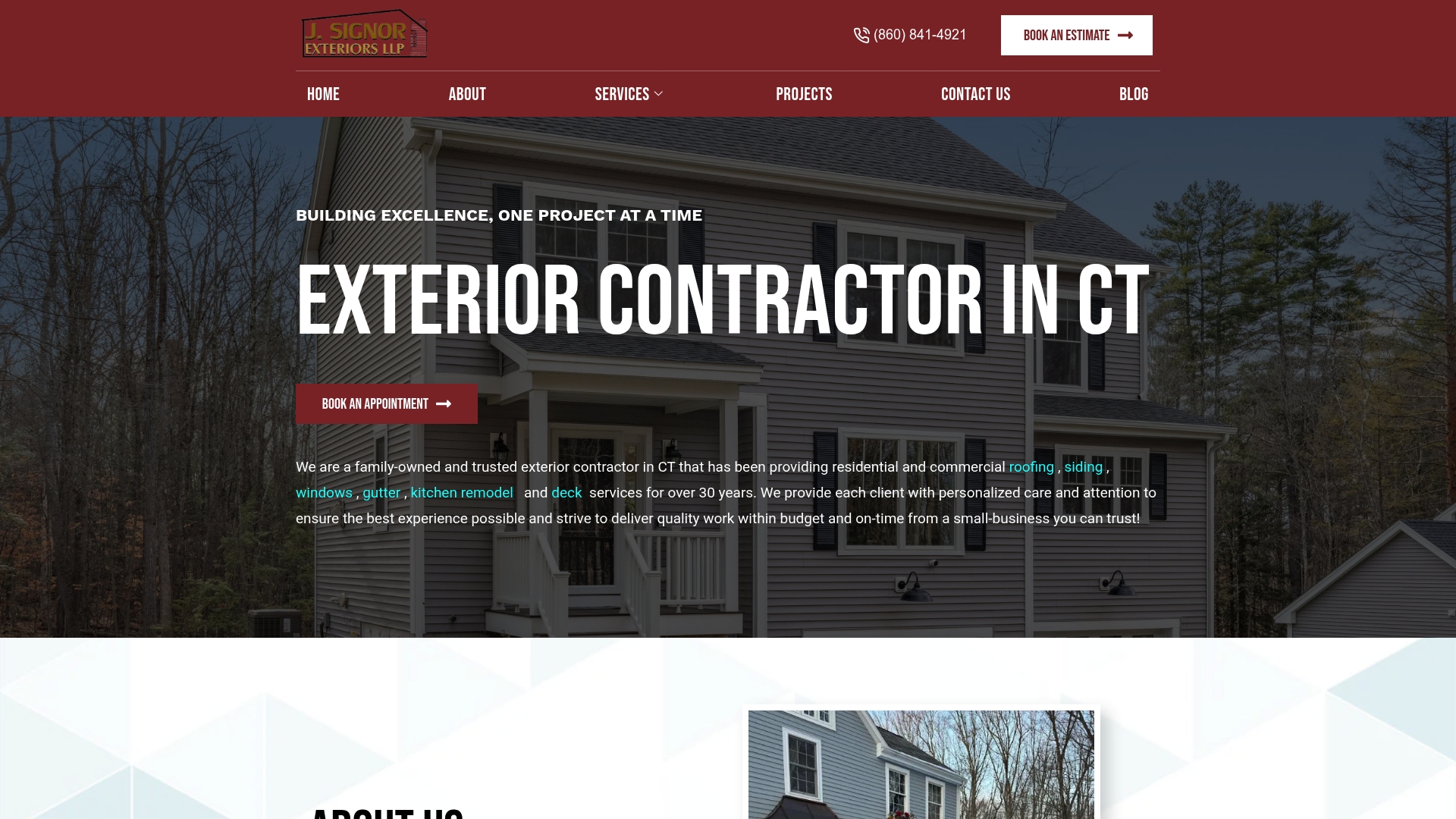
Every project starts with a written scope, named materials, and a payment structure tied to milestones. You will never receive a lump sum quote with no breakdown. Jsignorexteriors is fully licensed and insured in Connecticut, and every quote includes warranty terms in writing. Whether you need a Connecticut roofing contractor or a full exterior renovation, the team at Jsignorexteriors is ready to walk you through every line of your contract before you sign. Explore the full range of exterior remodeling services available across Connecticut and request your itemized quote today.
FAQ
What is included in an exterior remodel contract?
A complete exterior remodel contract includes the scope of work, itemized material and labor costs, project timeline, payment schedule, warranty terms, change order procedures, and a list of exclusions. Missing any of these elements creates financial and legal risk for the homeowner.
How much deposit is normal for an exterior remodeling project?
A standard deposit is no more than 25% of the total contract value. A typical payment schedule runs 10% at signing, with the remainder tied to construction milestones and a 10% holdback at completion.
What does a change order mean in a remodeling contract?
A change order is a written document that modifies the original contract scope, cost, or timeline. Both the homeowner and contractor must sign it before any additional work begins. Verbal approvals for changes are not legally binding.
How do I compare exterior remodeling quotes fairly?
Write your own detailed scope of work and send it to every contractor you are considering. This forces all bids to address the same tasks, making price comparison accurate. Insist on itemized quotes and check that material specifications include brand names and grades.
What legal protections should a Connecticut homeowner require in a remodel contract?
Connecticut homeowners should require lien waivers at each payment milestone, certificates of insurance naming them as an additional insured, a written dispute resolution clause, and a retainage clause holding back the final 10% until punch list completion.