

A contractor estimate is a detailed cost forecast prepared before any work begins, giving you a realistic picture of what your renovation or construction project will cost. The industry term is a construction estimate, and it covers materials, labor, permits, overhead, and profit margin. Unlike a contract, it is non-binding. For homeowners and business owners in Connecticut planning roofing, siding, or exterior work, understanding what a contractor estimate includes, and how to read one correctly, is the difference between a smooth project and a budget surprise.
What is a contractor estimate and what does it include?
A contractor estimate is a pre-work, non-binding cost forecast that evolves in accuracy as project details become clearer. Early conceptual estimates carry wide margins. A definitive estimate, prepared after full drawings and specifications are complete, narrows that range considerably. The estimate is not a promise of final cost. It is a professional prediction based on current information.
Every complete estimate should contain these core components:
- Scope of work. A written description of exactly what the contractor will do. Vague language here causes disputes later.
- Material list. Specific products, quantities, and unit costs. A roofing estimate, for example, should name the shingle brand, weight class, and underlayment type.
- Labor costs. Hours estimated per trade, with rates. Lump-sum labor figures with no breakdown are a red flag.
- Permits and inspections. Required for most Connecticut renovation projects. These costs belong in the estimate, not as a surprise add-on.
- Subcontractor costs. General contractors subcontract 70–85% of work. Each subcontractor bid should be reflected in the estimate.
- Overhead and profit. Residential estimates typically include overhead of 5–10% and profit margins of 8–15%. Markups above 35% are a warning sign.
- Contingency buffer. A standard contingency of 3–7% covers unforeseen conditions. Projects without one often produce change orders.
- Exclusions and allowances. Exclusions list what the contractor will not cover. Allowances are budget placeholders for items not yet specified, such as tile selection.
- Payment schedule. Milestone-based payments tied to project phases, not arbitrary dates.
- Estimate validity date. Material prices shift. A reputable contractor uses current supplier quotes and states how long the estimate is valid.
Pro Tip: Ask your contractor to separate the exclusions list from the scope of work. That single page often reveals more about a project’s risk than the total price does.
How to read contractor estimates without missing what matters
Reading a contractor estimate well means looking past the bottom line. A professional estimate is first a detailed scope document, not a lump-sum price. Lump-sum figures hide profit margins and make it impossible to compare bids objectively. If an estimate gives you one number without line items, ask for a breakdown before you proceed.
Here is a practical approach to evaluating any estimate you receive:
- Match the scope, not the price. Comparing estimates on price alone risks missing scope differences that will cost you more later. Two roofing estimates may look similar in price but differ on whether ice and water shield, drip edge, or ridge ventilation are included.
- Read every exclusion. The exclusions list reveals potential liabilities for unforeseen conditions like mold, rot, or structural damage found after work begins. These items become change orders if discovered mid-project.
- Clarify what “paint” or “finish” means. The estimate must define the physical state of the project precisely. Does “paint” mean one coat or two? Does it include trim? Vague terms cause costly disputes.
- Check the allowances. An allowance is a budget placeholder. If the actual product you choose costs more than the allowance, you pay the difference. Always ask what product the allowance is based on.
- Verify the validity date. Material prices in Connecticut, like lumber and composite siding, can shift quickly. An estimate without a validity date may not reflect current costs by the time you sign.
- Ask the key question. “What would cause this number to increase?” A contractor who answers clearly and specifically is showing you how they manage projects. A vague answer is a warning.
Pro Tip: Request a written scope document separate from the pricing sheet. When both documents align, you have a reliable estimate. When they conflict, you have a negotiation.
The difference between an estimate, a quote, and a contract matters here. An estimate is an informed prediction. A quote is a fixed price for a defined scope. A contract is the legally binding agreement. Never treat an estimate as a contract.
What does the contractor estimate process look like in Connecticut?
The estimating process follows a clear sequence. Understanding it helps you set realistic expectations and ask better questions at each stage.

Site inspection and initial consultation. Every accurate estimate starts with a physical visit. A contractor who estimates remotely without seeing the property is guessing. For Connecticut exterior projects, this visit also identifies site conditions like roof pitch, access constraints, and existing material conditions.
Review of drawings and specifications. For larger projects, the contractor reviews architectural drawings. For residential work, this may be a simpler scope document or a sketch. The more detail provided here, the more accurate the estimate.
Quantity takeoff. Experienced estimators perform quantity takeoffs meticulously. This step calculates exact material quantities: square footage of roofing, linear feet of siding, number of windows. Errors here multiply through every cost line.
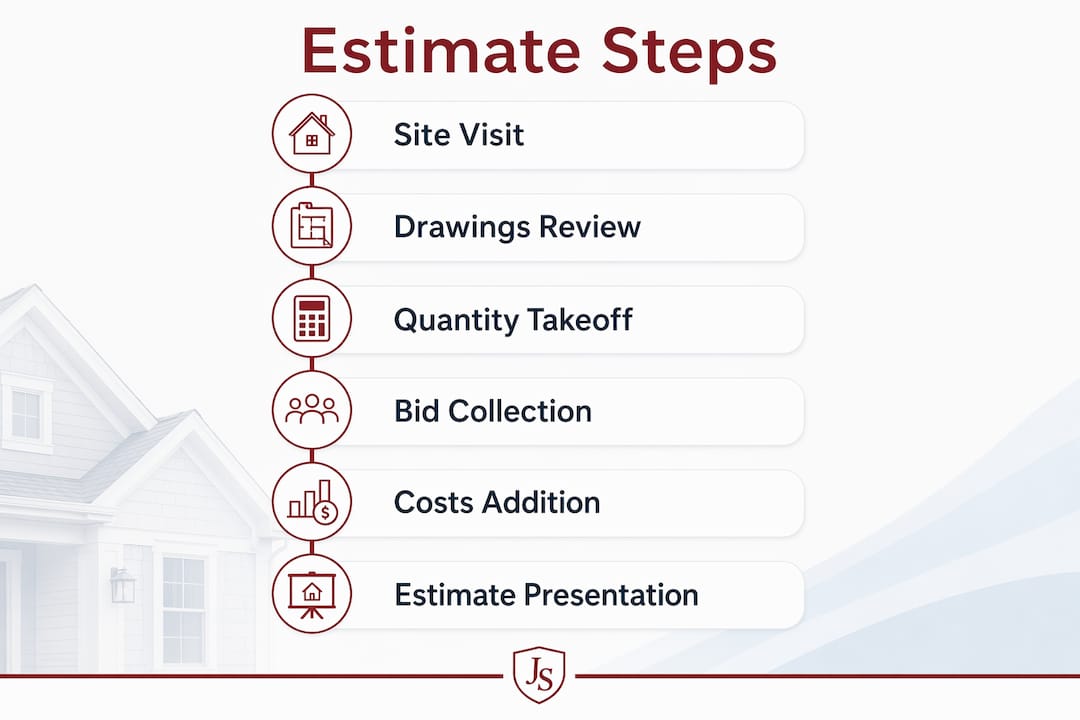
Subcontractor bid collection and leveling. The contractor collects bids from subcontractors and levels them to ensure all quotes cover the same scope. A low subcontractor bid that excludes key scope items is not a savings. It is a future dispute.
Adding overhead, profit, and contingency. These are applied after direct costs are calculated. A well-prepared estimate organizes all of these into a clean document before client presentation.
Estimate presentation and communication. The contractor presents the estimate and walks you through it. This is your opportunity to ask questions about scope, exclusions, and payment terms.
Connecticut-specific payment schedule standards are worth knowing before you sign anything:
| Payment Stage | Connecticut Best Practice |
|---|---|
| Initial deposit | No more than 15–25% upfront |
| Progress payments | Tied to completed milestones |
| Final payment | Withheld until punch list is complete |
| Retainage | Hold 10% until final walkthrough |
Connecticut payment schedule standards protect you as the owner and give the contractor a clear incentive to finish the work correctly. Avoid any contractor who demands 50% or more upfront before work begins.
Common mistakes homeowners make with contractor estimates
The most expensive mistake is choosing the lowest estimate without comparing scopes. A low number often reflects missing scope, not better pricing. When you receive multiple estimates for a Connecticut roofing project, check that each one covers the same materials, disposal, permits, and warranty terms before making any comparison.
“A standardized written scope is the only reliable basis for comparing contractor estimates. Without it, you are comparing different projects, not different prices.” — IsMyQuoteFair AI
Other frequent errors include:
- Ignoring exclusions. Homeowners skip the exclusions list and then face change orders for rot, mold, or structural issues found during work. Read every line.
- Accepting lump-sum labor. A single labor line with no breakdown makes it impossible to verify whether the price is fair. Always ask for a line-item breakdown.
- Skipping the validity date check. An estimate from three months ago may no longer reflect current material costs. Confirm the estimate is still valid before signing a contract.
- Overlooking the scope document. The scope document matters more than the total price. A detailed scope prevents disputes and protects both parties.
- Accepting large upfront payments. Paying more than 25% before work starts removes your leverage if problems arise. Milestone-based payments keep the project on track.
Understanding what affects a fair price for repairs helps you evaluate whether an estimate is reasonable before you commit.
Key Takeaways
A contractor estimate is only as useful as your ability to read it. Scope clarity, payment structure, and exclusions matter more than the total price.
| Point | Details |
|---|---|
| Estimates are non-binding forecasts | They predict costs before work begins and change as project details are finalized. |
| Scope beats price in comparisons | Always match scope of work before comparing totals across multiple estimates. |
| Exclusions carry real financial risk | Items excluded from the estimate become change orders if discovered during the project. |
| Connecticut payment standards protect you | Limit upfront deposits to 15–25% and hold 10% until the punch list is complete. |
| Lump-sum pricing reduces transparency | Line-item estimates allow objective comparison and reveal where costs are concentrated. |
What 30 years of estimates have taught me about reading them
After three decades working on exterior projects across Connecticut, I have seen homeowners make the same mistake repeatedly. They focus on the total and skip the scope. The total is almost meaningless without the scope behind it.
The question I recommend every homeowner ask is simple: “What would cause this number to go up?” A contractor who answers that question with specifics, rot under the sheathing, a second layer of old shingles, flashing that needs full replacement, is showing you how they think. A contractor who deflects or gives a vague answer is telling you something important about how they will manage your project.
Detailed scope documents are not just paperwork. They are the foundation of a fair working relationship. When the scope is clear, change orders become rare. When it is vague, they become routine. I have watched projects go over budget not because of bad luck, but because the estimate was a single page with a number on it.
Connecticut homeowners also tend to underestimate the importance of the exclusions list. That list is where the contractor has protected themselves. You need to read it with the same attention you give the price. If something on that list worries you, ask the contractor to price it as an add-on before work starts. That conversation costs nothing. The surprise change order costs plenty.
— Adam
Jsignorexteriors provides clear, detailed estimates for Connecticut projects
Jsignorexteriors has served homeowners and businesses across Connecticut for more than 30 years. Every estimate the company provides includes a written scope of work, line-item pricing, a clear exclusions list, and milestone-based payment terms.
Whether you need a roofing estimate in Connecticut or a full exterior assessment covering siding, gutters, or windows, Jsignorexteriors delivers the transparency and detail you need to make a confident decision. The company’s full range of exterior services covers everything from roof replacement to deck construction, all backed by licensed, insured professionals who put the scope in writing before any work begins. Contact Jsignorexteriors to request your estimate today.
FAQ
What is a contractor estimate vs. a quote?
A contractor estimate is a non-binding cost forecast based on available project information. A quote is a fixed price for a clearly defined scope of work.
What should a contractor estimate always include?
A complete estimate includes scope of work, material list, labor costs, permits, subcontractor costs, overhead, profit margin, contingency, exclusions, and a validity date.
How much upfront payment is normal in Connecticut?
Connecticut best practices recommend no more than 15–25% upfront, with the remaining balance tied to project milestones and 10% held until the punch list is complete.
Why do two estimates for the same project have different prices?
Different prices almost always reflect different scopes. One estimate may exclude permits, disposal, or specific materials that another includes. Always compare scope before comparing price.
How long is a contractor estimate valid?
Validity periods vary by contractor, but most estimates are valid for 30–60 days. Material prices change, so always confirm the estimate is current before signing a contract.