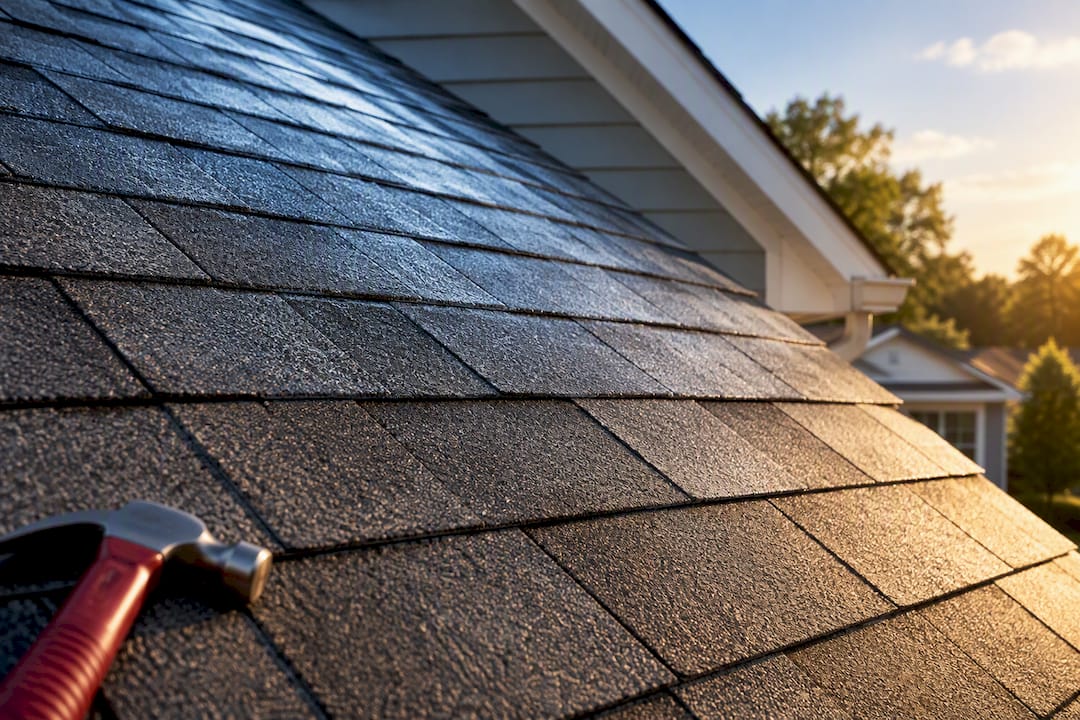
Cool roof shingles are worth choosing when you’re already reroofing in a warm, AC-heavy climate. They deliver lower cooling costs, steadier indoor comfort, and a modest premium at installation. The right call still depends on your attic insulation, your local climate, and whether you check a shingle’s actual solar reflectance rating before you buy.
TL;DR:
- Cool roof shingles can reduce cooling energy use by up to 15 percent, especially in single-story homes in warm climates with limited attic insulation.
- The effectiveness of cool shingles depends heavily on factors like building shape, attic insulation, roof orientation, and local climate, with the greatest savings in sun-exposed, AC-driven areas.
- A modest material premium of less than $0.50 per square foot is typical, with potential rebates and energy savings usually outweighing the additional cost over the roof’s lifespan.
- Dark-colored cool shingles are now available and perform near lighter shades, but glare or winter heating penalties may occur in some cold regions.
- Proper evaluation requires checking attic ventilation, insulation, and specific product ratings, rather than relying solely on the shingles’ initial solar reflectance ratings.
Table of Contents
- What Are the Benefits of Cool Roof Shingles?
- How Do Cool Roof Shingles Actually Work?
- How Much Can Cool Roof Shingles Save You?
- Do Cool Shingles Limit Your Color and Style Options?
- What Do Cool Roof Shingles Cost, and Are There Rebates?
- How Do You Decide If Cool Shingles Are Right for Your Home?
- What We See in the Field
- Get a Straight Answer on Cool Roof Shingles for Your Home
- Sources
- FAQ
What Are the Benefits of Cool Roof Shingles?
Cool roof shingles trade a small amount of upfront cost for savings and comfort that build year after year. The biggest wins show up in three places: your energy bill, your indoor comfort, and the strain your air conditioner places on the local power grid during heat waves.
On the energy side, cool shingles can cut annual air conditioning use by up to 15% for single-story homes in warm climates, according to Lawrence Berkeley National Laboratory. That reduction comes from a roof surface that simply doesn’t get as hot, which means less heat radiating into your attic and living space below it.
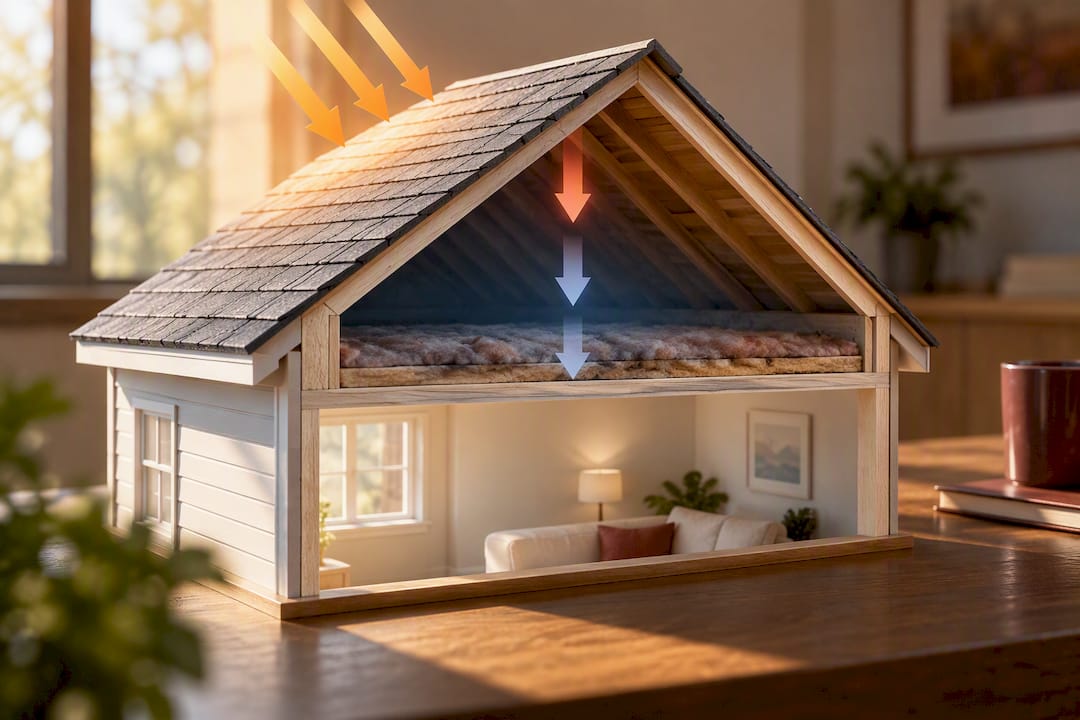
The benefits extend past your own roofline. The EPA notes that cool roofs lower both roof and indoor temperatures while easing peak cooling demand across a neighborhood, which helps blunt the urban heat island effect in dense areas and can reduce heat-related health risks for vulnerable residents.
Here’s the fuller picture of what a cool roof does for a typical home:
- Lower cooling bills during peak summer months
- More even indoor temperatures on upper floors and in attic-adjacent rooms
- Reduced peak electricity demand, which eases strain on the local grid
- Potentially slower thermal cycling stress on roofing materials, though this depends heavily on the specific product and climate
How Do Cool Roof Shingles Actually Work?
Every cool shingle claim traces back to three measurable properties, and understanding them turns a sales pitch into a comparison you can verify yourself.
Solar reflectance (SR) measures how much sunlight a roof bounces away instead of absorbing, on a scale from 0 to 1. Thermal emittance (TE) measures how efficiently the roof releases the heat it does absorb rather than holding onto it. Combine the two and you get the Solar Reflectance Index (SRI), a single number the Department of Energy uses to rank roofing products for cooling performance.
A few details matter more than most homeowners realize:
- Manufacturers list both “initial” and “aged” reflectance values; aged numbers, taken after three years of weathering, are the honest figure since dirt and UV exposure lower reflectance over time
- Near-infrared (NIR) reflective granules let a shingle absorb visible light (so it still looks charcoal gray or forest green) while bouncing back the infrared wavelengths that actually carry heat
- This NIR technology is why “cool color” shingles exist at all, letting you skip the stark white look older cool roofs required
How Much Can Cool Roof Shingles Save You?
Expect cooling energy savings in the range of roughly 4% to 15% for single-family homes in warm climates, with LBNL and DOE reporting per-area savings up to $0.20 per square foot annually on some commercial roofs. On residential buildings, ENERGY STAR points to peak cooling demand drops of 11% to 27% in some air-conditioned homes, a meaningful cushion during the hottest days of the year when electricity rates and grid strain both spike.
What actually controls where you land in that range:
- Building shape matters. A single-story ranch feels roof-driven cooling loads far more than a three-story colonial, where the roof is a smaller share of total exterior surface.
- Attic insulation does most of the heavy lifting. A well-insulated, well-ventilated attic already blocks a lot of radiant heat, which shrinks the incremental benefit a reflective shingle can add, according to guidance from Energy.
- Local climate sets the ceiling. Homes in Phoenix or Atlanta see far more benefit than homes in a heating-dominated climate.
Before committing, run your address through a DOE or ENERGY STAR savings calculator. Plugging in your square footage, local utility rate, and climate zone gives you a real number instead of a generic percentage.
Do Cool Shingles Limit Your Color and Style Options?
Cool color technology means you’re no longer stuck with white or light gray to get real reflectance. NIR-reflective granules let manufacturers produce shingles in deep browns, blacks, and greens that perform close to lighter colors while matching a traditional New England roofline.
That said, a few limitations deserve honest attention:
- Very light cool shingles can occasionally cause noticeable glare for neighbors or drivers, though this is uncommon with darker cool-color products
- Cold-climate homes see a small winter heating penalty since the roof reflects away some welcome winter sun, though EPA data shows this penalty is usually smaller than summer savings outside the coldest regions
- Algae and staining risks are similar to standard shingles; follow manufacturer cleaning guidance to protect reflectance over time
- Warranty terms on cool shingles typically mirror standard shingle warranties, so don’t assume “cool” automatically means longer-lasting
Pro Tip: Ask for the aged solar reflectance value, not just the initial number, when comparing warranty documents side by side. A shingle that starts strong but fades fast in reflectance will underdeliver on the savings you were promised.
What Do Cool Roof Shingles Cost, and Are There Rebates?
Cool asphalt shingles typically carry a small material premium, often under $0.50 per square foot compared to standard shingles, based on LBNL’s cost analysis. On a full reroof, that premium is a modest fraction of total project cost since labor, tear off, and decking work stay the same either way.
A few places to look for money back on that premium:
- Federal tax credits for qualifying energy-efficient roofing products, where currently available
- Utility rebate programs, which vary by provider and region, so check with your local utility directly
- LEED credits for commercial building owners pursuing certification
The simplest payback math: compare your incremental upcharge against your estimated annual dollar savings, then check that against your expected roof lifespan. For more on how long a typical roof lasts and when replacement makes sense, see this breakdown of average roof lifespan. If you’re reroofing anyway in a warm, AC-driven climate, the math almost always favors upgrading to a cool product rather than waiting.
How Do You Decide If Cool Shingles Are Right for Your Home?
Before you request quotes, walk through this checklist:
- Confirm your climate zone and how many cooling degree days your area sees annually
- Check your attic insulation level and ventilation setup
- Note your roof’s slope and orientation, since south and west-facing slopes see the most solar gain
- Decide on a color range you’re comfortable with, now that dark cool-color options exist
- Ask about warranty terms specific to the cool product line, not just the manufacturer’s standard warranty
When you sit down with a contractor, ask these questions in order:
- What is the CRRC product ID and aged solar reflectance for this specific shingle?
- Based on my home’s size and climate, what energy savings range should I realistically expect?
- How does this shingle’s warranty differ, if at all, from your standard product line?
- Will my current attic insulation and ventilation limit or enhance the benefit?
Watch for a contractor who can’t produce a CRRC ID or dodges questions about aged reflectance. That’s a red flag worth pushing on.
Pro Tip: Time this upgrade to coincide with a reroof you’re already planning. Retrofitting cool shingles onto a roof with years of life left rarely pencils out, but folding the upgrade into a scheduled replacement adds very little extra cost.
What We See in the Field
Adam here. When homeowners ask whether cool shingles make sense, the honest answer starts with their attic, not their color swatch book. We check insulation depth and ventilation flow before we ever talk shingle brand, because a poorly ventilated attic will blunt even the best reflective product, as explained in this example of how new interior doors improve energy efficiency in older Portland homes. Cool shingles earn their keep most clearly on south-facing, sun-battered roofs in already-planned reproofs, less so on shaded or heavily insulated homes where the baseline heat gain is already low.
— Adam
Get a Straight Answer on Cool Roof Shingles for Your Home
Reading SRI numbers off a spec sheet only gets you so far. What actually determines whether cool shingles pay off on your house is your attic, your roof’s exposure, and your local climate, and that calls for someone standing on your roof, not a generic calculator. A contractor with experience in Connecticut roofing typically includes a real look at your insulation and ventilation before recommending a product.
A proper evaluation covers your attic insulation, ventilation setup, verification of CRRC and ENERGY STAR product ratings on any shingle we discuss, and a written estimate you can compare against other quotes without guessing at hidden costs. If you’re weighing shingle types more broadly, our guide to roofing material choices for New England homes is a useful next stop. When you’re ready to see numbers specific to your roof, request an estimate through our roofing services page and we’ll walk your property in person.
Sources
- Next-Generation Factory-Produced Cool Asphalt Shingles: Phase 1 Final Report
- Using Cool Roofs to Reduce Heat Islands | US EPA
- Cool Roofs: How They Work (DOE/EERE fact sheet)
FAQ
Are Cool Roof Shingles Worth It?
Yes, for most homeowners reroofing in a warm, cooling-dominated climate, since the modest cost premium under $0.50/ft² is usually recovered through steady cooling savings. The value shrinks if your attic is already well insulated or your climate leans heating-dominated.
What Are the Pros and Cons of Cool Roofs?
The pros include lower cooling bills, better comfort in upper-floor rooms, and reduced peak electricity demand during heat waves, as the EPA outlines. The main cons are a small winter heating penalty in cold climates and a modest upfront cost premium that only pays off clearly in warm, AC-heavy regions.
How Long Do Cool Roofs Last?
Cool roof shingles generally carry warranty terms similar to standard asphalt shingles, since the reflective coating doesn’t inherently extend material lifespan. For a broader look at what determines how long any roof lasts, see this guide on roof lifespan.
How Much More Does a Cool Roof Cost?
Industry estimates and LBNL research put the material premium at under $0.50 per square foot compared to standard shingles, though actual pricing varies by product and region. J. Signor Exteriors provides project-specific written estimates rather than flat per-square-foot pricing, so request a quote through our services page for numbers specific to your roof.