
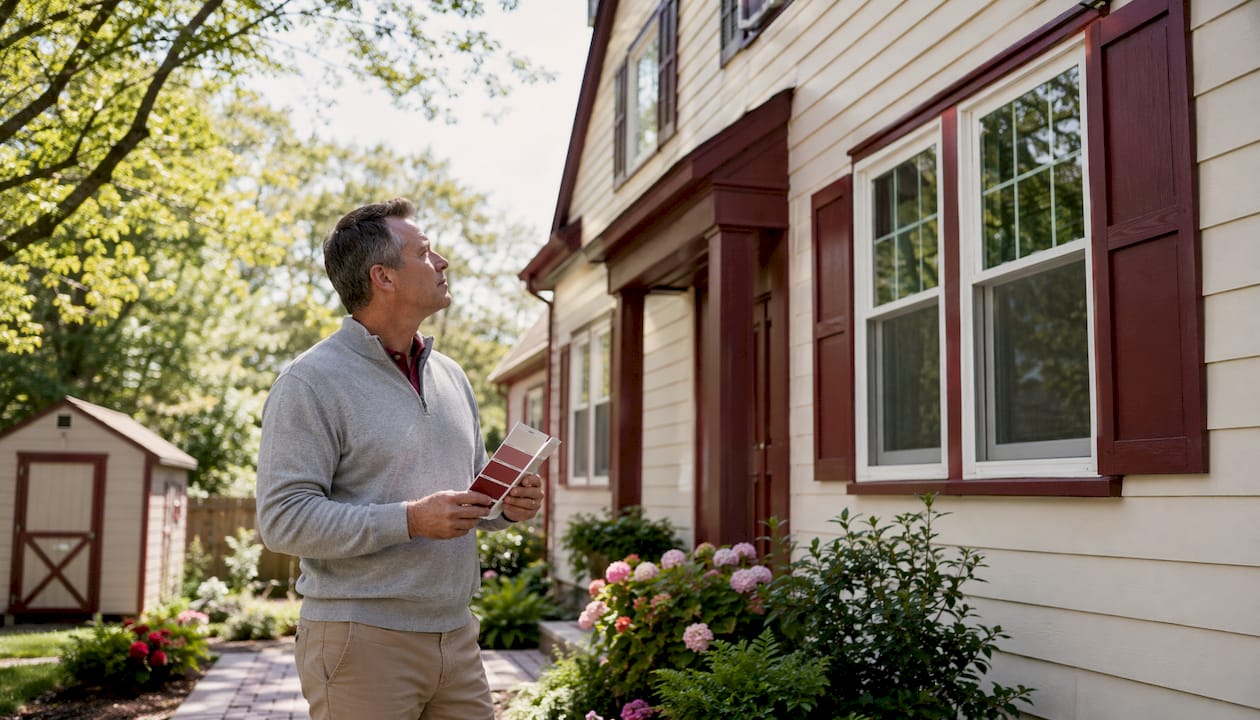
The exterior projects that most reliably increase resale value are, in order of ROI: garage door replacement, steel entry door, manufactured stone veneer, siding replacement, replacement windows, professional landscaping, a wood deck, and a new roof when the existing one is near end of life. According to Remodeling magazine’s Cost vs. Value data, eight of the top ten highest-ROI home improvements are exterior projects, and a garage door replacement alone returns 268% of its cost at resale. Before you schedule any of those, though, start with the low-cost fixes you can do this weekend: power wash the exterior, repaint the front door, swap out dated hardware, and add a few solar path lights. Those four steps cost a fraction of a major project and deliver outsized first-impression impact.
- Garage door replacement: Highest ROI exterior project tracked nationally; average cost around $4,672, average resale value added around $12,526.
- Steel entry door: A $2,435 investment that adds roughly $4,324 in resale value at an ROI figure often reported near 188%, and it’s one of the first things a buyer sees.
- Manufactured stone veneer: Replacing the lower facade with stone costs roughly $11,000 and adds approximately $22,880 in resale value, a 208% return.
- Siding replacement: Vinyl siding returns about 80% of cost; fiber-cement siding carries a longer lifespan and stronger selling point in many markets.
- Replacement windows: Vinyl windows return roughly 67% of cost while cutting heating and cooling loads, which matters to energy-conscious buyers.
- Professional landscaping: Homes with nicer landscaping sell for about 2% more and roughly a day faster, per Zillow research.
- Wood deck addition: Returns approximately 95% of cost and appeals directly to buyers who value outdoor living space.
- Roof replacement: Necessary when the roof is near end of life; expect about 57% cost recovery, but a failing roof will cost you far more in buyer negotiations.
Pro Tip: Before spending a dollar on any mid- or high-cost project, spend an afternoon on the low-cost refresh: power wash the siding and driveway, repaint the front door in a current color, replace door hardware and house numbers in a matching metal finish, and add two or three solar path lights. This $500–$1,500 effort often produces more visible impact per dollar than any single major upgrade.
Table of Contents
- How should you prioritize exterior upgrades by budget?
- What do the top exterior upgrade projects actually cost and return?
- What do ROI ranges and the 30% rule mean for your budget?
- How do you get accurate quotes and choose the right contractor?
- Why a licensed local contractor makes a real difference
- Key Takeaways
- The case for curb-appeal-first, every time
- Ready to plan your exterior upgrade? Jsignorexteriors can help.
- Useful sources and further reading
How should you prioritize exterior upgrades by budget?
Not every homeowner has the budget to tackle siding, windows, and a new deck at once, and trying to do everything simultaneously is rarely the right move. A phased approach lets you capture immediate visual wins, reassess after each stage, and avoid sinking the full budget before you know what the market will reward.
Phase 1: Cosmetic refresh ($3,000–$6,000)
This is where nearly every exterior project should begin. Professional power washing, fresh exterior paint or accent paint on shutters and trim, new door hardware, updated house numbers, and targeted path lighting deliver outsized visual impact per dollar compared with major envelope replacements. A home that looks clean and cared for attracts stronger offers before a single structural dollar is spent.
Phase 2: Targeted mid-cost projects ($5,000–$20,000)
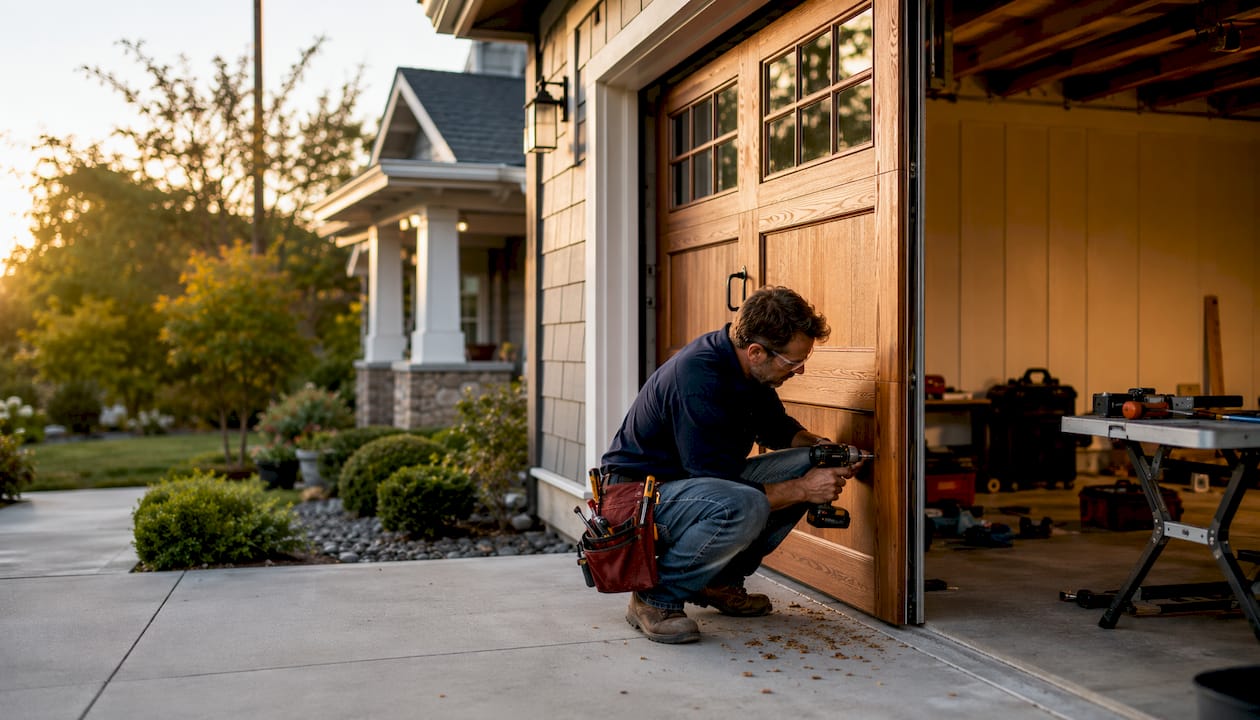
Once the cosmetic layer is done, move to the projects with the highest ROI that also address real buyer concerns: garage door, front entry door, professional landscaping, and a modest deck or patio. These projects are visible, relatively fast to complete, and well-supported by Cost vs. Value data. Manufactured stone veneer on the lower facade fits here too, if your home’s architecture supports it.
Phase 3: Envelope replacements ($15,000–$35,000+)
Siding, windows, and roofing are the most expensive exterior projects and the ones where over-improving is most common. Tackle these only when the existing materials are failing, visibly dated, or clearly out of step with neighborhood comps. Replacing perfectly functional vinyl siding on a home in a $280,000 neighborhood rarely pays back.
- Start with Phase 1 cosmetics regardless of your total budget. The visual momentum matters.
- Check neighborhood comps before committing to Phase 2 or 3. Your agent or a quick look at recent sales will tell you what buyers in your specific zip code are paying for.
- Apply the 30% rule as a ceiling: avoid spending more than roughly 30% of your home’s current value on total renovations. A $400,000 home has a $120,000 renovation ceiling before you risk over-improving for the neighborhood.
- Get three written quotes before starting any Phase 2 or 3 project. Material costs and labor rates vary significantly by region, and a single quote gives you no basis for comparison.
- Sequence for visual momentum: finish each phase before starting the next. A freshly painted house with a new garage door looks complete; the same house mid-siding replacement looks like a construction site.
For Connecticut homeowners, exterior renovation budgeting in a market with cold winters and strong buyer expectations around energy efficiency means windows and roofing often carry more weight than in warmer-climate markets.
Pro Tip: In curb-appeal-heavy markets (dense suburbs, competitive spring markets), Phase 1 and Phase 2 alone can move the needle significantly on sale price. In energy-conscious markets or older housing stock, buyers scrutinize windows and roofing more closely, making Phase 3 a stronger investment. Know your market before you phase.
What do the top exterior upgrade projects actually cost and return?
Here’s a practical look at the eight projects that consistently appear at the top of national ROI data, with realistic cost ranges, return estimates, and what to watch for on each.
| Project | Typical cost range | Estimated resale ROI | Time to complete | Best for | Maintenance/lifespan |
|---|---|---|---|---|---|
| Garage door replacement | $4,672 | ~268% | 1–2 days | Curb appeal, first impression | Low; 15–30 years |
| Steel entry door | $2,435 | ~188% | 1 day | Curb appeal, security | Low; 20–30 years |
| Manufactured stone veneer | ~$11,000 | ~208% | 1–2 weeks | Curb appeal, facade upgrade | Very low; 50+ years |
| Fiber-cement siding | ~$19,000 | ~114% | 1–3 weeks | Curb appeal, structural protection | Low; 50–100 years |
| Vinyl siding | — | ~80% | 1–2 weeks | Budget-friendly refresh | Low; 20 years |
| Wood deck addition | — | ~95% | 1–2 weeks | Outdoor living, buyer appeal | Moderate; 15–25 years |
| Replacement windows (vinyl) | ~$21,200 | ~67% | 2–5 days | Energy savings, curb appeal | Low; 20 years |
| Roof replacement (asphalt) | — | ~57% | 2–5 days | Structural necessity | Low; 20–30 years |
Garage door
A standard steel insulated garage door in a style appropriate to the home’s architecture is the single best-returning exterior project in national data. At roughly $4,672 average cost and $12,526 in added resale value, the math is hard to argue with. If your garage faces the street, this is almost always the first mid-cost project to schedule. Signs it’s time to replace rather than repair: visible dents or warping that affect the panel face, outdated style that clashes with a refreshed exterior, or mechanical failure that a chain/track repair won’t fix.
Front entry door
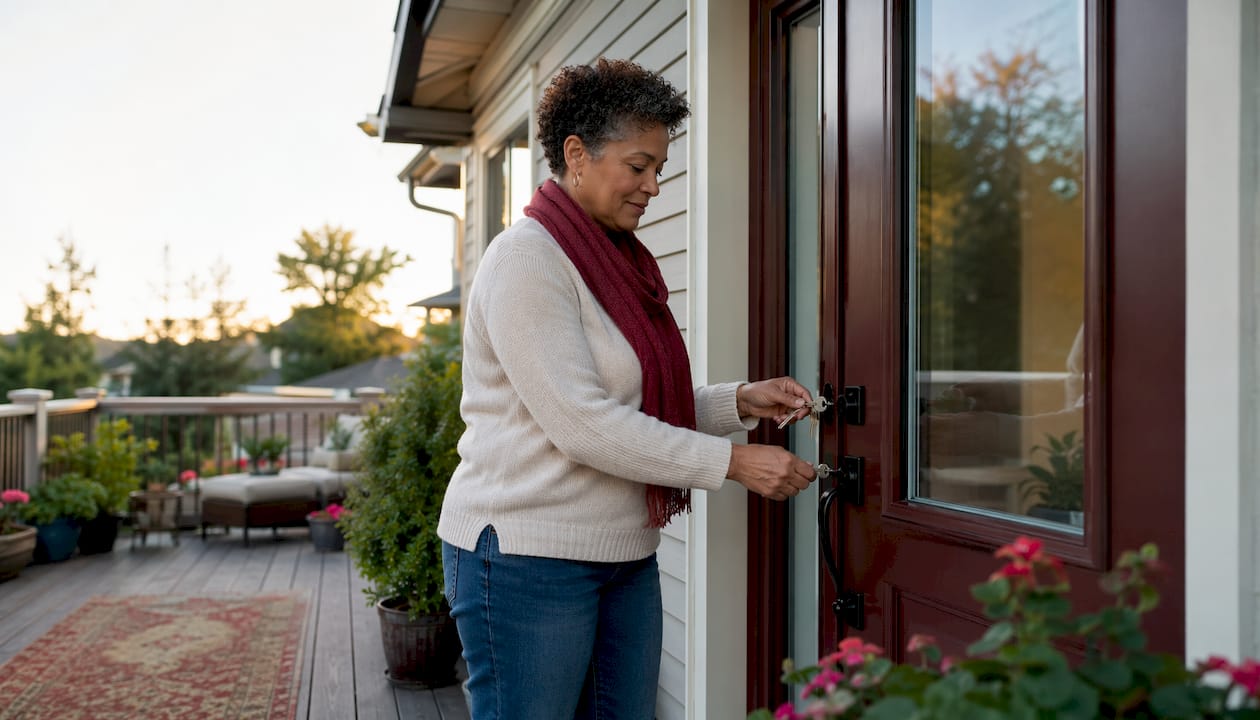
A steel entry door with low-e glass sidelights, a new lockset, and a deadbolt averages $2,435 and adds roughly $4,324 in resale value. That approximately 188% return makes it the second-highest-performing project in the data. Before replacing, check whether a fresh coat of paint in a current color and new hardware will do the job. If the door is warped, drafty, or visually dated beyond what paint can fix, replacement is the right call. For design ideas on door upgrades that add value, matching the door style to the home’s architecture matters as much as the material.
Siding and stone veneer
Manufactured stone veneer on the lower third of the front facade costs roughly $11,000 and adds approximately $22,880 in resale value, a 208% return that reflects how dramatically a material upgrade reads as premium to buyers. Full fiber-cement siding replacement costs more (around $19,000) but returns about 114% and carries a 50–100 year lifespan, making it one of the strongest long-term investments for homes with aging wood or vinyl. Reviewing your siding material options before committing to a product is worth the time.
Roof
A full roof replacement with asphalt shingles represents a major investment and typically recovers a bit more than half of its cost. That is usually the lowest ROI among major exterior projects, but the value changes if the roof is leaking or failing. Buyers will either walk away or demand a price reduction that far exceeds the replacement cost. In cold-climate markets like Connecticut, buyers scrutinize roofing closely, and a roof with fewer than five years of life remaining is a negotiation liability. Roof replacement in Connecticut carries specific considerations around ice damming and ventilation that affect both material choice and long-term performance.
Replacement windows
Vinyl window replacement averages $21,200 nationally and returns about 67% of cost. Wood windows cost more (around $25,000) and return slightly less (about 63%). The stronger case for windows is often the energy story: ENERGY STAR-rated windows can cut heating and cooling loads meaningfully, and in markets where buyers prioritize efficiency, that translates to faster sales and stronger offers. Signs it’s time to replace: visible condensation between panes, drafts around the frame, or single-pane glass in a market where double-pane is the norm.
Landscaping and curb appeal
Landscaping doesn’t appear as a standalone line item in Cost vs. Value reporting, but Zillow’s research shows homes with nicer landscaping sell for about 2% more and roughly a day faster. Agent surveys consistently rank it among the highest-impact curb appeal investments. Keep the design clean: defined garden beds with stone or concrete edging, low-maintenance native plantings, and height layering (low plants at the walkway, taller plants toward the property edge) create a professional look without expensive specimens. Avoid over-accessorizing the front yard, which can distract from the architecture.
Deck and patio
A wood deck addition averages mid-range costs and recoups a substantial share of its cost. Composite decks cost more and recoup slightly less, but they require almost no maintenance and appeal strongly to buyers who prefer low upkeep. A concrete or paver patio runs lower in cost but also returns less. Size the deck to what’s typical in your neighborhood; an oversized deck on a modest home rarely pays back the full investment.
Gutters and exterior paint
Gutters are maintenance, not a cosmetic upgrade, but neglected gutters cause fascia rot, foundation drainage problems, and basement moisture issues that buyers will flag in inspection. Clean gutters and properly functioning downspouts protect the value of every other exterior investment you make. Exterior paint, while not tracked separately in Cost vs. Value data, is consistently cited by agents as a top-five pre-sale recommendation. A professional paint job on a typical home runs $3,000–$5,000 and can make a 20-year-old house look like it was built last year.
What do ROI ranges and the 30% rule mean for your budget?
National Cost vs. Value data gives you a reliable starting framework, but your actual return depends on your local market, the condition of your home relative to comps, and how well the project is executed. Here’s how to translate national figures into a realistic budget plan.
A worked example: Suppose your home is worth $400,000 and you’re planning a $20,000 exterior spend. Allocating roughly $4,700 to a garage door replacement, $2,400 to a steel entry door, $5,000 to professional landscaping and a cosmetic refresh, and $8,000 to a partial stone veneer application would put you in line with projects that collectively return well above their cost in national data. That same $20,000 spent on a partial roof replacement on a roof with ten years of life remaining would return far less.
The 30% rule sets a practical ceiling: on a $400,000 home, total renovation spend should stay below $120,000 to avoid over-improving for the neighborhood. But the more useful guardrail is matching your spend to local comps. If homes in your neighborhood are selling at $400,000 with original windows and basic landscaping, replacing every window and adding a premium composite deck may not move your sale price at all.
Seasonal timing matters. Spring and early summer are peak seasons for exterior work, which means contractor schedules fill up fast and material costs can run higher. Scheduling siding, window, or roofing projects in late summer or fall often means better contractor availability and sometimes lower pricing. Landscaping, on the other hand, is best planted in spring or early fall for establishment before a listing.
Maintenance projects follow a different logic than cosmetic upgrades. A roof with active leaks is not optional; it’s a structural liability that will cost you in negotiations regardless of what you spend on curb appeal. Fix urgent maintenance first, then layer in the value-adding cosmetic and mid-cost projects.
Pro Tip: Every dollar of deferred maintenance tends to cost $3–$5 in buyer negotiation concessions. Fix what’s broken before you add what’s new.
How do you get accurate quotes and choose the right contractor?
Getting the right contractor is as important as choosing the right project. A poorly executed garage door installation or a siding job with mismatched trim will undermine the ROI you’re trying to capture.
- Define your scope in writing before you contact anyone. Know which project you want, the approximate materials, and your timeline. Vague requests produce vague quotes.
- Request at least three written quotes. Verbal estimates are not bids. A written quote should specify materials, labor, timeline, payment schedule, and what happens if scope changes.
- Verify license and insurance. In Connecticut, exterior contractors must be licensed and carry liability insurance and workers’ compensation. Ask for both certificates and verify them independently. Understanding what belongs in an exterior remodel contract protects you if disputes arise.
- Check local references. Ask for two or three recent projects in your area and follow up with those homeowners. Online reviews are useful, but a direct conversation tells you more.
- Clarify permit handling. Most structural exterior projects (roofing, siding, windows, decks) require permits in Connecticut. Ask who pulls the permit, who is responsible for inspections, and how permit costs are handled in the quote.
- Get a clear payment schedule. A reasonable structure is a deposit at signing, a draw at material delivery, and the balance at completion. Never pay in full upfront.
Questions to ask every contractor:
- What specific materials and brands are you proposing, and why?
- Will any work be subcontracted, and if so, to whom?
- How do you handle change orders, and what triggers one?
- What warranty do you offer on labor, and what does it cover?
- What is your process if the project uncovers unexpected damage (rot, structural issues)?
Red flags to watch for:
- A bid that is significantly lower than the other two without a clear explanation.
- Cash-only payment requests or pressure to skip a written contract.
- No local references or an unwillingness to provide them.
- Vague scope language (“replace as needed,” “standard materials”).
- A contractor who wants to pull permits after work begins, or who suggests skipping them.
Before work begins, prepare the site:
- Clear access to the work area and mark any underground utilities.
- Protect landscaping near the work zone with tarps or temporary fencing.
- Arrange parking for the crew and a dumpster location if needed.
- Secure pets and notify neighbors if the project will affect shared spaces.
For a detailed pre-project checklist, the exterior remodeling project checklist for Connecticut homes covers scope review, contractor vetting, and site prep in one place.
Why a licensed local contractor makes a real difference
Consider a typical phased exterior refresh: a Connecticut homeowner starts with a cosmetic refresh (power wash, new exterior paint, updated hardware, path lighting), then moves to a garage door replacement and professional landscaping, and finally addresses aging fiber-cement siding and a roof approaching the end of its warranty period. Each phase builds on the last visually, and the work is sequenced so the home looks finished at every stage, not mid-construction.
When J. Signor Exteriors manages that kind of phased project, the outcome isn’t just a better-looking house. It’s documentation: permits pulled and closed, materials specified and warranted, and a contractor of record that a buyer’s inspector can verify. That paper trail matters at closing.
J. Signor Exteriors has served Connecticut homeowners and businesses for more than 30 years, handling roofing, siding, gutters, replacement windows, decks, masonry, and kitchen remodeling as a fully licensed and insured contractor. The services map directly to the high-impact projects covered in this article:
- Roofing: Full replacement and repair, including cold-climate considerations for Connecticut homes.
- Siding: Vinyl, fiber-cement, and manufactured stone veneer options with material guidance.
- Gutters: Installation and repair to protect the envelope investments you’ve made.
- Replacement windows: Energy-efficient options that address both buyer appeal and utility costs.
- Decks: Wood and composite construction sized to neighborhood expectations.
- Masonry: Walkways, retaining walls, and stone veneer that add structural and visual value.
Local licensing, verifiable references, and a written warranty are not optional extras. They are the difference between an exterior upgrade that holds its value and one that creates problems at the inspection table.
Key Takeaways
The highest-ROI exterior upgrades are garage door replacement, steel entry door, and manufactured stone veneer, in that order, and all three cost under $12,000.
| Point | Details |
|---|---|
| Start with cosmetics | A $3,000–$6,000 Phase 1 refresh (paint, power wash, hardware, lighting) delivers the highest visual impact per dollar. |
| Garage door leads ROI | At roughly $4,672 cost and $12,526 in added resale value, garage door replacement returns approximately 268% nationally. |
| Steel entry door returns top ROI | At approximately $2,435 cost and $4,324 in resale value, a steel entry door replacement averages an ROI near 188%. |
| Match spend to comps | The 30% rule caps total renovation spend at roughly 30% of home value; local comps are the better guide for individual projects. |
| Roof is maintenance, not optional | A failing roof costs more in buyer concessions than replacement; expect about 57% cost recovery when replacing proactively. |
| Use Jsignorexteriors for phased work | J. Signor Exteriors handles roofing, siding, windows, decks, and masonry in Connecticut with 30+ years of licensed, insured experience. |
The case for curb-appeal-first, every time
There’s a tendency among homeowners to treat exterior upgrades as the “practical” category and interior renovations as the real investment. The data says otherwise, and so does the experience of working with buyers in competitive markets.
Buyers form their opinion of a home before they step inside. That’s not a soft observation about aesthetics. It’s a documented pattern that shows up in offer prices, days on market, and the frequency of bidding wars. A home with strong curb appeal triggers an emotional response before the buyer has evaluated a single interior feature, and that emotional response is extremely difficult to reverse once it’s set.
What most homeowners underestimate is how much consistency matters. Matching metal finishes across hardware, lighting, and house numbers, keeping plantings proportional to the architecture, and choosing a door color that works with the siding rather than against it: these details separate a home that looks professionally refreshed from one that looks like a series of individual upgrades. The whole reads as more than the sum of its parts, and buyers price it accordingly.
The phased approach isn’t just a budgeting strategy. It’s a way to make better decisions. When you complete Phase 1 and see how the home reads from the street, you often discover that the garage door was the only remaining gap, or that the landscaping was doing more work than you realized. Phasing gives you permission to stop when the job is done rather than spending to a predetermined budget.
Ready to plan your exterior upgrade? Jsignorexteriors can help.
Knowing which projects return the most is one thing. Getting them done right, on time, and with the documentation that protects your investment at closing is another. J. Signor Exteriors brings more than 30 years of licensed, insured exterior remodeling experience to Connecticut homeowners who want both.
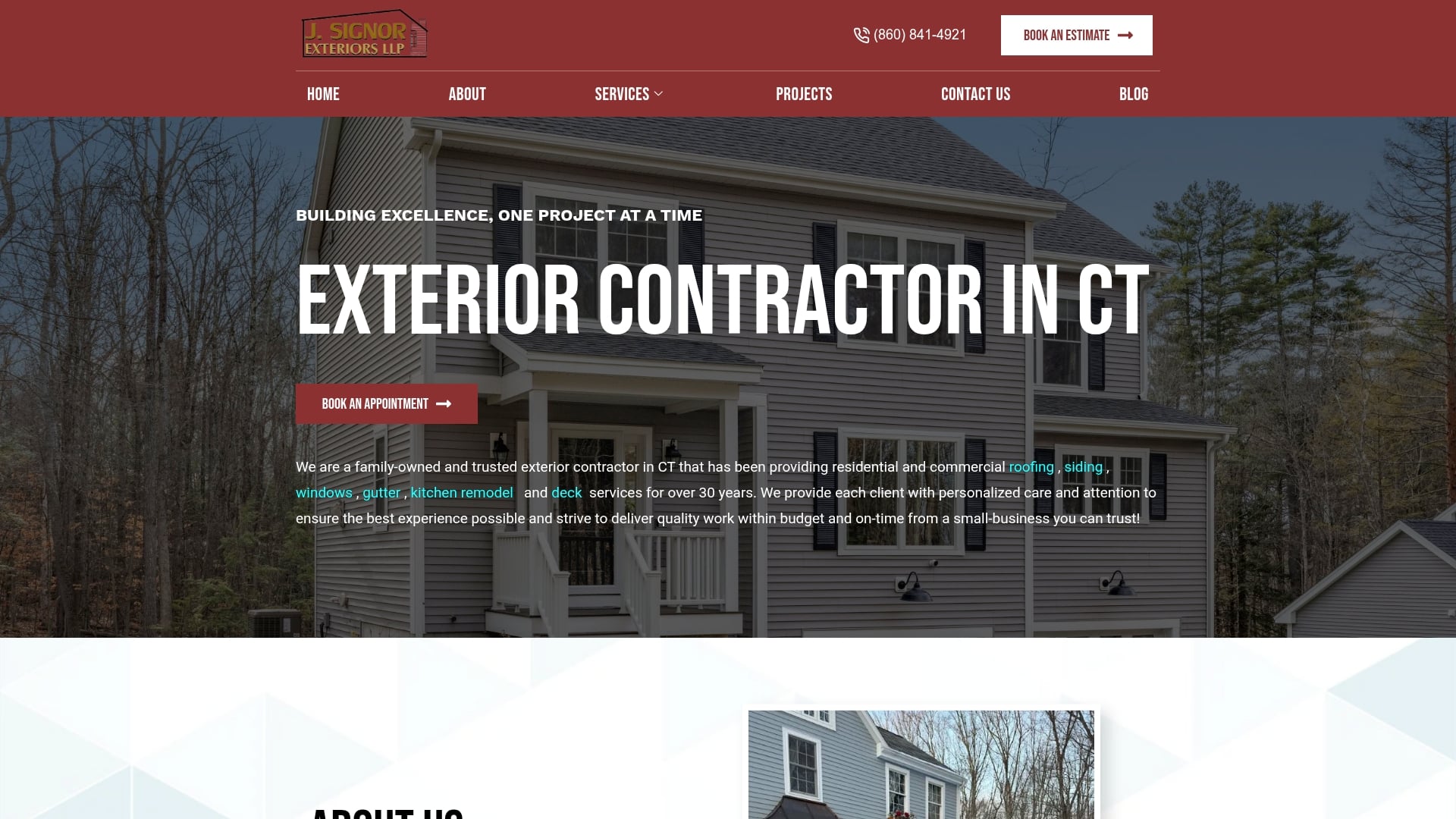
The firm handles the full range of high-impact exterior projects covered in this article: roofing, siding, replacement windows, gutters, decks, and masonry. Every project starts with a written scope, a clear timeline, and proper permitting, so there are no surprises at the inspection table. Whether you’re planning a phased refresh before listing or a longer-term upgrade to enjoy the home for years before selling, the process is the same: a site visit, a written quote, and a realistic timeline you can plan around.
For roofing specifically, J. Signor Exteriors is Connecticut’s local roofing contractor with the cold-climate experience that matters for ice damming, ventilation, and material selection. For siding, the team covers vinyl, fiber-cement, and stone veneer options with full material guidance. Contact J. Signor Exteriors to schedule a site visit and get a written estimate for your next exterior project.
Useful sources and further reading
- Exterior Home Improvements to Help You Sell — Zillow: ROI figures for garage door, entry door, siding, windows, roof, and landscaping; curb appeal research.
- Which Home Improvements Increase Value Most? — Opendoor: Cost vs. Value data summary with project-by-project ROI table.
- Exterior Home Makeover: Complete Guide — GenRoom: Phased approach, cosmetic refresh costs, and curb appeal sequencing.
- Outdoor Upgrades That Add the Most Value — Redfin: Agent perspectives on curb appeal, landscaping, lighting, and outdoor living.
- The 4 Best Exterior Upgrades for Adding Home Value — The Spruce: Expert commentary on garage door, entry door, siding, and projects that don’t recoup cost.
- ENERGY STAR — Windows & Doors: Energy savings data for replacement windows and doors.
- Exterior Remodeling Project Checklist for Connecticut Homes — Jsignorexteriors: Pre-project preparation and contractor vetting checklist for Connecticut homeowners.
- Types of Exterior Siding Materials — Jsignorexteriors: Material options, lifespans, and maintenance guide for Connecticut siding projects.
This article is general information for homeowners planning exterior improvements. Cost and ROI figures are national averages from industry reporting and will vary by market, project scope, and contractor. Verify current incentives, permit requirements, and contractor licensing with your local authority and a qualified professional before starting any project.