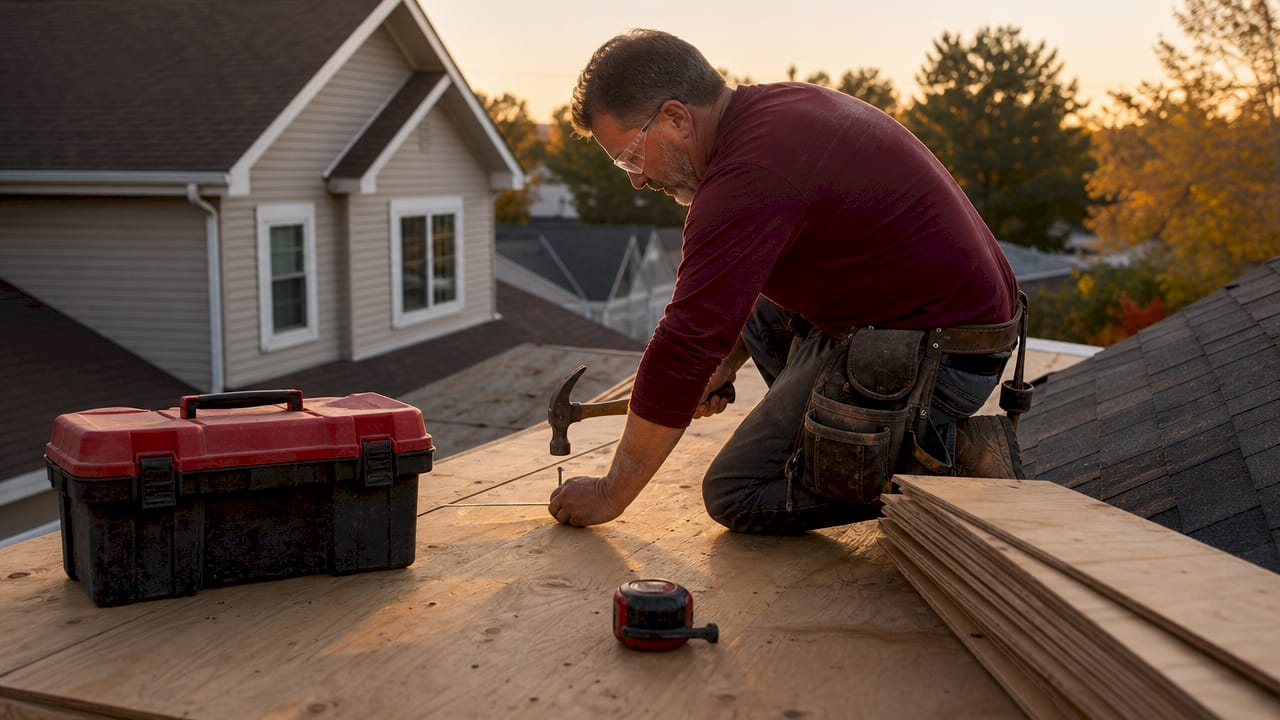
Roof decking, also called roof sheathing, is the continuous panel layer fastened directly to your roof’s rafters or trusses that forms the structural base for every roofing material above it. Without a sound deck, shingles, underlayment, and flashing have nothing solid to anchor to. Understanding what is roof decking means understanding the foundation of your entire roof system. The deck also acts as a structural diaphragm, transferring lateral wind and seismic loads down through the framing. Get the deck wrong, and no amount of quality shingles will save your roof.
What is roof decking and why does it matter structurally?
Roof decking is the structural substrate that transfers every load your roof carries, from the weight of snow and workers to wind pressure, down into the framing and foundation. This function is not cosmetic. It is the reason your roof does not sag or collapse under stress.
Dead loads are the permanent weight of roofing materials themselves. Live loads include snow accumulation, rain, and the weight of workers during installation or repair. Dead and live loads both travel through the decking to the framing below, which is why deck thickness and panel integrity directly affect the safety of your home.
The deck also acts as a diaphragm, meaning it resists the lateral push of high winds and seismic activity by distributing those forces across the entire framing system. A deck with gaps, rot, or improper fastening loses this diaphragm function. That loss shows up as shingle blow-offs, roof racking, or worse.
The deck is also the nailing base for your underlayment and shingles. Fastener pull-through resistance depends on deck thickness. A thin or deteriorated panel cannot hold nails under wind uplift, which is why panel grade and thickness are specified in building codes, not left to contractor preference.
- Supports dead loads (roofing materials) and live loads (snow, workers)
- Acts as a structural diaphragm against wind and seismic forces
- Provides the nailing surface for underlayment and shingles
- Determines fastener pull-through resistance based on thickness
Pro Tip: Ask your contractor to confirm the deck thickness before any new roofing system goes on. Undersized panels are a code violation in most jurisdictions and a liability in high-wind areas like coastal Connecticut.
What are the most common roof decking materials?
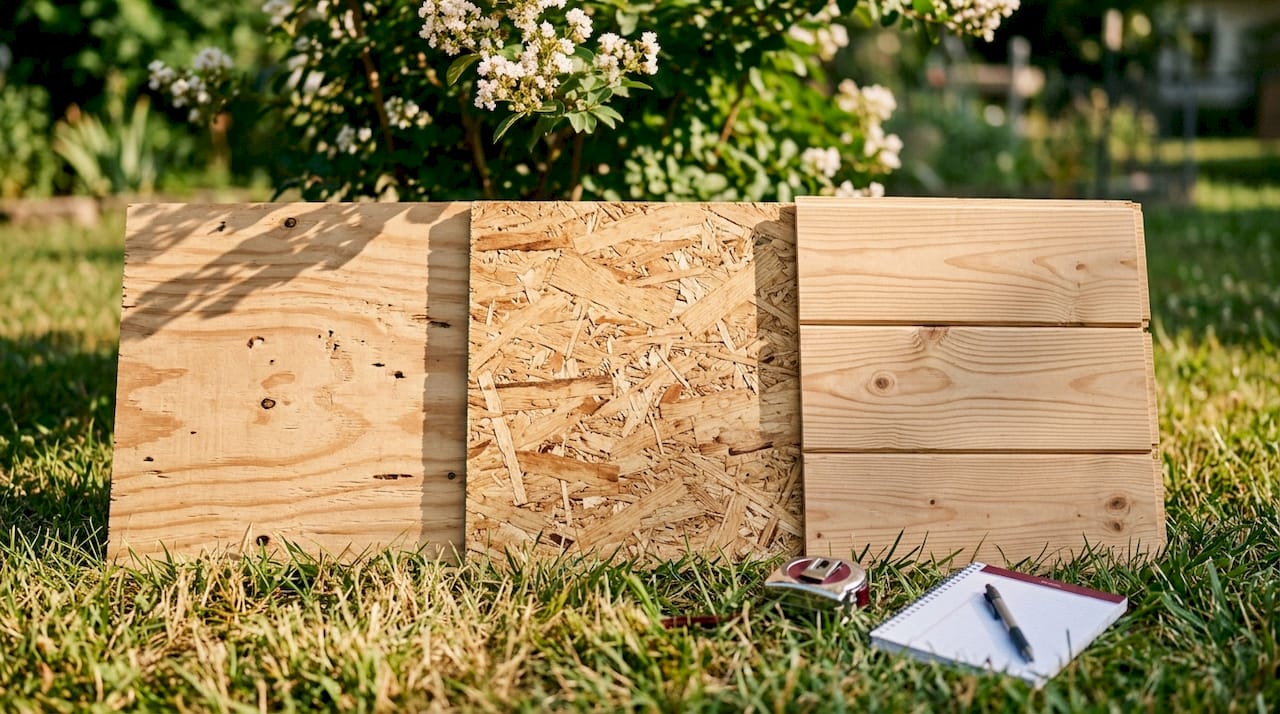
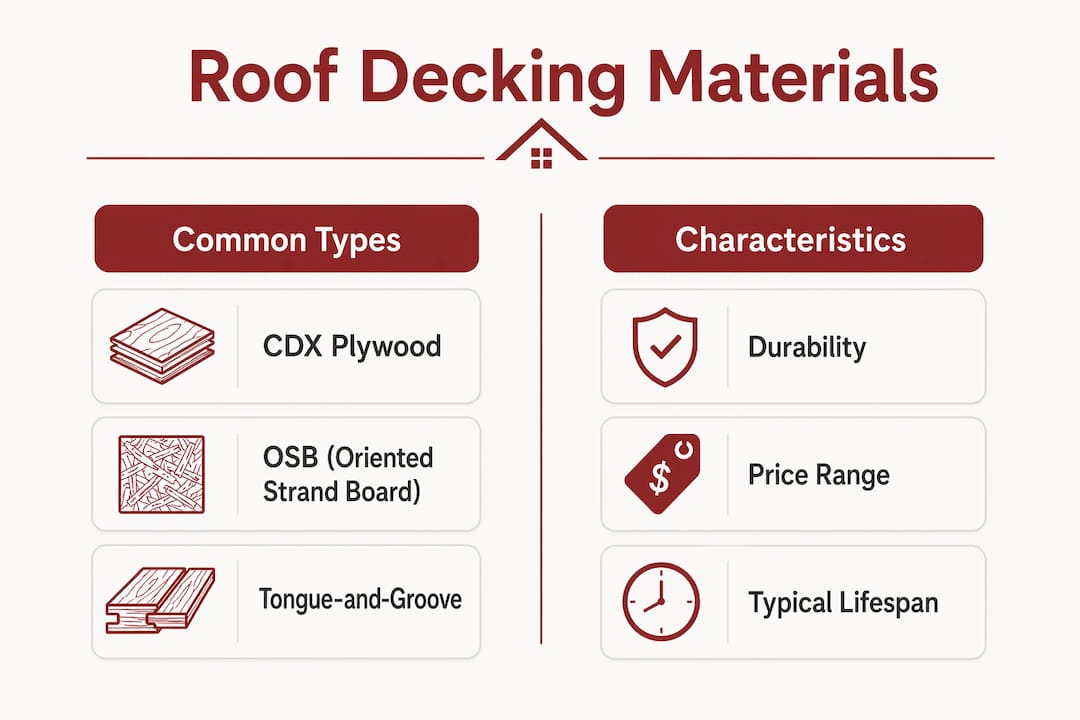
The three materials used in residential roof decking are CDX plywood, oriented strand board (OSB), and tongue-and-groove wood planks. Each has a distinct performance profile, cost range, and best-use scenario.
CDX plywood
CDX plywood is the grade most contractors specify for re-roofing projects. The “C” and “D” refer to the face and back veneer grades, while the “X” means the glue is rated for exterior exposure. CDX plywood resists edge swelling better than OSB when moisture penetrates, which makes it the preferred choice when you are tearing off an old roof and exposing the deck to weather during the project. Its expected lifespan runs 40–50 years with proper maintenance. Cost typically falls between $2.50 and $3.80 per square foot installed.
OSB (oriented strand board)
OSB is the standard choice for new construction because it costs less and comes in large, consistent panels. OSB costs run $2.00–$3.20 per square foot, making it the most economical option. Its lifespan is 30–40 years when kept dry. The trade-off is that OSB absorbs moisture faster than CDX plywood and can swell at the edges if the roof system is compromised. For new builds where the deck goes on dry and gets covered quickly, OSB performs well. For re-roofing in wet climates, CDX plywood is the stronger call.
Tongue-and-groove planks
Tongue-and-groove solid wood planks are the oldest form of roof decking and still appear in historic homes throughout Connecticut. They interlock along their edges, which provides a tight, continuous surface without gaps. Their lifespan exceeds 50 years, making them the most durable option. The cost reflects that durability, running $4.00–$5.50 per square foot. You will rarely see tongue-and-groove specified in new residential construction today because OSB and plywood are faster to install and significantly cheaper.
| Material | Lifespan | Cost per sq ft | Best use |
|---|---|---|---|
| CDX plywood | 40–50 years | $2.50–$3.80 | Re-roofing, wet climates |
| OSB | 30–40 years | $2.00–$3.20 | New construction |
| Tongue-and-groove planks | 50+ years | $4.00–$5.50 | Historic homes, premium builds |
Choosing the right material also depends on your roof replacement budget. Decking replacement can add meaningful cost to a project, and knowing the price range per material helps you plan accurately before work begins.
How is roof decking installed correctly?
Proper roof decking installation follows a specific sequence of panel sizing, fastening type, and nailing pattern. Skipping or shortcutting any step creates vulnerabilities that show up years later as leaks, blow-offs, or structural failure.
- Confirm panel grade and thickness. Most residential codes require a minimum 7/16-inch OSB or 15/32-inch CDX plywood for standard rafter spacing. Wider rafter spacing requires thicker panels.
- Stagger panel joints. Panels should be offset by at least one rafter bay so vertical seams do not align. Aligned seams create a weak line across the roof.
- Leave an expansion gap. Panels expand with moisture. A 1/8-inch gap between panel edges prevents buckling.
- Follow the nailing schedule. Regional building codes specify nail size, spacing at panel edges, and spacing in the field. In Connecticut and other northeastern states, high-wind nailing schedules often require 8d ring-shank nails at 6-inch spacing along edges.
- Fasten to every rafter. Skipping a rafter creates an unsupported span. Improper nailing patterns are the leading cause of roof decking failures, particularly in high-wind events.
- Address older plank decking. Homes built before the 1970s often have spaced wood plank decking. Modern underlayments and shingle systems require a continuous surface. Sheathing over old planks with OSB or plywood is often mandatory to meet current code and ensure the new roofing system performs as designed.
Proper fastening per code matters more than material choice alone. A premium CDX plywood deck with incorrect nailing will fail before a properly fastened OSB deck in the same storm.
Pro Tip: Request a written nailing schedule from your contractor before the job starts. If they cannot produce one, that is a signal to ask more questions. Code-compliant fastening is not optional, and a reputable contractor will have no hesitation showing you the plan.
How do you maintain and inspect roof decking?
Roof decking is not a permanent, set-it-and-forget-it component. Moisture damage can weaken decking even when it is not visible from inside the attic. By the time you see a stain on your ceiling, the deck above may already be compromised.
Contractors inspect decking during tear-off by walking the surface and probing soft spots with a tool. Spongy areas, visible rot, delamination on plywood, or swollen OSB edges all signal replacement. The challenge is that decking inspection is rarely included in a base roof estimate. Surprises during the project are common when homeowners have not budgeted for potential deck replacement upfront.
The signs that your decking needs attention include:
- Soft or spongy spots when walking the roof surface
- Visible rot, dark staining, or mold on panels viewed from the attic
- Sagging or uneven roof surface visible from the ground
- Shingles that lift or curl without obvious wind damage
- Water stains on attic sheathing after rain events
Maintenance practices that extend decking lifespan include keeping gutters clear so water does not back up under the eaves, addressing flashing failures quickly before water infiltrates the deck, and scheduling attic inspections after major storms. Understanding the average roof lifespan helps you time decking inspections alongside broader roof assessments.
Experienced contractors recommend building a worst-case decking replacement budget into your roofing project estimate. If the deck turns out to be in good shape, you keep the money. If it is not, you avoid a mid-project financial surprise that stalls the job.
Key Takeaways
Roof decking is the structural foundation of every residential roof, and its material, installation, and condition determine how well the entire roofing system performs over time.
| Point | Details |
|---|---|
| Decking is structural, not cosmetic | It transfers all roof loads to the framing and resists wind and seismic forces. |
| Material choice depends on project type | CDX plywood suits re-roofing; OSB fits new construction; tongue-and-groove works for historic homes. |
| Nailing schedule is non-negotiable | Improper fastening is the leading cause of decking failure, regardless of panel quality. |
| Decking is not permanent | Moisture damage can compromise panels invisibly, making inspection at every re-roofing critical. |
| Budget for replacement upfront | Decking replacement is rarely in base estimates; plan for a worst-case scenario to avoid surprises. |
Why I think homeowners underestimate roof decking every single time
After more than 30 years working on roofs across Connecticut, the single most consistent mistake I see is homeowners treating the deck as an afterthought. They focus on shingle color, manufacturer warranties, and price per square. The deck never comes up until we pull the old shingles off and find rot.
The misconception runs deep. People assume that because the deck is hidden, it must be fine. Moisture does not work that way. A slow leak around a flashing, a clogged gutter that backs water under the eaves, or a single cracked shingle can saturate a panel over months without triggering an obvious interior leak. By the time the ceiling stains, the deck has been wet for a long time.
The other thing I see constantly is contractors who skip the nailing schedule conversation entirely. They nail by feel and habit rather than by code. In a moderate wind event, that deck holds. In a serious storm, it does not. Connecticut gets nor’easters and occasional hurricane remnants. A deck fastened to last-decade standards in a high-wind zone is a liability.
My honest advice: treat the deck as the most important part of your roofing project, not the least. Ask your contractor what panel grade they specify, what nailing schedule they follow, and whether they will inspect the existing deck before pricing the job. A contractor who answers those questions confidently is one worth hiring.
— Adam
Jsignorexteriors can assess and replace your roof decking
Roof decking problems rarely announce themselves before a storm or a full tear-off. Getting a professional assessment before issues escalate protects both your home and your budget.
Jsignorexteriors has served homeowners and businesses across Connecticut for more than 30 years. The team inspects existing decking during every roof replacement in Connecticut, confirms panel grades and nailing schedules meet current code, and addresses rot or damage before new materials go on. Whether you are planning a full re-roof or need a targeted deck repair, Jsignorexteriors brings the experience and licensing to get it done right the first time. Contact the team to schedule an inspection and get a clear, honest estimate for your project.
FAQ
What is the difference between roof decking and roof sheathing?
Roof decking and roof sheathing refer to the same component. Both terms describe the structural panel layer fastened to roof rafters or trusses that supports all overlying roofing materials.
Is roof decking necessary on every home?
Yes. Roof decking is a required structural element in residential construction. It provides the nailing base for underlayment and shingles and transfers loads to the framing system.
How long does roof decking last?
Lifespan depends on material. Tongue-and-groove planks last 50+ years, CDX plywood lasts 40–50 years, and OSB lasts 30–40 years when properly maintained and kept dry.
Does roof decking get replaced during a roof replacement?
Not always, but damaged sections must be replaced. Contractors inspect the deck during tear-off and replace any panels showing rot, delamination, or structural weakness before installing new roofing materials.
What causes roof decking to fail?
The two leading causes are moisture infiltration leading to rot and improper nailing that fails under wind uplift. Both are preventable with regular inspection and code-compliant installation practices.